

COMMUNITY & LOCAL AFFAIRS
CEY vs CFM: THE GREAT HELDERBERG GRUDGE MATCH —THE RIVALRY NOBODY OFFICIALLY ACKNOWLEDGES BUT ABSOLUTELY EVERYBODY IS HAVING
Two towns. One basin. A shared mountain, a shared road and approximately forty years of accumulated opinions about each other’s parking, property values and general sense of self-importance. The Helderburger investigates.
By Fannie Geldenhuys-Swanepoel — Social Dynamics & Number Plate Correspondent
There is a rivalry in the Helderberg Basin that predates the R430-million sewer project, outlasts every municipal boundary redraw and survives even the annual indignity of the shared school catchment area. It does not have a name, exactly. It is never discussed at official functions. Both sides, if pressed, will insist it doesn’t exist — and will then spend the next forty minutes explaining, in considerable detail, why their town is objectively superior.
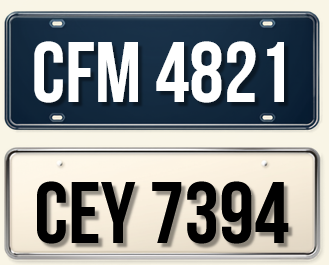
The rivalry is, of course, between Strand and Somerset West. CEY versus CFM. The Beach versus The Mountain. The Sunburnt versus The Suited. St Rand against the City for Millionaires.
The Helderburger, in the proud tradition of community journalism everywhere, has decided to give it the rigorous and entirely impartial examination it deserves.
A Tale of Two Plates
It begins, as so many Helderberg disagreements do, with something small that turns out to be enormous. In this case, a number plate.
The Western Cape assigns number plate prefixes based on towns and regions, an approach that dates back to an older municipal system where registration codes were handed out according to local authorities. Larger areas received shorter codes while smaller towns were given longer ones. Strand uses CEY while Somerset West uses CFM. IOL
This is, on the face of it, a purely administrative matter. It is not, in practice, a purely administrative matter at all.
Somerset West residents will tell you, with the quiet satisfaction of people who believe the universe has been making a point, that CFM stands for “City for Millionaires.” This is not official. It has never been official. The official derivation is a bureaucratic alphanumeric sequence with no particular meaning. But Somerset West has long since decided that it means what it means and has arranged its property values, gated estates and artisan coffee shops accordingly.
Strand, meanwhile, carries the plate CEY, a combination that has attracted rather fewer self-congratulatory interpretations, though The Helderburger’s letters desk has received several colourful suggestions over the years, not all of them printable before the watershed. The most charitable and repeatable interpretation offered by a Strand resident was “Clearly Enjoying Yesterday,” a reference to what they describe as Somerset West’s excessive interest in its own history. A Somerset West resident, when presented with this interpretation, smiled thinly and said nothing, which in Somerset West is understood to constitute a devastating riposte.
The Geography of Superiority
To understand the rivalry, one must first understand the geography, because in the Helderberg, geography is destiny and everyone knows it.
Somerset West is the commercial capital of the Helderberg Basin, situated on the slopes of the Helderberg, long considered a desirable area in which to live. It is a town of wine estates, mountain views, 65-plus suburbs with names like Boskloof Eco Estate and Bridgewater and a population that includes a notable contingent of seasonal European visitors — Europeans, especially from Germany, Switzerland and the Netherlands, come here to enjoy the South African summer before flying home, tending to stay in luxury gated estates. Property24Culture Connect
Somerset West is, in short, the kind of town that is permanently on the verge of describing itself as a lifestyle destination. It has the wine route, the mountain, the heritage architecture, the estate agents who use the word “bespoke” without irony and a Latin motto — Prorsum Sursum, meaning Straight Up — that Somerset West residents consider aspirational and Strand residents consider a fairly accurate description of where Somerset West thinks it is relative to everyone else.
Strand, by contrast, is a town that knows exactly what it is and is largely unbothered by the question. The name “Strand” is Afrikaans for “beach,” and the settlement developed during the 18th and 19th centuries as a fishing and holiday resort for inland communities, particularly from the Stellenbosch district. It has five kilometres of white sand beach. It has a golf club, surf breaks, rugby fields, squash courts, a tidal pool, a water park and the kind of community that has been getting on with things since 1897 without requiring a Latin motto to feel good about itself. Wikipedia
Strand’s view is of the open ocean, which is magnificent and democratic — available to everyone, requiring no purchase, no entrance fee, no biometric security and no heritage tour. Somerset West’s view is of the mountains, which are also magnificent and which Somerset West considers fractionally more sophisticated, in the way that all elevated things tend to regard themselves relative to sea-level concerns.
The Wind Question
Any honest examination of the Strand-Somerset West relationship must address the south-easter, which is the Western Cape’s most democratically distributed irritant but which blows with particular commitment along the False Bay coastline.
Strand and Gordon’s Bay are known for the strength and persistence of the south-easterly winds in summer, while Somerset West has areas that are sheltered from the south-easter. Wikipedia
This is, in meteorological terms, a neutral observation about prevailing wind patterns. In Helderberg social terms, it is a source of quiet, continuous, never-quite-articulated triumph for Somerset West and a point of vigorous counter-argument from Strand, whose residents will note — correctly — that the south-easter in Strand means a brilliant, sparkling beach day with natural air conditioning and that Somerset West’s shelter from the wind also means it is, in high summer, approximately the temperature of a slow oven.
Somerset West calls this “warm.” Strand calls this “airless.” The debate has been ongoing since the region was first settled and shows no sign of resolution.
Property: The Language They Both Speak
Whatever their differences, Strand and Somerset West share one deep and abiding common interest: property values. The Helderberg Basin is a place where people check Prop24 with the regularity that other communities check the weather and where a neighbour’s recent sale price is considered appropriate dinner party conversation at virtually any income level.
Somerset West has, for some years, held the upper hand in the price-per-square-metre stakes, a fact it bears with the gracious modesty of someone who raises the subject approximately once per conversation. The arrival of R1-billion developments like The Charles within the Lord Charles Estate — offering apartments from R2.1 million and described as “attainable luxury” — has only reinforced Somerset West’s conviction that it is, in property terms, ascending.
Strand, however, has been quietly doing its own ascending and the Helderberg’s new General Valuation Roll — taking effect July 2026 — is expected to confirm what beachfront owners have long suspected: that five kilometres of Blue Flag coastline on False Bay is not, in the current market, something to be modest about. The CEY fraternity has been holding its cards close, but the cards, it turns out, are worth considerably more than previously advertised.
Both towns are now in the unusual position of simultaneously complaining about their rates bills and boasting about their valuations in the same breath — a feat of cognitive flexibility that The Helderburger acknowledges as genuinely impressive.
The Sewage Complication
It would be remiss of The Helderburger not to note that the current municipal moment has introduced a certain complexity into the rivalry’s usual dynamics.
The Great Strand Sewage Saga — the overflows, the petition, the mayoral swim, the R430-million rehabilitation programme with its promising November 2027 completion date — has provided Somerset West with the kind of material that, in lesser hands, might be deployed ungraciously. Somerset West residents who drive through Strand on the R44 have been observed doing so with their windows closed and their expressions suggesting that the CFM plate on their vehicle represents not merely an administrative code but a meaningful distinction.
Strand residents, for their part, have pointed out that the pipes belong to the City of Cape Town, that Somerset West’s infrastructure is not without its own vintage character and that anyone who lives within smelling distance of the old AECI site — where the factory between Somerset West and Strand was once the second largest dynamite factory in the world — should perhaps exercise some restraint when discussing the aromatic qualities of their neighbour’s municipal situation. Wikipedia
This argument has not been resolved. It will not be resolved before November 2027 at the earliest.
What They Agree On
It would be misleading to suggest that CEY and CFM are in a state of active hostility. They are not. The rivalry is of the deeply affectionate, entirely competitive, thoroughly local variety — the kind that exists between suburbs that are, in practice, so thoroughly intertwined as to be functionally inseparable.
They share the N2. They share Somerset Mall. They share Radio Helderberg. They share the Lourens River, the Helderberg Mountains and the view of Table Mountain across the bay that makes residents of both towns feel, on clear mornings, that they have made the correct life choices. Their children attend each other’s schools. Their rugby teams play each other with the cheerful ferocity of people who will be having a braai together within hours of the final whistle.
And they share, perhaps most importantly, the quiet and mutual conviction that the other town secretly knows it got the slightly lesser deal — a conviction that each side holds with such sincere certainty and such complete inability to prove, that it has kept the conversation going for over a century and shows every sign of continuing indefinitely.
The Verdict
The Helderburger, having considered the matter at length and with the editorial rigor for which this publication is known, is pleased to offer the following conclusion:
Strand has the beach, the wind, the surf, the tidal pool, the five kilometers of sand, the working-class dignity, the braai on the beachfront and the kind of community that has never needed to be told it was somewhere worth being.
Somerset West has the mountain, the wine, the heritage, the gated estates, the European seasonal visitors, the Latin motto, the artisan coffee and the quiet assurance of a town that has been describing itself as desirable since 1822 and has not yet run out of reasons.
Both are correct. Both are insufferable about it, in their own particular ways. Both are, taken together, the reason the Helderberg Basin is one of the finest places to live in South Africa — and both know it, even if they will never quite agree on which one of them makes it so.
CEY and CFM. Neighbours, rivals and, beneath all the number plate posturing, a single community that shares a mountain, a sea and the permanent suspicion that the town next door is getting slightly more credit than it deserves.
The debate continues. The view from both sides remains magnificent.
The Helderburger declares no preference in the CEY vs CFM dispute and wishes to assure both communities that this publication serves the entire Helderberg Basin with complete impartiality. Our offices are located equidistant between Strand and Somerset West, in a lay-by on the R44 that belongs, technically, to neither. We consider this an editorial strength.



Be the first to comment