

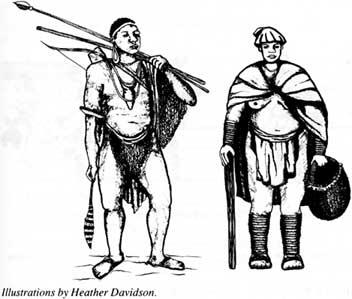
Thirty-five free burghers. One hundred and eighty slaves. One hundred and thirty-four VOC officials. Fifteen women. Twenty-two children.
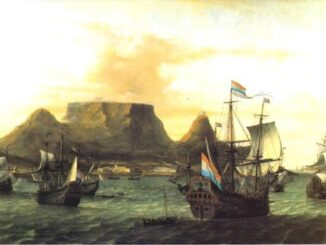
That was the entire European population of the Cape Colony when Jan van Riebeeck sailed away in 1662 after ten years of building, arguing, planting and scheming. By any measure, it was a tiny settlement, a handful of people on the edge of a vast continent and yet within forty years, their descendants and the new arrivals who followed them would be pushing into the Helderberg valleys and planting the farms that still carry their names today.
How did it happen so fast?
The answer is land. Specifically, the hunger for it.
In February 1657, the VOC issued the first permits for nine company servants to farm along the Liesbeeck River. These were the first free burghers, men released from their VOC contracts and given plots of ground to farm independently. They had to sell their produce to the Company at fixed prices. They could not trade with the Khoikhoi. They were in many ways still not entirely free. But they had land and land in the Cape Colony meant everything.
The problem was that the land near Cape Town filled up quickly. New arrivals needed farms. Existing farmers needed more grazing. Free burghers came to regard manual labour as slaves’ work and for many of them there was no other available employment. The response of the unemployed was to move away from the coast, into vast open expanses sparsely occupied by Khoikhoi and San. East. Always east. Toward the mountains.
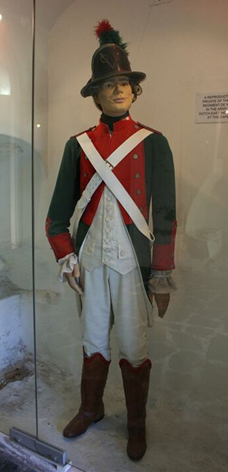
A Dutch soldier
Land grants expanded significantly after Simon van der Stel arrived as the colony’s new commander in 1679. Van der Stel was energetic, ambitious and genuinely interested in developing the colony, unlike the VOC bosses in Amsterdam, who kept telling everyone to stay small. He founded Stellenbosch in 1679, the second town in the colony and began pushing settlement east and north. Farmers followed. And beyond Stellenbosch, beckoning on the horizon, were the Hottentots-Holland mountains and the extraordinary valleys at their feet.
By the 1690s, farms were being granted in the foothills. The Lourens River valley. The land around what would become Somerset West. The sweet water, the shelter of the mountain, the rich alluvial soil, it was everything a farmer could want.
The Khoikhoi clans who had grazed these valleys for centuries were not consulted. They were simply in the way.
Within a generation of van Riebeeck’s vegetable garden, the Helderberg had been claimed, measured, named and handed out in pieces. The mountain had watched humans arrive before. But never quite like this.
Between You and Me:
Imagine sitting on your horse and deciding to travel east through the fynbos, across rivers with no bridges, until the mountains stop you. And let’s not even get into the lions and elephants you might have met along the way. The free burghers who moved east looking for land remind me of nothing so much as the people who first discovered that Somerset West was a pleasant place to live and then told one other person, who told two more and now the N2 on a Friday afternoon is a philosophical experience in patience. (Take note do not get confused here. It was free burghers not three burghers or free hamburgers.) The hunger for land and the hunger for a good spot near the mountain is not so different. The method of acquisition has improved, marginally. The traffic has not.
Historian – Harmen Bockelenberg
Next week: What the Dune Kept — The paintings the San left behind on the mountain’s own rock faces, eland, dancers and figures caught mid-trance, a spiritual record of a world the Helderberg’s newest arrivals never learned to read.

Be the first to comment