

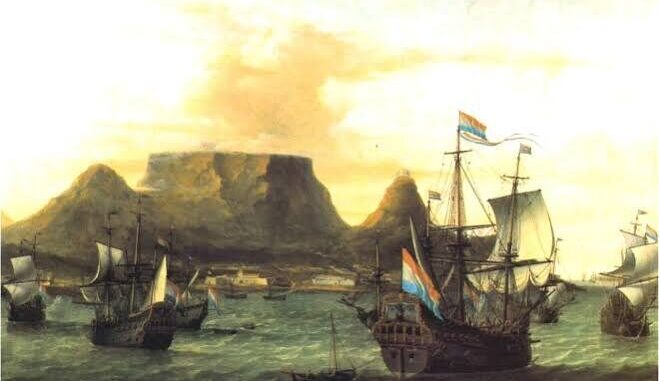
On 6 April 1652, three Dutch ships, Drommedaris, Reijger and Goede Hoop, dropped anchor in Table Bay. There were 90 men aboard. Their instructions were modest: build a fort, plant a garden, provide fresh water and vegetables to VOC ships passing between the Netherlands and the East Indies. A refreshment station. Nothing more.
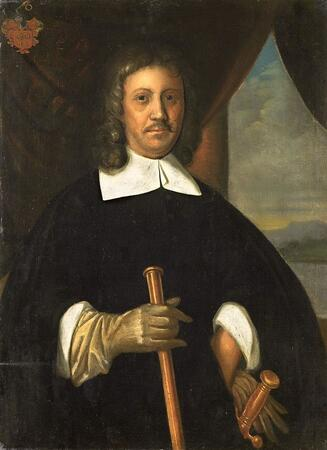
Jan van Riebeeck
Drommedaris (Dromedary) was the flagship. Reijger (Heron) and Goede Hoop (Good Hope) accompanied her. A fourth, smaller vessel, the yacht Walvisch (Whale), arrived shortly afterwards.
That is the official version. What actually happened was rather larger than a pit stop and a vegetable garden.
The man entrusted with establishing the Dutch foothold at the Cape was Jan van Riebeeck — a 33-year-old VOC official, navigator and trained surgeon. He arrived in Table Bay on 6 April 1652 aboard the Drommedaris, accompanied by his wife, Maria de la Quellerie, a French Huguenot born in Rotterdam in 1629. Together they would become the first family of what was intended to be nothing more than a modest refreshment station for passing ships.
Van Riebeeck’s instructions from the Dutch East India Company were straightforward: provide fresh water, vegetables and meat to vessels travelling between Europe and Asia. He was not sent to establish a colony, nor was he expected to settle permanently. Yet from the moment he arrived, it became clear that he saw greater possibilities in the Cape than his employers did. Within months he was writing to Amsterdam, arguing that the settlement should be expanded. The Company repeatedly rejected the idea, but Van Riebeeck persisted. Gardens were planted, buildings erected and trade established with the Khoikhoi, primarily for cattle that would feed the growing number of ships calling at the Cape.
What began as a supply station slowly developed a permanence of its own. Beneath the shadow of Table Mountain, Jan and Maria raised their family while the small outpost expanded around them. They had eight children, although, as was common in the seventeenth century, not all survived to adulthood. Their son Abraham, born at the Cape in 1653, would later rise to become Governor-General of the Dutch East Indies — one of the most powerful positions within the VOC. Other children, including Maria, Anthony and Elisabeth, spent parts of their lives moving between the Cape and the far-flung Dutch territories of Batavia, Malacca and the East Indies.
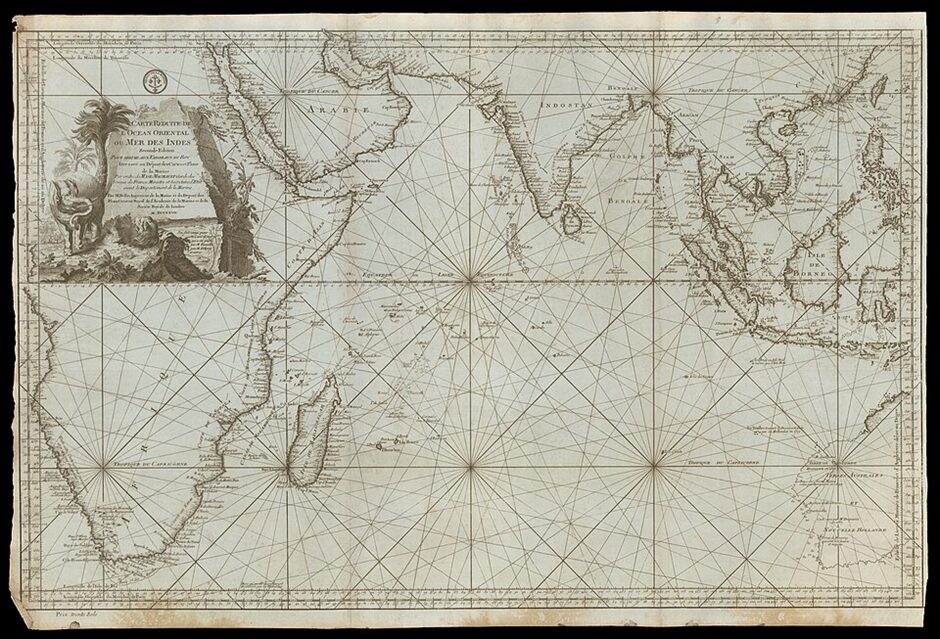
Neither Jan nor Maria could have foreseen what their arrival would set in motion. The settlement they helped establish was intended as a temporary stop on a long sea route between Europe and Asia. Instead, it became the foundation of European settlement in southern Africa. Few figures in South African history have attracted as much attention, admiration and criticism as Jan van Riebeeck. To some he was a capable administrator carrying out the wishes of the VOC; to others he became the symbolic starting point of centuries of colonial expansion. Whatever perspective one takes, there is little doubt that when he stepped ashore in 1652, the course of South African history changed forever.
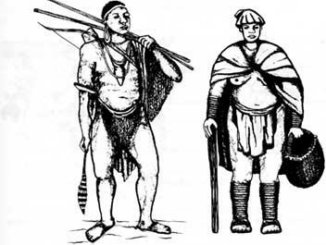
The Khoikhoi around the Cape Peninsula, the Goringhaiqua, the Gorachouqua, the Goringhaikona, watched with a mixture of curiosity and unease. At first the trade was manageable. The Dutch wanted cattle. The Khoikhoi traded cattle for metal, tobacco and alcohol. But the Dutch wanted more cattle than the Khoikhoi could comfortably spare. And then, in 1657, Van Riebeeck made a decision that changed everything: he released a group of VOC employees from their contracts and allowed them to farm independently along the Liesbeeck River. The river was originally named the Amstel or Versse Rivier. The Dutch commander, Jan van Riebeeck, later named it the Liesbeek after a small, reedy river back in the Netherlands.
Free burghers. Private farmers. People who needed land.
In 1659 the first Khoikhoi-Dutch War broke out, a dispute over the ownership of land and cattle, led by a Khoikhoi chief named Doman. The Khoikhoi raided farms and drove off cattle. The Dutch sheltered in their fort and fired back. It ended badly for the Khoikhoi.
It is important to distinguish between the early Dutch settlers and the later Boers. The Dutch who arrived at the Cape in the seventeenth century were mainly VOC employees, soldiers and officials sent to support trade between Europe and Asia. The Boers emerged generations later from the descendants of these settlers, together with German and French Huguenot immigrants, developing a distinct identity shaped by the African landscape, frontier life and growing independence from Europe. Over time they formed their own culture and language, later known as Afrikaans, becoming a people quite different from the Dutch who had first arrived at the Cape.
Now look east. Look toward the mountains. Just over the Eerste River.
The name Eerste River is generally traced to 1655, when a VOC official named Willem Muller, crossing the open Cape Flats, arrived at the first substantial watercourse encountered beyond the frontier of the colony.
By 1673, Dutch exploratory expeditions had pushed north and east beyond the Liesbeeck and beyond the first ranges of hills and found fertile grazing land to the northeast of the Hottentots-Holland Mountains. The territory of the Chainoqua, the Hessequa, the Cochoqua and the Gouriqua. The clans of the Helderberg. The people who had grazed these valleys for centuries.
The Dutch sent a man named Hieronymus Cruse on horseback to attack the Cochoqua. In that raid, the Dutch seized 1,800 head of livestock. A year later they came back and took nearly 5,000 more. The Cochoqua whose territory included the valleys that would one day become Somerset West never fully recovered.
The destruction of the Khoikhoi clans of the Helderberg was not a single dramatic event. It was a slow grinding process of pressure, livestock seizure and disease smallpox epidemics in 1713 and 1755 would kill enormous numbers of people who had no immunity and the gradual collapse of the social structures that held their world together. The survivors were absorbed into the colony as servants and labourers. Some intermarried with settlers and slaves. Their descendants became part of what would eventually be called the Cape Coloured community, one of the most complex and culturally rich communities in South Africa, whose roots run directly back to the original people of this valley.
The Cochoqua and the Hessequa are gone as distinct peoples. But they are in the ground of the Helderberg. They are in the faces of some of the people who live here now. They were here first and for longer than anyone else and they deserve more than a footnote.
This is their chapter.
Between You and Me:
Jan arrived on die Ryger, Tyger and Nuwe Hoop, with instructions to build a vegetable garden and a small fort. Call it an outpost or pitstop. This became the problem statement. What he actually built was the next four centuries of South African history. The VOC told him repeatedly to keep things small. That was part of the problem. He kept writing back while sipping on his Amstel next to the river suggesting they think bigger. History, as it turned out, agreed with Jan rather than with the VOC’s accountants. This is a pattern you will recognise if you have ever tried to tell an enthusiastic man with a plan to please just stick to growing cabbages. The cabbages are never the point. They never were.
Historian – Harmen Bockelenberg
Next week: how the Dutch found the Helderberg — the slow, hungry creep east from a vegetable garden at the Cape to the farms of the Lourens River valley.

Be the first to comment