

STORY 104
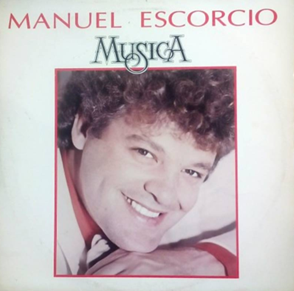
The story of how Manuel Escórcio became one of South Africa’s most celebrated tenors begins in a hostel shower in Somerset West, sometime in the late 1960s, when a teenage boy from Mozambique was singing to himself the way teenagers sing to themselves, unselfconsciously, for the pleasure of it, because the acoustics were good and nobody was supposed to be listening.
Somebody was listening.
As a child he had no formal exposure to music. He likes to relate how his talent was accidentally discovered in the shower at Helderberg High School while living in the school’s hostel. He always attempted to sing in the style of Mario Lanza, just for the fun of it all.
Manuel Maria Lamarque Escórcio was born in Lourenço Marques, now Maputo, the capital of Mozambique. His father was from Madeira in Portugal and his mother originated from Mauritius. He was, in other words, a child of the Portuguese world that existed along the east coast of Africa, colonial, Catholic, multilingual, a world away in culture and climate from the Dutch Reformed, Afrikaans-speaking Western Cape.
He first came to South Africa in 1966. He enrolled at Helderberg College in Somerset West, the Seventh-day Adventist institution on the slopes of the mountain that had been educating students since the early twentieth century. He was studying theology. He was going to be a pastor. His voice had other ideas.
Escórcio started his musical career at Helderberg College in Somerset West when he was sixteen years of age. The college environment, with its emphasis on sacred music, its choirs, its culture of public performance through church services and college concerts, gave him a stage before he had a teacher. The Seventh-day Adventist tradition takes music seriously. Singing is not incidental to worship; it is central to it. A voice like Escórcio’s, once discovered, was not going to be left idle.
Wilhelmina Dunbar was his first teacher of song. She heard what the hostel shower had revealed and understood what it meant. The boy who had been imitating Mario Lanza for the acoustics began learning, formally, what his voice could actually do.
West. By the time he left the Helderberg, the direction of his life had changed entirely. He studied music further at the University of Stellenbosch, where he completed a Bachelor of Music in 1976, then obtained a Master of Music degree from the University of Cape Town in 1982. He also studied in London, earning a Licentiate of the Royal Schools of Music. The theology diploma from Helderberg College remained on his wall alongside everything that came after it.
What came after was considerable. He became the first South African artist to appear in two concerts at the Sun City Super Bowl, with the Gerry Bosman orchestra, in 1983. He performed across South Africa, the United States, Canada, Brazil, Portugal, Venezuela, the Philippines and Australia. He won two Sarie awards, the Nederburg Opera Prize, three gold albums and two platinum albums. In 1981 he was awarded the Order of Prince Henry by the Portuguese government, a rare honour for a South African artist and later received the Comendador title from that same government, recognising his contribution to Portuguese cultural heritage in the southern hemisphere.
He also came back. For four years he was the Choir Director of the Hottentots Holland Choral Society in Somerset West, the same community that had first heard his voice in a hostel and a church hall and a college concert room. He directed Handel’s Messiah, Haydn’s Creation, Bach’s Coffee Cantata. He coached the next generation.
The Helderberg gave Manuel Escórcio his first stage. He gave it back a great deal more.
The mountain that rises behind Helderberg College looked indifferent to all of this, as mountains do. But somewhere in the hostel on those slopes, on an ordinary morning in the late 1960s, a boy from Mozambique was singing in the shower and someone stopped in the corridor to listen and that was the moment the story changed.
Between You and Me:
He was going to be a pastor. The voice had other ideas. I love this sentence because it captures something true about a certain kind of life, the plan that everyone, including the person themselves, assumed was the plan, quietly overtaken by something that was always there but had not yet been noticed. Escórcio enrolled at Helderberg College to study theology. He left having discovered, by accident, in a shower, that he could sing in a way that would take him to the Sun City Super Bowl and the concert halls of three continents. I wonder how many other accidental discoveries have happened in hostel showers and corridors and other unremarkable spaces over the years, unheard, because nobody happened to be walking past at the right moment. Wilhelmina Dunbar happened to be walking past. That is the whole story, really. Someone was listening.
Historian – Harmen Bockelenberg
Next week: A schoolboy, a town hall and a singer two years away from her first gold record.




Be the first to comment