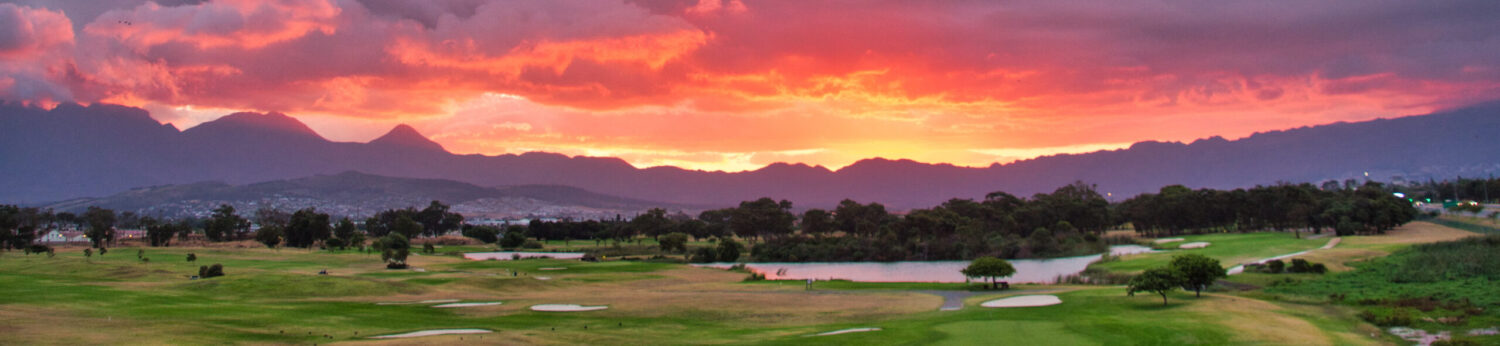


UAE billionaire “deeply passionate about conservation,” plans to preserve mountain “mostly”
Sheikh Hamdan Al-Malik Al-Farouq Al-Noor, 43, who already owns three private islands, a glacier in Iceland and what his spokesperson describes as “a minor share” in the Maldives, has confirmed his intention to acquire the Helderberg Nature Reserve — describing it as a “charming rustic project” with “enormous lifestyle potential, once the rougher edges are addressed.”
The Sheikh, whose net worth is estimated by Forbes at somewhere between “a great deal” and “an incomprehensible amount,” first became aware of the Helderberg after his personal cartographer (yes, he has one) flagged a gap in his Southern Hemisphere portfolio during a routine audit. “There was simply nothing between his Patagonian estancia and his stake in a Kenyan conservancy,” explained the cartographer, who asked not to be named, as cartographers generally prefer it that way.
The acquisition, which is currently awaiting final approval from local government, was confirmed in a press release issued by Al-Farouq Holdings (Pty) Ltd, a subsidiary of Al-Farouq Global Interests, which is itself a subsidiary of Al-Farouq Sovereign Capital, registered in the Cayman Islands, which is in turn wholly owned by the Sheikh’s second cousin’s holding company in Luxembourg. The Helderberg, in other words, will soon be locally managed.
In an exclusive statement — the Sheikh’s fourth this week, following statements on his new superyacht, his new superyacht’s helicopter and a correction regarding the superyacht’s helicopter, Al-Farouq expressed a heartfelt commitment to the mountain’s natural heritage. “The fynbos is extraordinary,” the statement read. “We intend to keep all of it. Some of it. The parts that don’t interfere with the putting green.”
The development plans, described by the Sheikh’s architectural firm (Zaha Hadid’s second cousin, twice removed) as “sensitively ambitious,” include a boutique hotel of between 180 and 240 rooms, depending on how the wind blows; a private funicular railway; a helipad “for emergencies and also for Tuesdays”; and a dune-buggy circuit on the lower slopes, which the firm’s brochure describes as adding “a sense of curated adventure to what was previously just a mountain.”
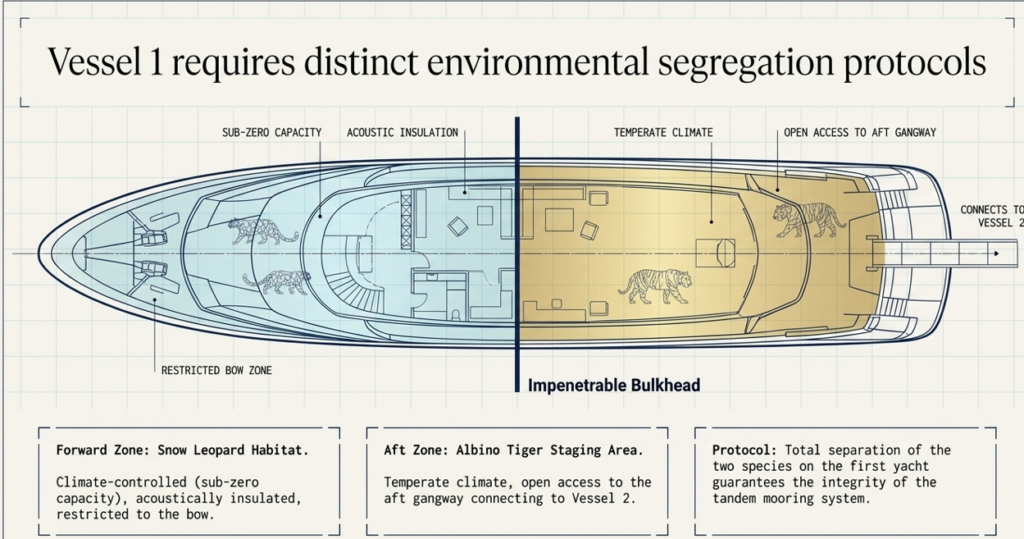
SIDEBAR: About the Sheikh. Sheikh Hamdan Al-Malik Al-Farouq Al-Noor holds honorary doctorates from two universities he donated buildings to and one from a third university where the circumstances remain, in the words of the institution, “under internal review.” He keeps a rare albino tiger on his second yacht, where it is reportedly “very happy, all things considered.” He has pledged to plant one tree for every tree removed during development “in Dubai,” his spokesperson clarified, when pressed.
Environmental concerns have been addressed, the statement assures, by the appointment of an independent ecological assessment panel. The panel, this reporter can reveal, consists of three members: the Sheikh’s brother-in-law, who holds a degree in hospitality management; a marine biologist who “has pivoted to land”; and an AI-generated consultant whose LinkedIn profile lists “nature” as a key skill.
The baboons, which have occupied the mountain for considerably longer than anyone else involved in this transaction, have not been consulted. A spokesperson confirmed that they would be “humanely relocated to a suitable alternative environment,” which, after further questioning, turned out to mean “the neighbouring municipality.”
“We see the baboons as an asset. Possibly even a mascot. We are open to a baboon-themed restaurant concept, if the market research supports it.”
When asked about the famous south-easter wind, which reaches speeds of up to 60km/h on the slopes during summer and has historically discouraged alfresco dining, the Sheikh’s project manager, a man who has never been to our area and conducted this interview from a glass-walled office in Abu Dhabi described it as “a feature, not a bug,” and confirmed that wind-themed activities were “on the mood board,” alongside fynbos, the view and a vague watercolour sketch labelled simply “local culture (TBD).”
The proposed name for the development has not been officially confirmed, but internal documents seen by this reporter suggest the working title is “Al-Helderberg Lifestyle Pinnacle: A Sheikh Hamdan Al-Malik Al-Farouq Al-Noor Reserve.” The mountain itself, it appears, is to be rebranded as “The Berg at Al-Helderberg,” on the grounds that “Helderberg” is “difficult for international guests to pronounce and we do not anticipate many local guests, frankly.”
Local government, which must still grant final approval for the transaction, has confirmed only that the process is ongoing and that all relevant legislation will be followed. A municipal spokesperson said the council was “excited about the investment potential” and that any concerns raised by residents during the public participation process would be “given full and appropriate consideration.” The public participation process closed last Thursday. Seven people attended. One was lost.
The Sheikh, for his part, remains enthusiastic. In a final note appended to his press release and translated from Arabic by a service that may also handle restaurant menus, he expressed his vision simply: “I have owned islands. I have owned a glacier. But a mountain? A mountain is permanent. A mountain says something about a man.” He did not specify what it says. His PR team is working on it.
Asked for comment, a protea on the lower slopes of the Helderberg did not respond, which local botanists describe as “entirely in character and probably wise.”
Editor’s Update: A previous version of this article stated that the Sheikh’s albino tiger lives on his “first” yacht. It lives on his second yacht. The first yacht has a snow leopard. The Helderburger regrets the error.
Charl du Plessis is Die Helderburger se buitelandse korrespondent. Hy het tans aansoek gedoen vir ‘n UAE-werksvisa, bloot as ‘n voorsorgmaatreël.
Leave a Reply