
Of all the consequences that flow from one man’s greed, few are as lasting as the lines drawn on a map. The farms you are about to read about are still there. Go and look.
By 1708 Willem Adriaan van der Stel was gone, sailing back to the Netherlands in disgrace, never to return. Before he left, in one last act of stubborn pride, he personally supervised the grape harvest at Vergelegen. The wine that year was recorded as “particularly good.” He left the colony having tasted his finest vintage and lost everything else.
Back in Amsterdam, the VOC bosses looked at what their disgraced governor had built and made a decision. Officials of the company would henceforth be forbidden from owning land at the Cape. Ever. The door Willem Adriaan had walked through — the door his father had also used at Constantia — was slammed shut behind him.
As for Vergelegen itself? It had to be sold and broken up.
On 31 October 1709, the great estate was divided into four separate pieces and sold off at auction. What happened to those four pieces of land is, without exaggeration, the origin story of the Helderberg as we know it today.
The north-western portion went to a man named Jacobus van der Heyden. He named it for its most obvious natural feature — the Lourens River running through it originally called the Tweederivier to distinguish it from the Eersterivier to the west. Today you know that farm as Lourensford, one of the busiest estates in the Helderberg, home to the Saturday market that half of Somerset West descends on every weekend.
The south-western portion was bought by a French Huguenot named Jacques Malan for the price of 4,000 guilders. He called it Morgenster — morning star. Drive down Lourensford Road today and you will pass it on your left, still making wine and olive oil, still carrying a French Huguenot’s name after more than three hundred years.
The southern portion was purchased by a widow, Catharina Harmans, whose late husband had been Gerrit Cloete. She called the farm Cloetenburg. That piece of land — right there — is the ground on which Somerset West was eventually built. The school Somerset House sits on it to this day.
The largest remaining portion, the one that kept the original homestead, the vines and the gardens, retained the name Vergelegen and was sold for 9,500 guilders to a man named Barend Gildenhausen.
One corrupt governor. One scandal. One auction. Four farms. Four names still on our map today.
For those wondering what these sums actually meant to the men counting them out at auction, here is a rough guide. The guilder does not convert neatly into modern currency — the 1700s ran on a different economy entirely — but historians generally compare it to silver value, purchasing power or the wages of the day.
One guilder contained roughly 10 grams of silver and equates to approximately €15 in modern terms or around R300 today. A skilled worker earned roughly one guilder a day. To put the auction prices in perspective:
5 guilders was a meaningful amount of money. 100 guilders was substantial. 1,000 guilders represented serious wealth for many settlers. 10,000 guilders would place someone among the wealthier burghers of the Cape.
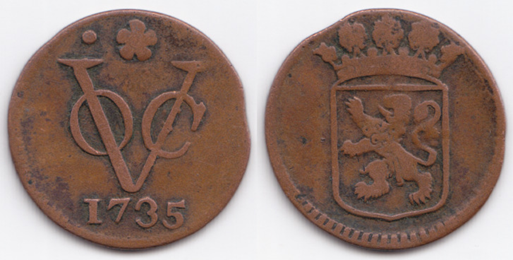
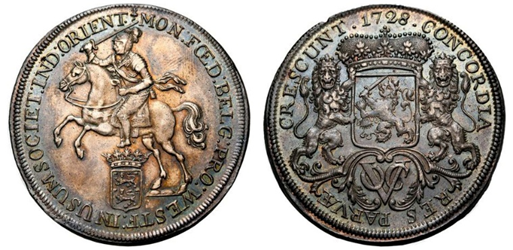
Jacques Malan paid 4,000 guilders for Morgenster. Barend Gildenhausen paid 9,500 for Vergelegen itself — roughly equivalent to twenty-six years of a skilled worker’s daily wage, paid in one transaction, on one October morning, for a piece of land that a disgraced governor had built with stolen resources.
And you thought the farms were handed out for free.
Between You and Me:
Willem Adriaan, having performed his final act as the Cape’s most enthusiastic self-server, tiptoed back to Amsterdam a real nutcracker, presumably through the tulips, humming something cheerful, his bags considerably lighter than his conscience. The song he was humming was later recorded by one Jody Wayne, who called it Tulips for Toinette and made considerably more money from it than Willem Adriaan ever did from his farms. The difference being that Jody at least owned the rights to what he was selling. Some men learn. Some men sail to Rotterdam and rot. Willem Adriaan was, by all accounts, the latter variety. Alas history keeps repeating itself.
Next week: the people who built all of this and whose names nobody ever put on a map.

Leave a Reply