


Whether you’re visiting a wine farm in the Cape Winelands, enjoying a tasting along the Hemel-en-Aarde Valley, or opening a bottle at home, one question often comes up: how do you know if the wine in your glass is actually good?
You don’t need to be a sommelier, memorise complicated wine terminology or pretend to detect twenty different aromas to answer that question. Learning a few basic principles can help you appreciate wine more confidently and understand what makes one wine stand out from another.
The secret is to look beyond the price tag, the label and even your first impression. Good-quality wine is generally about balance, character, complexity and how well all its elements work together.
And there is an important distinction to remember: a wine can be well made without being your personal favourite.
Start with the wine, not the price tag
It’s easy to assume that a more expensive bottle must be better than a cheaper one. While price may reflect factors such as production methods, ageing and reputation, it is not a guarantee of quality.
The same applies to prestigious labels, beautiful packaging and impressive wine-farm settings.
A good-quality wine should be judged primarily on what is in the glass. Does it have a pleasant aroma?
Are its flavours balanced? Does it show character? And does the taste linger pleasantly after you swallow?
These are far more useful questions than simply asking how much the bottle costs.
Five simple steps to tasting wine
You can learn a surprising amount about a wine by following five simple steps: see, swirl, smell, sip and savour.
1. See: Take a look at the wine
Hold the glass by its stem and look at the wine against a white background.
Notice its colour, intensity and clarity. A Sauvignon Blanc might be pale straw in colour, while a red wine such as Pinotage may show a deeper ruby or garnet shade, depending on its age and style. Colour can offer clues about a wine, but it cannot tell you everything about its quality.
Most wines are clear and bright, although some are intentionally unfiltered and may appear slightly cloudy. Unusual browning in a young wine can be worth investigating, but appearance alone is not enough to make a final judgement.

2. Swirl: Let the aromas develop
Gently swirl the wine around the glass. This helps release aromatic compounds, making it easier to appreciate the wine’s smell. You don’t have to identify every aroma precisely. Start with broad categories:
- Fruit, such as citrus, apple, berries or tropical fruit.
- Floral notes.
- Spices.
- Herbal or earthy aromas.
- Oak-related notes, where present.
With a little practice, you may begin to recognise more specific characteristics. What starts as a general impression of red fruit might develop into something reminiscent of strawberries or cherries.
The important question is whether the aromas are pleasant, clean and appropriate for the style of wine.

3. Smell: Look for character and freshness
Take two or three gentle sniffs rather than one deep breath.
Ask yourself three simple questions. Is the aroma easy to detect? What does the wine smell like? And does anything seem unusual or unpleasant? Some warning signs include strong vinegar-like smells, wet-cardboard or musty aromas, rotten-egg smells and pronounced solvent-like notes. These can indicate wine faults, although the cause cannot always be established from smell alone.
Remember, unfamiliar does not automatically mean faulty. Some wine styles have distinctive aromas that may take time to appreciate. You do not need an expert vocabulary. Being able to describe what you notice in your own words is a perfectly good starting point.
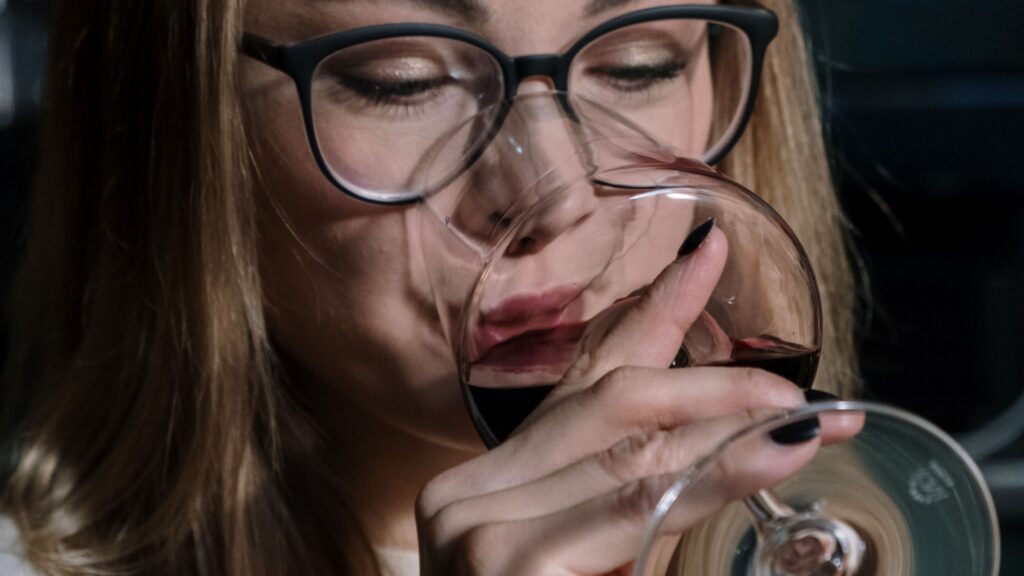
4. Sip: Pay attention to balance
Now take a small sip and allow the wine to coat your mouth. This is where some of the most useful clues about quality emerge.
Acidity: Does the wine feel fresh and lively? Acidity often creates a mouth-watering sensation and can give a wine its refreshing character.
Tannins: Particularly in red wines, tannins create a drying or slightly gripping sensation on your gums. They can provide structure, but should work well with the rest of the wine.
Alcohol: Does the alcohol feel integrated, or does it create an unpleasantly hot sensation?
Body: Does the wine feel light, medium-bodied or full-bodied in your mouth?
Flavour: Do the flavours broadly reflect what you noticed in the aroma? Are they clear and satisfying, or does the wine seem thin and lacking in character?
There is no single correct combination. A light-bodied wine can be excellent, just as a full-bodied wine can be. What matters is how well its components work together. A wine with lively acidity, for example, can be wonderfully refreshing when supported by sufficient fruit. If the acidity overwhelms everything else, the wine may feel harsh or unbalanced.

5. Savour: Consider what happens next
After swallowing, notice how long the flavour remains.
This is known as the finish, and it can tell you something useful about the wine’s quality.
A wine with a pleasant, lingering finish often offers more than one whose flavour disappears almost immediately.
You might continue to notice fruit, spice or savoury characteristics after the initial sip.
Length alone, however, is not a guarantee of quality. The finish should also be pleasant and harmonious.
Then ask yourself one final question: did the wine leave you interested in another sip?
That is not a formal technical measurement, but it is a useful way to think about enjoyment.
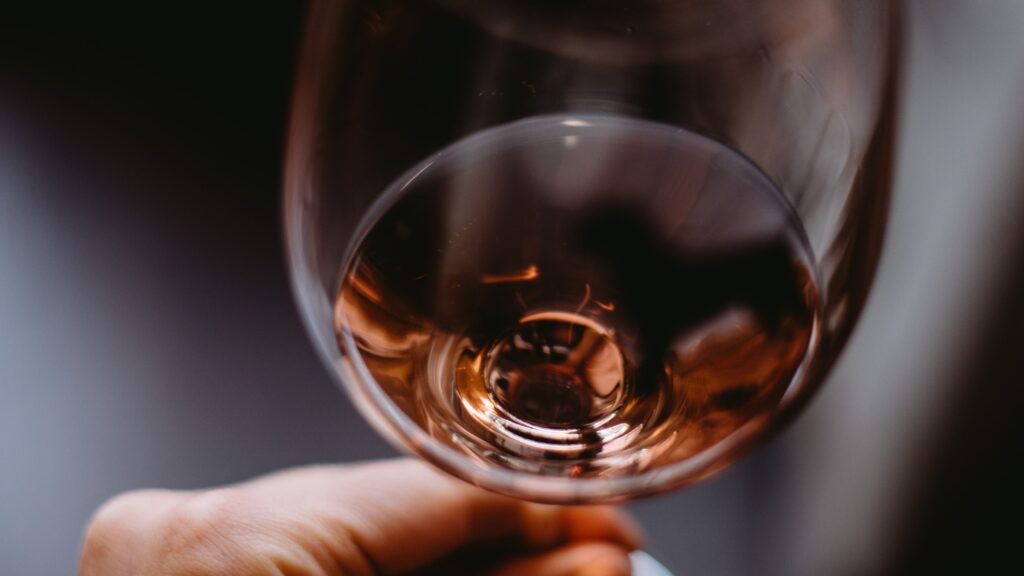
What separates a good-quality wine from an average one?
Professional wine assessments often consider several characteristics together. You can use the same principles without turning a relaxed tasting into a technical examination.
- Balance
Balance is one of the most important indicators of a well-made wine. The fruit, acidity, alcohol and tannins should complement one another rather than allowing one element to dominate unnecessarily.
A powerful wine is not automatically a good wine, and a subtle wine is not necessarily inferior. Harmony matters more than sheer intensity.
- Concentration
Concentration refers to the substance and presence of the wine’s flavours.
A wine does not have to be heavy or rich to show good concentration. Even a lighter style can express its fruit and other characteristics clearly.
The question is whether the wine feels expressive and complete rather than thin or watery.
- Complexity
Does the wine reveal different layers as you smell and taste it? You might notice fruit first, followed by herbal notes, spice or a savoury character. These layers can make a wine more interesting and rewarding to explore. A straightforward wine is not necessarily a poor one. Simplicity can suit a particular style perfectly well, but complexity is often a positive indicator of quality.
- Length
A lingering, pleasant finish is generally a good sign. It suggests that the wine’s flavours continue to express themselves after the initial sip. Consider both the duration and the quality of that finish.
- Harmony
Ultimately, harmony brings everything together. A well-made wine should feel coherent, with its different elements supporting one another. It need not be the biggest, boldest or most expensive wine on the tasting menu. It simply needs to work as a whole.
On South African Wines

South Africa offers wine lovers a wide range of styles to explore, making these principles useful whether you are tasting a fresh Sauvignon Blanc, a textured Chardonnay, a distinctive Chenin Blanc or a structured Pinotage.
Each variety has its own characteristics, and wines can differ considerably according to their growing region, winemaking approach, age and style. Rather than expecting every wine to taste the same, consider whether it expresses its character clearly and whether its components are well integrated.
A crisp white wine, for instance, need not have the same body or finish as a fuller-bodied Chardonnay. Likewise, a red wine with noticeable tannins should not automatically be judged harshly simply because it feels different from a softer, fruit-forward red.
Understanding the style helps you make a fairer assessment:
Good wine, personal preference and a great tasting experience
There is one distinction that is particularly important when visiting wine farms or writing about them.
Wine quality, personal preference and the tasting experience are three separate things.
A wine may be technically well made but not suit your palate. Perhaps you prefer softer reds to more tannic ones, or less acidity in your white wines. That does not automatically make the wine poor quality. Equally, you might love a wine that is simple, approachable and easy to drink. Enjoying it is perfectly valid, even if it does not display all the characteristics associated with a more complex wine.
The experience itself is another matter entirely.
A knowledgeable host, an engaging explanation of the wines, attentive service and a welcoming setting can make a tasting memorable. On the other hand, poor service or a rushed, uninspiring presentation can detract from the visit, even if the wines themselves are excellent.
When reviewing a wine farm or tasting venue, it helps to describe these elements separately.
For example:
- Wine assessment: A fresh, well-balanced Sauvignon Blanc with pronounced citrus notes and a pleasant finish.
- Personal preference: The acidity was a little higher than I generally enjoy.
- Tasting experience: The host was knowledgeable, the presentation was informative and the setting made for a relaxed visit.
This approach gives readers a much clearer picture than a single score ever could.
How to make better notes at your next wine tasting

You don’t need a complicated scoring sheet. A few simple observations can help you remember each wine and compare your impressions afterwards. For every wine, make a note of its appearance, aroma, taste, balance and finish. Then record whether you personally enjoyed it.
If you are tasting several wines, try to make your initial observations before discussing them with your companions. It is easy for other people’s opinions to influence your own, especially when someone confidently declares a particular wine the favourite. There is nothing wrong with comparing notes afterwards. In fact, discovering that different people notice different things is part of the enjoyment of wine tasting.
Just remember that your notes do not need to sound like those of a professional critic. Honest, specific descriptions are far more helpful than complicated terminology used without confidence.
So, how do you know if a wine is worth your attention?
Start by looking for balance, concentration, complexity, harmony and a pleasant finish. Consider whether the wine expresses its style well, and do not confuse price or prestige with quality.
Then acknowledge your own preferences. You can recognise that a wine is well made while admitting that it is not quite to your taste. And if you are visiting a wine farm, remember to assess the hospitality and overall experience separately from the wine itself. For us at The Helderburger, that distinction is particularly valuable. The purpose of exploring a wine destination is not simply to decide whether a bottle deserves a high score. It is to help readers understand what they might discover, what they can expect and whether the visit is likely to be worthwhile.
Sometimes the most useful question is not, “Would I give this wine eight out of ten?”
It is: “Was the wine good, was the experience enjoyable, and would I recommend the visit to someone else?”
Those three questions offer a far more meaningful way to explore South Africa’s wine country—and to help others decide where their next tasting adventure should take them.
For more information on South African winelands , wine tasting and general lifestyle related food and drink, please visit our fork and vine section here.


Be the first to comment