

STORY 93
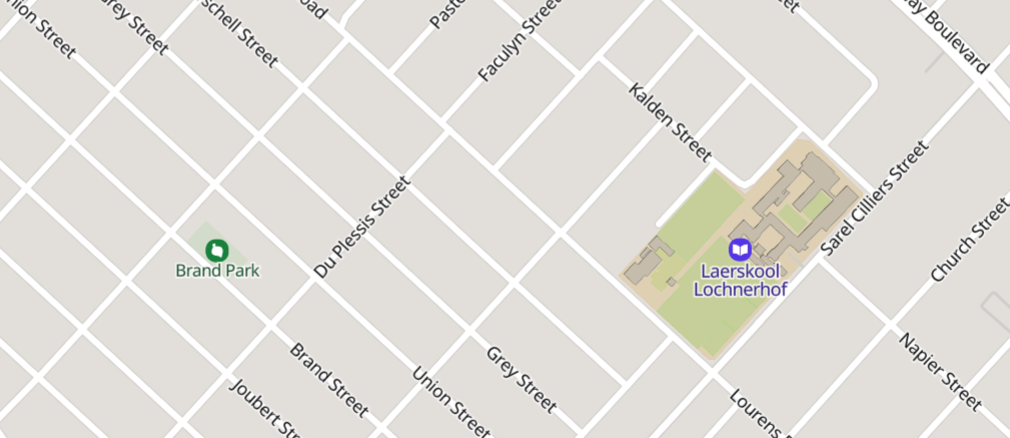
Every child who has ever walked through Lochnerhof’s gates has said the name without thinking about where it came from. It wasn’t invented for the school. The land carried the name long before the first pupil arrived in 1956, back when it was still farmland known as the Lochnerhof estate.
Who exactly the “Lochner” behind that name was is still an open question, and it’s worth admitting that honestly rather than forcing a tidy answer. There was, without doubt, a Lochner family well established in the Helderberg by the late 1800s. Johann Georg Lochner, born around 1740 in Grünstadt in Germany, arrived at the Cape in 1765 aboard the Noord Nieuwland, working first for the Dutch East India Company before becoming a wagon driver and farmer. His descendants put down roots in the Western Cape, and one of them, Johannes Tobias Albertus Lochner, born in 1857, married Helena Johanna Francina van der Westhuizen and raised fourteen children before his death in Somerset West in 1935.
Whether it was this Lochner, or another branch of the family entirely, who owned the particular farm that gave Lochnerhof its name hasn’t been confirmed by any single document found so far. That’s a real gap, and rather than paper over it, it’s worth leaving as an invitation. Somewhere in a deed of transfer or a subdivision plan, the answer to which Lochner it was is probably still sitting, waiting for someone with the patience to go looking.
What is beautifully confirmed, though, is a link between this family and the very schools this whole story has been circling. One of Johannes and Helena’s daughters was Helena J. F. Lochner, born in 1892, who grew up in Somerset West and trained as a teacher. She spent twenty-four years as a kindergarten teacher right here in Strand, and along the way became one of the founders of Afrikaans children’s literature, eventually publishing more than sixty illustrated storybooks. And in a detail almost too neat to invent, it was Helena Lochner who designed Hendrik Louw’s very first school badge, before it was later redesigned by the well-known cartoonist T. O. Honiball.
So the thread runs, however loosely, from an old Helderberg farming family through a pioneering children’s author and teacher, into the badge on a Strand schoolchild’s blazer, and eventually into the name of the school that would one day open its doors under Karl Kielblock in July 1956. By the time Lochnerhof’s own founding story begins, the land had already carried a story of its own for generations.
There’s a further layer worth a gentler mention. The school building itself had earlier been the Methodist Church School, and the Methodist congregation it served had originally been racially mixed, before segregation and the Group Areas Act pushed the coloured congregation out. It’s not the centre of this story, but it belongs in it, quietly, the way so much of Strand’s history sits just beneath the surface of a name everyone uses without a second thought.
Between You and Me:
Hansie Schoeman knew every single child at Lochnerhof by name and surname, and I was one of those children in 1969. It’s strange to think now that the name over the school gate had already outlived a farm, a family, and at least one remarkable woman’s career before I ever walked through it. I never knew any of that as a boy. I doubt most of us did.
Historian – Harmen Bockelenberg
Next week: the schools born because the Helderberg kept growing and the children who walked into a former Methodist church one Thursday morning and called it a new beginning.



Be the first to comment