

STORY 85
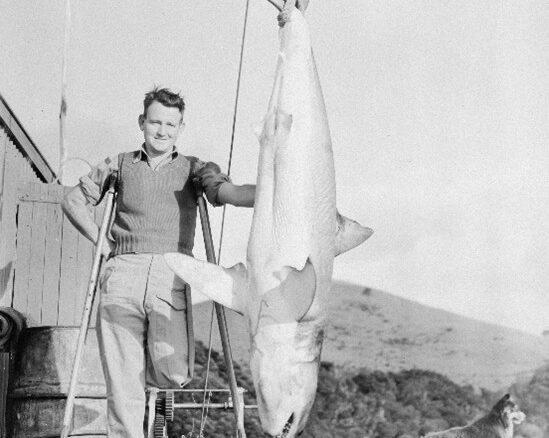
For most of recorded history, the great white sharks of False Bay were a secret that only fishermen and divers and the occasional terrified swimmer kept. They were there had always been there in the cold, food-rich waters at the meeting of two oceans, feeding on the seals that colonised every suitable rock along the Cape Peninsula. They were large. They were numerous. They were, by the standards of what was understood about sharks in the twentieth century, terrifying and unknowable.
And then, in the 1990s and 2000s, False Bay became famous.
Seal Island a small, rocky outcrop in the middle of False Bay, about a kilometer in circumference, home to roughly 64,000 Cape fur seals is the reason. Great white sharks had discovered it long before any human put a camera in the water. The seals are fat and plentiful and seasonally predictable in their behaviour. The sharks learned the patterns. They approach from deep water beneath the island, accelerating upward toward the surface at tremendous speed, taking the seals in a high-speed strike that can launch both predator and prey clear of the water.
This behaviour spectacular, explosive, unrepeatable on demand is called breaching. And when wildlife filmmakers and marine biologists began documenting it in False Bay in the 1990s, the footage went around the world.
The BBC filmed it for their wildlife series. National Geographic filmed it. Discovery Channel made it the centrepiece of their annual Shark Week programming, returning season after season to the same small island in False Bay to capture the same extraordinary behaviour. Seal Island, False Bay, became one of the most filmed wildlife locations on earth. A rocky outcrop in a South African bay that most of the world had never heard of became synonymous with one of nature’s most dramatic spectacles.
The research that followed was equally significant. Scientists from the Save Our Seas Foundation, the South African Shark Conservancy and international institutions set up long-term studies in False Bay. Individual sharks were identified by their dorsal fins each fin a unique silhouette, as individual as a fingerprint. Sharks were tagged. Their movements were tracked. Population estimates were attempted. The science produced from False Bay’s great white sharks in the first two decades of the twenty-first century was among the most important shark research undertaken anywhere in the world.
What it revealed was complicated. The sharks of False Bay were not the mindless killing machines that the popular imagination demanded. They were complex animals with individual behaviour patterns, social hierarchies and extraordinary navigational abilities. Some individuals were documented travelling thousands of kilometers to the Mozambique Channel, to Australia before returning to False Bay. The bay was home or something like it.
Cape Town became, in those years, the great white shark capital of the world. Cage diving operations launched from Simon’s Town and Gansbaai Gansbaai, on the other side of Cape Hangklip, was the commercial center of the cage-diving industry, but the False Bay population was the research population, the one the scientists worked with. Tourists came from Japan, Germany, the United States, Australia, specifically to float in a cage in False Bay while a five-meter shark investigated the bait line a meter from their face.
And then, in 2017, things changed.
Two orca killer whales entered False Bay. Within days, great white sharks began disappearing from the bay. The pattern repeated. When the orca a pair known to researchers as Port and Starboard, identifiable by their distinctive collapsed dorsal fins were detected in the bay, the great whites vanished. Sometimes for days. Sometimes for months. The sharks that had made False Bay famous simply left when the orca arrived.
The impact on the cage-diving industry was immediate and severe. The impact on the marine ecosystem was complex and still being studied. Great white shark sightings in False Bay fell dramatically between 2017 and the early 2020s. Researchers debated whether the population had relocated, whether it was temporarily displaced or whether something more fundamental had shifted in the ecology of the bay.
The sharks have not entirely gone. They still come. The research continues. But the reliable, predictable, spectacular breaching at Seal Island the behaviour that made False Bay famous became less reliable, less predictable and less spectacular than it once was.
False Bay has been hosting great white sharks since before any human being sailed its waters. It will host them long after the last cage-diving boat ties up for the final time. The bay is patient about these things.
Between You and Me:
Two orca arrived in False Bay in 2017 and the great white sharks, which had survived everything else this bay could throw at them for millions of years, simply left. Not gradually. Within days. An entire population of apex predators, the subject of years of international research and television documentaries, departed because two other animals showed up. I find this a useful corrective to how we usually think about top of the food chain. There is always something else. The sharks were the top of the food chain right up until they weren’t and the bay did not pause to acknowledge the transition. It just continued, the way the bay always does, indifferent to who currently holds the title.
Historian – Harmen Bockelenberg
Next week: men of the sea the maritime legends of False Bay, from a shark-fishing schoolteacher to the sailor who turned back to save a friend.


Be the first to comment