

STORY 79
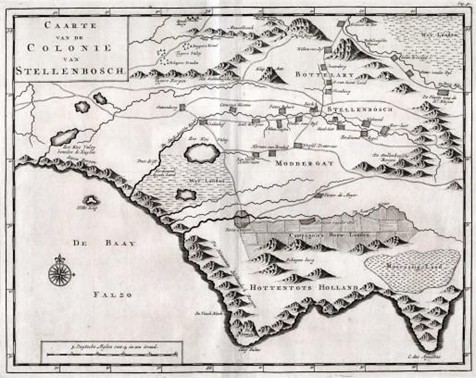
Before Somerset West existed, before there was a church, a village or a name, there was Vergelegen. In 1700 Willem Adriaan van der Stel, then governor of the Cape, was granted a vast tract of land in the Hottentots Holland valley and built there on a scale nobody in the young colony had attempted before, vineyards orchards, cattle stations, irrigation channels and a homestead that still stands today. It didn’t last. Van der Stel’s empire building drew accusations of corruption and in 1706 he was recalled to the Netherlands in disgrace. Three years later, in 1709, the authorities broke Vergelegen apart and sold it off in four pieces: Vergelegen itself, Lourensford, Morgenster and a fourth farm called Cloetenburg.
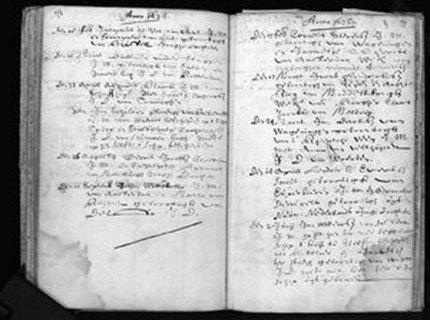
The school’s history says that Catherine Cloete acquired the Cloetenburg portion in 1720 and that the farm was named after her. The genealogical and architectural sources give us a slightly more complicated version. She appears in the records as Catharina Harmans / Catharina Lodewijcks, widow of Gerrit Cloete.
That fourth farm is where our story settles. In 1720 a woman named Catherine Cloete bought the Cloetenburg portion and gave it her name, a name that survives on the property to this day even though ownership moved on from her family fairly quickly. Some of the earlier detail around exactly when and how she acquired it is genuinely uncertain, one record has her dying in Stellenbosch in 1715, which sits awkwardly against the commonly repeated 1720 purchase date, so the safest way to put it is that Cloetenburg emerged from Vergelegen’s division in the early 1700s and became associated with her, rather than insisting on an exact transaction date nobody has fully nailed down yet.
What followed was a long procession of Cape farming families. The Malans held Cloetenburg through much of the 1700s, Jacques Malan from 1724, then Daniel Malan from 1732, a substantial farmer whose 1731 tax return listed 20 000 vines, fifty cattle, 350 sheep and thirteen enslaved people, a number that had grown to thirty eight by 1757. That’s an uncomfortable fact, but an honest history of this land has to include it. Cloetenburg wasn’t only a picturesque old homestead. It was part of the same economy that built the whole Cape wine and wheat industry on forced labour and that shouldn’t quietly disappear from the story just because the gables are beautiful.
By 1829 the farm had passed into the Morkel family, beginning with Daniel Johannes Morkel and it stayed largely in Morkel hands through the middle of the century. It was during this period that the old Dutch name Cloetenburg gradually gave way in common use to a new, more English-sounding one, Oatlands, part of a wider trend at the Cape as English influence grew through the 1800s. Pieter Gerhard Jacobus Morkel owned Oatlands from 1868 to 1903 and, in a detail that ties the farm directly into the town’s own civic story, served as Somerset West’s second mayor.
Because somewhere in the early 1800s, the farm and the town had already begun to merge. Local farmers gave up a portion of Cloetenburg’s land for a church, building began around 1818 and the church was dedicated in 1821. The village of Somerset West was formally laid out the following year, named for the Cape’s governor Lord Charles Somerset, with “West” added later to keep it apart from Somerset East on the other side of the colony. The town, in other words, grew directly out of Cloetenburg’s own ground. As Somerset West expanded through the nineteenth and into the twentieth century, roads and houses and businesses steadily swallowed the old farm, until what remained of Oatlands was only the historic homestead itself and its immediate grounds. By 1940 the surrounding farmland had already been absorbed entirely into the growing town.
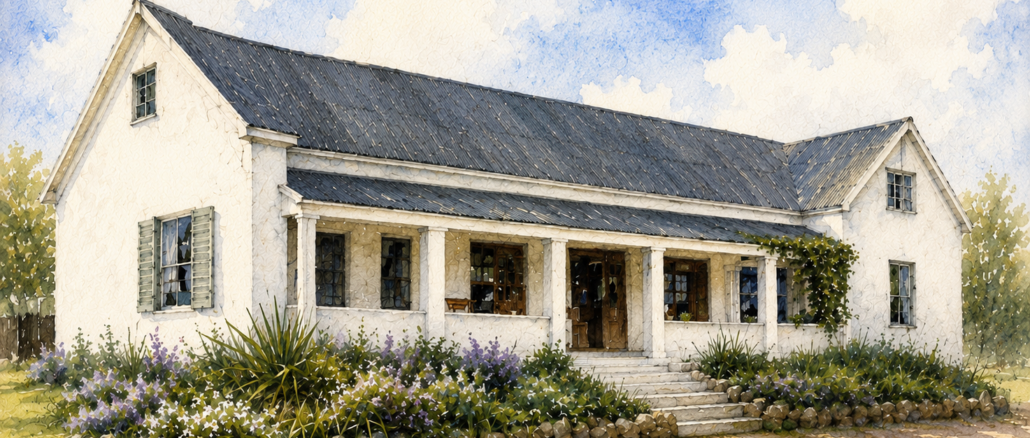
The old homestead didn’t vanish, though. At some point in the early twentieth century it became known as the Oatlands Guest House, though exactly when that began and who ran it hasn’t yet turned up in any record found so far, a genuine gap still waiting for someone to go looking through old newspapers and municipal directories. What is certain is what came next. In 1950 the guest house closed its doors as a place for travellers and reopened as a school. More than two centuries after Catherine Cloete first gave the farm her name, children began walking through its old werf every morning instead of guests arriving with their luggage. The land that gave Somerset West its beginning had found one more purpose to serve.
The ownership story what we can establish
Here is the most defensible version I’ve been able to reconstruct:
| Period | Person / owner | What we know |
| 1700–1709 | Willem Adriaan van der Stel | Original Vergelegen estate |
| 1709 onward | — | Vergelegen divided into four farms |
| early 1700s | Catharina Harmans / Cloete | Associated with the Cloetenburg portion; farm takes Cloete name |
| 1724 | Jacques Malan | Acquires part of Cloetenburg |
| 1732 | Daniel Malan | Acquires Cloetenburg from Claas Louw |
| 1756 | Daniel Wynand Malan | Cloetenburg transferred to him |
| late 18th/early 19th c. | Malan/Morkel succession | Further transfers require title-deed verification |
| 1829 | Daniel Johannes Morkel | Morkel ownership established |
| 1840s–50s | Morkel family | Further transfers within Morkel family |
| 1868–1903 | Pieter Gerhard Jacobus Morkel | Owner of Oatlands; second mayor of Somerset West |
| early 20th c. | — | Remaining farm absorbed into expanding Somerset West |
| before 1950 | — | Historic homestead becomes Oatlands Guest House |
| 1948 | Haydocks | Somerset House School founded elsewhere |
| 1950 | Somerset House | Moves into Cloetenburg/Oatlands homestead |
The Morkel family history explains that during the 19th century several old Dutch farm names were replaced by more English-sounding names.
Among them:
Cloetenburg → Oatlands
Voorburg → Bridgewater/Broadlands
Morgenster → Morning Star
The Morkel historian explicitly comments that the replacement of names such as Cloetenburg reflected changing public sentiment during the period when English influence at the Cape was increasing.
Between You and Me: I have no personal memory to offer here, no family connection to Cloetenburg or the old Oatlands name and I’d rather say so plainly than invent one. What strikes me most, going through this history, is how much of Somerset West’s own shape was decided centuries before anyone alive today was born, by a governor’s downfall, a widow’s purchase and a church built on borrowed land. If any reader remembers Oatlands as a guest house or has family stories touching this farm before it became a school, that gap in the record is exactly the kind of thing worth writing in.
Historian – Harmen Bockelenberg
Next week: Cloetenburg’s old walls have one more life left to live. Next week we follow the farm from Oatlands Guest House into its final transformation and meet the Haydocks, the Rickards and a headmaster who once lay down in the middle of Drama Street to prove a point.


Be the first to comment