

STORY 78
A town that grows fast loses its old buildings faster. Somerset West grew fast. It grew in the 1920s, grew again after World War Two, grew enormously from the 1990s onward. And with every wave of growth came the gentle attrition of demolition a Victorian house cleared for a car park, a Cape Dutch outbuilding removed to extend a driveway, a nineteenth-century merchant’s home converted past recognition and then finally knocked down when conversion was no longer economical.
What remains is remarkable not because there is so much of it, but because it survived at all.
The oldest built fabric in the Somerset West area is concentrated around the original VOC-era farms Vergelegen, Lourensford, Morgenster all of which retain buildings or foundations from the eighteenth century. Vergelegen’s original manor house, built for Willem Adriaan van der Stel around 1700 and then partially demolished on government orders after his recall, was reconstructed and remains the centrepiece of that estate. The camphor trees Van der Stel planted, five of them, still standing, now declared national monuments are themselves a form of architecture. They have been growing in that courtyard for more than three hundred years.
But Vergelegen is a wine estate with its own story and its own resources to maintain its heritage. The question is what survives in the town itself.
Cloetenburg is one answer. The Cloete family, one of the founding Afrikaner farming dynasties of the Cape, built a homestead in the Somerset West valley in the eighteenth century. The farm passed through many hands and the land around it was subdivided as the town grew. But the core structure, Cape Dutch gable, whitewashed walls, the proportions that every Cape vernacular architect was trained to admire, survived into the modern era, battered, altered, but recognisable.
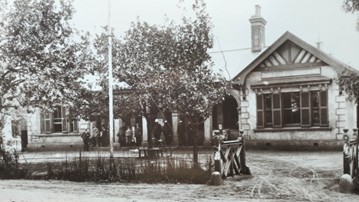
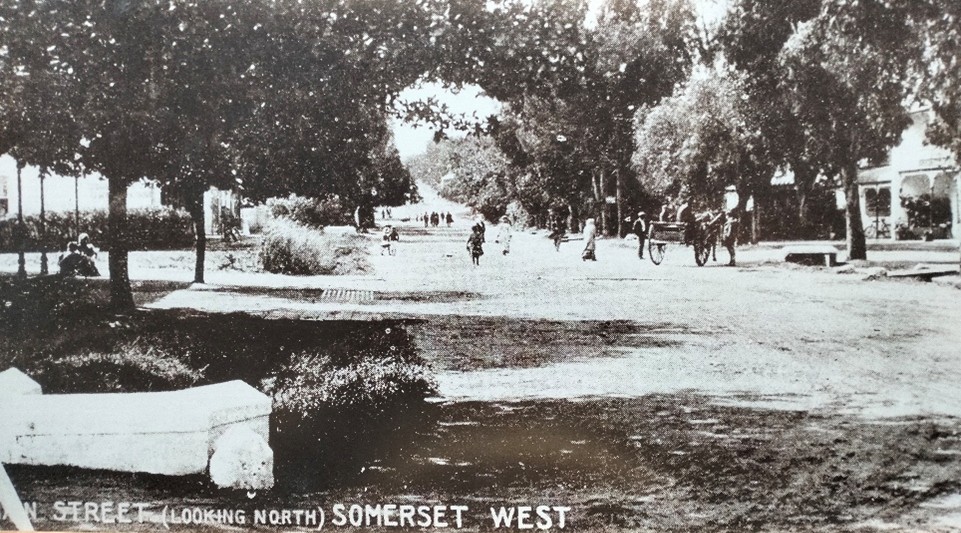
The Dutch Reformed Church, built around 1819 to 1820, in Somerset West deserves its own meditation. The congregation was established in 1819, when Somerset West was still a new parish carved out of the Stellenbosch mother church. The church building that served the congregation for most of the nineteenth century stood in what became the central square of the town. The square itself, what residents still informally call Predikant Square, from the Dutch word for minister, remained the social heart of the older town long after the commercial centre shifted elsewhere. The architecture around it, some of it dating from the Victorian era, represents the densest concentration of pre-twentieth-century building fabric left in Somerset West.
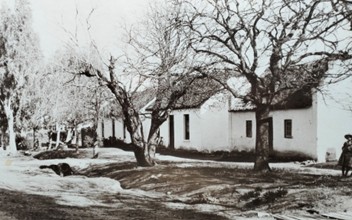
The old buildings that survive in and around Predikant Square repay attention. The scale is human. The materials are honest, local brick, plaster, timber window frames, corrugated iron roofs added later and not entirely disgracing the buildings beneath them. These are not grand buildings. They were built by a modest farming community for practical purposes. Their modesty is part of what they say about the town that built them.
The problem with heritage buildings in a growing town is always the same. They are expensive to maintain. They are not efficiently laid out for modern use. Insurance is complicated. Building regulations designed for new construction sit awkwardly with old fabric. Owners who would prefer to keep them often cannot afford to. Owners who could afford to keep them often prefer to demolish.
Somerset West has lost more than it has kept. But what it has kept still tells the story of the valley, of the Afrikaner farming families who settled it, of the British colonial administration that shaped its civic institutions, of the congregation that argued about the railway and the road and the boundary of the municipality in the vestry of a church that is still standing.
Walk slowly through the old part of Somerset West sometime. The buildings are not labelled. Most visitors do not know what they are looking at. But they are looking at three centuries of one community’s attempt to make a permanent life in a beautiful valley at the edge of Africa.
Between You and Me:
Predikant Square. I have walked through it more times than I could count and for most of those times I did not know it had a name, informal or otherwise or that the buildings around it represented the densest surviving concentration of old Somerset West. It looked, to me, like the bit of town near the church where parking was sometimes difficult. This is, I suspect, how most heritage actually functions in a living town, not as a curated experience but as the unremarked backdrop to a parking problem. The buildings do not announce their age. They simply continue standing while everything around them gets replaced and eventually someone writes a book and points out what was there all along.
Historian – Harmen Bockelenberg
Next week: The old farm didn’t stay a farm forever. Next week we follow Cloetenburg’s homestead through its guest-house years and into its final transformation, the moment three centuries of Helderberg land became a school.

Be the first to comment