
STORY 71
We began this book at Vergelegen. A corrupt governor. A land grab. Half a million vines planted with slave labour on the slopes of the Helderberg in 1700. A scandal that ended in court, a carve-up that created four farms and five camphor trees planted in the year that Somerset West did not yet exist.
It is time to go back.
In 1987, Anglo American Farms Limited AmFarms bought Vergelegen from Tom Barlow, whose father Charles Barlow had owned it since 1941, the year after Lady Florence Phillips died. The Phillips family had owned Vergelegen since 1917, when Sir Lionel Phillips, a Randlord who had made his fortune on the diamond fields of Kimberley and the gold mines of the Witwatersrand, bought the estate as a gift for his wife Florence.
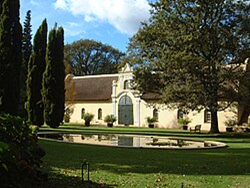
Lady Florence Phillips had created the magnificent gardens and restored the Cape Dutch homestead from near ruin. But she had also done something that, in retrospect, seems extraordinary, she removed the last remaining vineyards. By the time Anglo American bought the property in 1987, no grapes were being cultivated on the farm that had once held half a million vines. The estate that Willem Adriaan van der Stel had built as a wine operation had not produced a grape in decades.
Anglo American invested extensively in viticulture and in restoring the estate’s historic core. The vineyards were re-established following intensive climatic and soil tests. A detailed master plan was drawn up, two years of analysis before a single vine was planted. In 1992, an impressive multilevel, sunken hilltop gravity-flow winery was built and opened by Baron Eric de Rothschild, owner of Château Lafite in Bordeaux. The owner of one of the world’s most celebrated wine estates came to Somerset West to open a winery on a farm that had been built by a disgraced Dutch governor 292 years earlier. History has a particular sense of occasion.
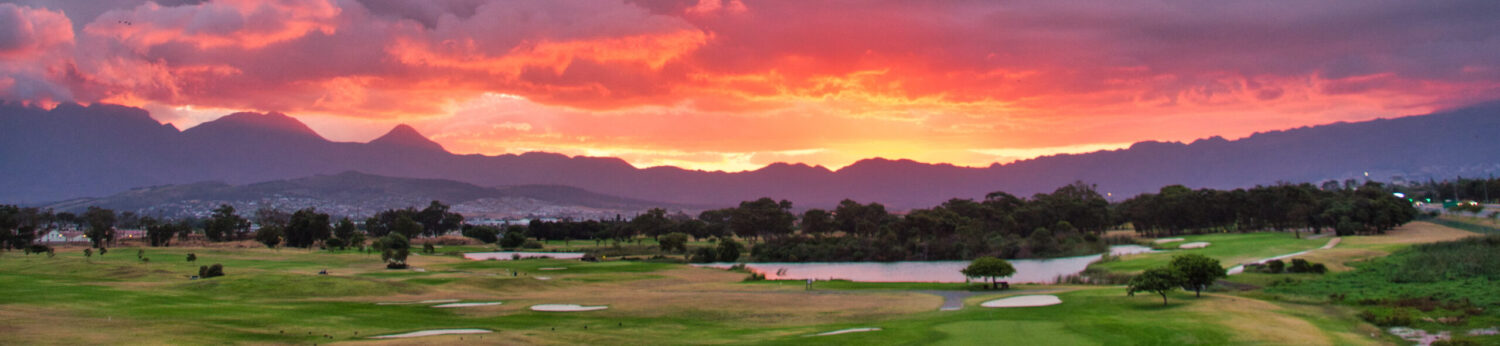
As early as 1992 Vergelegen produced its first award-winning wines in over a century. Within a decade the estate was competing at the highest levels of international wine. Today Vergelegen competes with the top wines of the world, with 3,000 hectares of estate and 133 hectares under vine, planted primarily to Bordeaux red varieties plus Sauvignon Blanc, Chardonnay and Semillon.
But there is a chapter of Vergelegen’s modern story that most visitors walking through the gardens do not know. And it is the most remarkable chapter of all.
In April 1990, just weeks after Nelson Mandela walked out of Victor Verster Prison on 11 February after 27 years, the ANC needed a venue for their first caucus meeting since being unbanned. They needed to prepare for their first formal negotiations with the government. Most of the senior ANC members had only been in the country for days, returned from decades of exile. And they needed a venue that was secure.
They were struggling to find a venue that was not potentially bugged, said Don Tooth, managing director of the estate. The ANC approached Anglo American, which had bought Vergelegen three years earlier. The property was still very bare, with stripped walls, which meant it was easy to clear of any sort of bugging or rigging.
On 29 April 1990, the first meeting of the ANC caucus took place at Vergelegen. Nelson Mandela was there, attending his first significant political meeting since his imprisonment on Robben Island. Thabo Mbeki was there. Trevor Manuel. Joe Slovo. Steve Tshwete. Joe Nhlanhla. They sat on plastic chairs on the stoep of the old homestead, the same stoep, the same Cape Dutch homestead, that Willem Adriaan van der Stel had built 290 years earlier with slave labour and company money.
Think about what that image contains. The men who would govern post-apartheid South Africa, on the stoep of a building constructed by one of colonial South Africa’s most notorious abusers of power. A liberation movement meeting in secret at a wine estate built by forced labour, now owned by a mining giant, to plan the dismantling of the last racially structured government on earth.
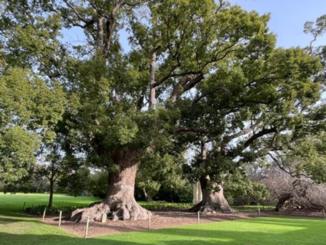
The five camphor trees planted in 1700 were right there. They had seen everything.
A portrait of Mandela taken that day hangs in the estate’s heritage wing. He is standing in front of one of the five camphor trees.
After 1994 the illustrious visitors kept coming. Anglo American hosted a private luncheon for Her Majesty Queen Elizabeth II and Prince Philip during a State visit to South Africa. President Nelson Mandela hosted a State Banquet in honour of United States President Bill Clinton and Hillary Clinton at Vergelegen. Mandela hosted the VIP guests of the 46664 Concert Bono, Annie Lennox, Beyoncé Knowles, The Corrs and Oprah Winfrey among them. The Elton John Cape Town Ball was held there to benefit the Elton John AIDS Foundation.
Bono on the stoep at Vergelegen. Beyoncé at the same table where the ANC planned the transition to democracy. Queen Elizabeth in the gardens that Lady Phillips planted. All of them, at one time or another, under the camphor trees that a corrupt Dutch governor planted in 1700.
Three decades of restoration culminated in Vergelegen being added to the Western Cape’s list of provincial heritage sites. Today the estate welcomes 100,000 annual visitors, offering a unique combination of heritage, environment and hospitality, standing at the forefront of South Africa’s wine renaissance.
One hundred thousand visitors a year. To a farm in Somerset West. On the slopes of the Helderberg. Built by a man who was sent home in disgrace, carved into four pieces in 1709 and reassembled, slowly, piece by piece, century by century, into something that the original governor could never have imagined and probably did not deserve.
Willem Adriaan van der Stel died in the Netherlands in 1733. The five trees he planted are still standing.
The wine is considerably better than anything he produced.
Between You and Me:
Nelson Mandela sat on plastic chairs on the stoep at Vergelegen. This detail has stayed with me since I first read it. Not a state banquet. Not a formal occasion. Plastic chairs on the stoep of a Cape Dutch homestead that Willem Adriaan van der Stel had built with slave labour in 1700, now used for the first caucus meeting of a newly unbanned liberation movement planning the end of apartheid. The camphor trees were right there. They were planted in the year that Somerset West did not yet exist. They will almost certainly still be standing when Somerset West is three hundred years older than it is now. There is something in that continuity, the trees, the stoep, the plastic chairs, the men who sat in them, that says more about this valley than anything I could write.
Historian – Harmen Bockelenberg
Next week: the river that remembers the Lourens floods and what happens when the mountain sends everything down at once.


Be the first to comment