

In October 1990, archaeologists from the University of Cape Town were excavating the site of the old Slave Lodge at Vergelegen when they found a wooden box. It was made from yellowwood. Thirty-six iron nails held it together, ranging in length from eighteen to a hundred and five millimetres. Inside the box were fine pieces of bone.
They had found someone.
Scientific testing confirmed that the remains were those of a female, aged between fifty and fifty-nine years old. Her teeth and the isotopic record in her bones told a more specific story: her diet and dental records indicated that she was from a tropical area, confirming that she had come to Vergelegen as a slave. She had been brought from somewhere far away — from the Mozambique coast, from Madagascar, from the Indonesian archipelago, from one of the many places the VOC sourced its human cargo — and had worked at Vergelegen and had died at Vergelegen and had been buried at Vergelegen in a yellowwood box with iron nails and had been forgotten at Vergelegen for nearly three hundred years.
The estate staff gave her a name. They called her Flora.
A number of personal items were also discovered during the excavation — coins and buttons, small objects that had been buried with her or had found their way into the soil around her over the centuries. The kind of objects that tell you almost nothing and everything simultaneously: that a person existed, that they owned things, that they were a human being with a body and a life and possessions, however modest, however constrained by the conditions of their bondage.
Vergelegen had been built on slave labour. Willem Adriaan van der Stel had brought enslaved people from across the VOC’s trading network to construct his estate, plant his half-million vine stocks, tend his cattle, work his corn mill, maintain his elaborate gardens. When he was recalled to the Netherlands in 1707 and the estate was broken up, the slaves did not leave with him. They stayed — transferred with the land, inherited by new owners, their lives continuing in the same place under different masters. Flora had been one of them or one of their descendants or one of the later arrivals who came to work the land after the van der Stel era had ended.
She had been in the ground for the entire history of Somerset West. She had been there when the Cloete family farmed the land, when the English arrived, when the town was named Somerset, when the railway came, when the motor car came, when the N2 was built across the flats between the estate and the sea. Three centuries of history had proceeded above her in the yellowwood box with the iron nails and she had been part of none of the stories that history chose to record.
For members of staff who had lived in the area for generations, Flora offered a tangible link with the past. They were consulted before her remains were removed and took part in a small ceremony.
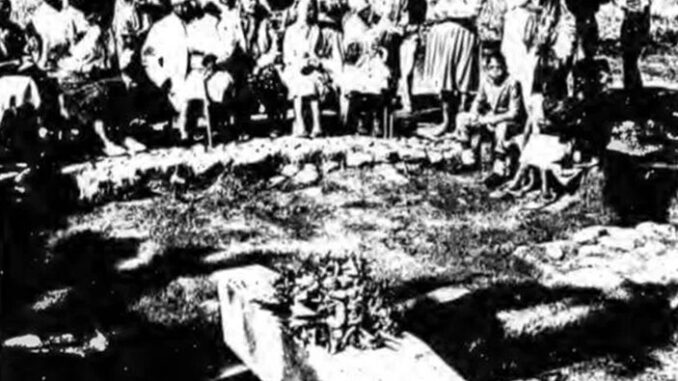
On 6 April 1991 — exactly 339 years after Jan van Riebeeck had landed at the Cape and set in motion the chain of events that would eventually bring enslaved people to Vergelegen — the reburial of Flora took place at Vergelegen Wine Estate. A new coffin had been made. Flower arrangements were delivered. Food was prepared for the day. A lay minister from the estate presided over the funeral. In attendance were around twenty to thirty members of the farmworker community.
Many of those present had lived in the area for generations. Some of them were the descendants, directly or in spirit, of the enslaved people who had built and worked the estate that was now being asked, three centuries late, to acknowledge what it had been built on. Anglo American Farms, which owned Vergelegen, had in recent years arranged to put many elderly retired farmworkers into old-age homes in Macassar, while other farmworkers were offered home ownership in the Strand. The community that gathered for Flora’s reburial was a community that had itself been dispersed. The funeral brought them together.
During and after the ceremony, everyone joined in the traditional funeral hymns as the men of the community gently lowered the coffin into the ground. Leaves and petals were strewn over the coffin before sand was gently shovelled into the grave.
The results of the archaeological work were displayed in Vergelegen’s foyer, making it probably the first location in South Africa to mount a detailed exhibition relating to Cape slavery. The coins and buttons found with Flora’s remains. The iron nails from the yellowwood box. The scientific data that had reconstructed, from bones alone, the outline of a life — a woman in her fifties, from a tropical place, brought here against her will, buried here without ceremony, found here three centuries later and given, finally, the burial she had not received the first time.
Her name was not Flora. Nobody knows what her name was. The name the estate staff gave her is an act of kindness toward an unknown woman — a way of saying that she was a person, that she deserved a name, that the history of this place includes her even though the written record never did.
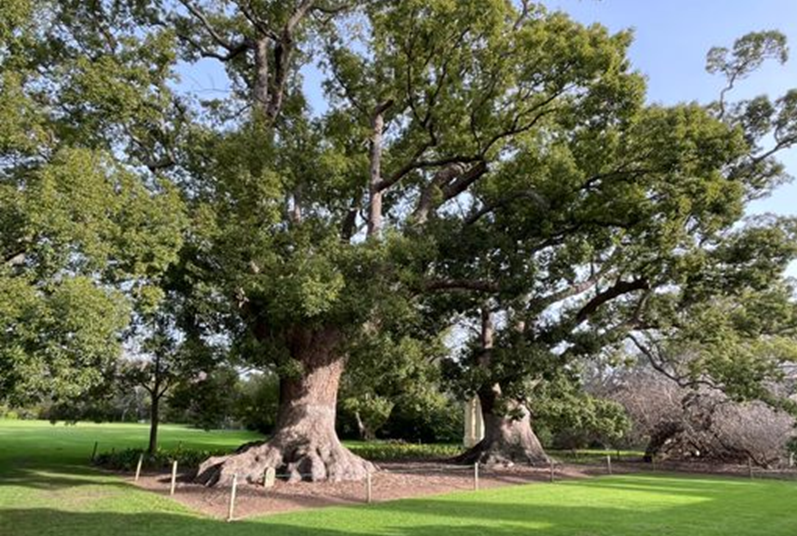
She is still at Vergelegen. She has been there longer than any building on the estate. She was there before the camphor trees that Willem Adriaan van der Stel planted in the courtyard, which are now national monuments themselves.
The trees are celebrated. Flora is remembered now too.
It took three hundred years. But she is remembered.
Between You and Me:
Visiting Vergelegen makes you feel underdressed and historically inadequate simultaneously. The camphor trees, national monuments, alone will do that to you, five trees planted by a disgraced governor, now national monuments, standing in the courtyard like bouncers who have been there since 1700 and have no intention of leaving. The estate spent three centuries being beautiful and celebrated and historically significant and still remembered Flora.
Historian – Harmen Bockelenberg
Next week: the mountain that gives the Helderberg its name — and why the people who named it chose the word for light.

Be the first to comment