
STORY 111
landscape this dramatic was always going to end up on film. The question was never whether. The question was always how, in whose story and what the mountain and the sea would be asked to represent.
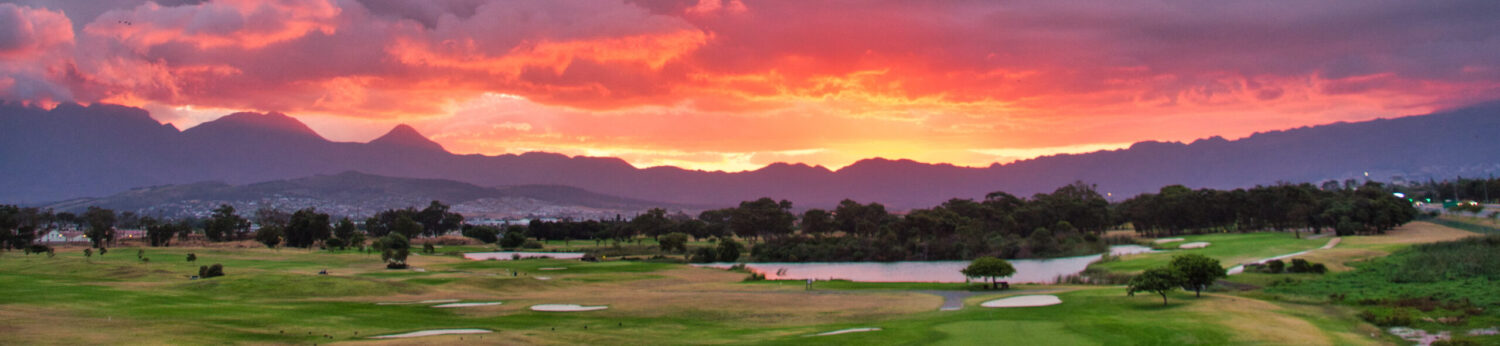
The Western Cape has been one of the world’s great film locations for as long as South African cinema has existed and for as long as international productions have been looking for somewhere that looks like nowhere else. The light, that word again, that light, is the reason. Cape light has a quality that cinematographers recognise immediately. It is sharp without being harsh. It gives depth. It makes the landscape three-dimensional on a two-dimensional screen in a way that the diffuse light of northern Europe or the bleached-out light of the American Southwest, does not. The Western Cape has been used as a stand-in for the Mediterranean, for North Africa, for Spain, for Greece, for parts of the American West, for fictional landscapes that exist only in the imagination of screenwriters.
The Helderberg specifically has appeared in film and television production in roles that range from incidental background to something more deliberate. The wine farms of the Stellenbosch-Helderberg area have been used extensively for period productions that require the visual vocabulary of European estate culture, the Cape Dutch gables, the oak avenues, the vineyards in their seasonal changes, transplanted convincingly into whatever story the production requires. A French château. An Italian estate. A Napa Valley winery in a story that could not afford to film in Napa Valley.
Vergelegen has appeared on screen more than once. The estate’s visual profile, the camphor tree courtyard, the perfectly restored manor house, the formal gardens, is sufficiently iconic that it has become a default setting for productions requiring that particular combination of grandeur and antiquity. It is a location that requires minimal dressing. The history is already visible in the architecture.
The Strand and Gordon’s Bay beaches have been used for coastal scenes that required a beach on the False Bay side of the Cape Peninsula, a specific look, a specific light, a specific relationship between mountain and sea that differs from the Atlantic-facing beaches of Clifton and Camps Bay. The False Bay coast is rougher, less glamorous, more austere. It reads differently on screen. Productions that needed that reading came here.
The film industry’s relationship with the Helderberg has also been economic. A major production filming in the valley generates work, location fees for the farms, accommodation for cast and crew, work for local caterers and transport companies and electricians and drivers and all the supporting infrastructure that a film production requires. The Cape Town film industry, which grew dramatically in the 2000s and 2010s into one of the most active production hubs in the southern hemisphere, distributed that economic activity widely across the Western Cape and the Helderberg received its share.
South African films set in the Cape wine industry and there have been several, at varying levels of quality and ambition, almost inevitably used Helderberg and Stellenbosch locations. The farms look like what they are. The light is generous. The mountain provides a backdrop that no production designer could build and no budget could replicate.
What is interesting and what is worth sitting with for a moment, is what the Helderberg has almost never been asked to represent on screen. Its own history. The history that is actually here, the Khoikhoi, the VOC, the slaves, the Huguenots, the great floods, the shipwrecks, the apartheid-era separation of communities that lived a kilometre apart and lived in entirely different worlds. That history is extraordinarily cinematic. It is dense with drama and conflict and landscape and character. It has barely been told.
The mountain has been used as a backdrop for other people’s stories. Its own story is still waiting.
Between You and Me:
The mountain has been used as a backdrop for other people’s stories. Its own story is still waiting. I wrote that line near the end of researching this book and it has stayed with me more than almost anything else I have written, because it is true in a way that extends well beyond film. The Helderberg’s landscape has been photographed, filmed, painted and marketed for three centuries, almost always in service of someone else’s narrative. A French château. A Napa Valley stand-in. A beautiful backdrop for a wedding, a wine label, a property listing. The actual story of this valley, the one this book has tried to tell, has rarely been the subject of anything. I do not know if this book changes that in any meaningful way. But it is, at least, an attempt to let the mountain be the subject for once, rather than the scenery.
Historian – Harmen Bockelenberg
Next week: Those we owe the Helderberg builders not pertinently registered as such but not forgotten.

Be the first to comment