

STORY 82
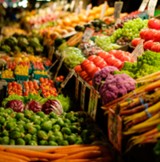
There is a particular kind of Saturday morning that has become characteristic of the Helderberg. You wake up. The mountain is out. The south-easter has blown itself clean overnight. By nine o’clock, the Lourensford road is backed up past the N2 off-ramp with families in SUVs, couples with reusable shopping bags and people walking purposefully with insulated coffee cups. The market is on.
The Lourensford Craft Market running every Saturday on the grounds of the historic Lourensford Estate became one of the defining social institutions of the new Helderberg. It is not unique to Somerset West. Markets of this kind appeared all over the Western Cape in the 2000s and 2010s, part of a broader shift in how middle-class South Africans spent their weekends. But Lourensford grew into something particularly significant, partly because of its setting, partly because of its scale and partly because Somerset West was ready for it.
Somerset West had always been a prosperous town. But for most of the twentieth century, its prosperity was quiet and residential a retirement destination, a dormitory suburb of Cape Town, a place where people had gardens and drove to Stellenbosch when they wanted culture. The commercial centre was modest. The social life was built around churches, sports clubs and dinner parties in private homes. The mountain was beautiful. The weather was good. That was enough.
The post-1994 boom changed the demographic profile of the town. Young families arrived from Cape Town, Johannesburg and overseas drawn by house prices that were still reasonable relative to the city, by schools that were good, by a quality of life that felt genuinely different from the urban grind. The Helderberg became what estate agents began calling a lifestyle destination. That phrase gets used loosely. But in this case, it was accurate. People were not just buying homes. They were buying a way of living.
Somerset Mall was already part of that story. Opening in 1990, it was one of the first large regional shopping centres in the southern suburbs of Cape Town anchoring the town’s retail identity and drawing shoppers from Strand, Gordon’s Bay and the surrounding farming communities. The Mall grew with the town, expanded and renovated in step with the population. It brought national retail chains and a cinema and a food court. It made Somerset West self-sufficient in ways it had never been before you no longer had to drive to Stellenbosch or Cape Town for anything.
But the market offered something the mall could not. The market was particular. Every stall was somebody’s livelihood and somebody’s creative project simultaneously. The sourdough was made by a person you could meet. The olive oil came from a farm you could see from where you were standing. The wooden toys were sanded by a craftsman who was there to explain how he made them. In an economy increasingly mediated by screens and supply chains and anonymous logistics, the market offered the reassurance of directness. You bought from a person. The money went to a person.
This mattered to the community that had grown up around the Helderberg. It was an educated, relatively affluent, environmentally aware community precisely the community that markets of this kind are designed to serve and that in turn sustains them.
The market also did something more quietly important. It brought different parts of the Helderberg community into the same space on a Saturday morning. People who lived in the old residential streets near the mountain. People from the newer developments past the N2. People from the farms. People from further afield. The Helderberg had always been slightly fragmented Somerset West, Strand, Gordon’s Bay are three distinct towns with distinct characters, linked by geography but not always by community. The market was one of the places where a broader Helderberg identity was performed, week after week, on the lawns of a three-hundred-year-old farm.
The old estate looked on. Laurens Campher could not have imagined any of it. But the mountain behind him would have been familiar. And the smell of bread baking and the sound of children and the feeling of a community feeding itself those things are not entirely new.
Between You and Me:
The Lourensford market is a three-hundred-year-old farm on a Saturday morning, full of people buying sourdough from people they can actually talk to. I find something quietly hopeful about this, in a way that I do not entirely want to over-explain, because over-explaining a hopeful thing tends to kill it. The mall is fine. The mall does what malls do. But the market does something else it puts a face on the transaction, it puts the farm back into the food, it reminds a community that has become increasingly mediated by screens and logistics what it feels like to hand someone money directly for something they made with their hands. Laurens Campher planted vines here in 1700 because the land was good. The land is still good. People are still showing up because of it, just differently than he could have imagined.
Historian – Harmen Bockelenberg
Next week: the road to Betty’s Bay a drive through the Kogelberg’s hidden coast, from Hangklip to the penguins at Stony Point.

Be the first to comment