

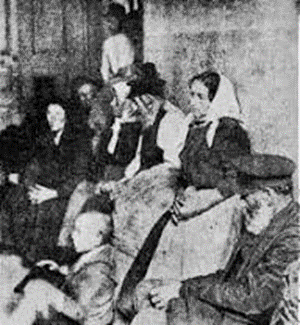
Picture a small town in Lithuania in 1900. Narrow wooden buildings packed close together. A synagogue on the corner. The smell of bread and mud and woodsmoke. A family sitting around a table, talking in Yiddish, in a country that is not really theirs, because Lithuania is part of the Russian Empire and the Russian Empire has made it very clear that Jewish people are not welcome.
Now picture that family standing on a beach in The Strand thirty years later, running a general dealer’s shop, their children in the local school, their name on a business sign in English and Afrikaans.
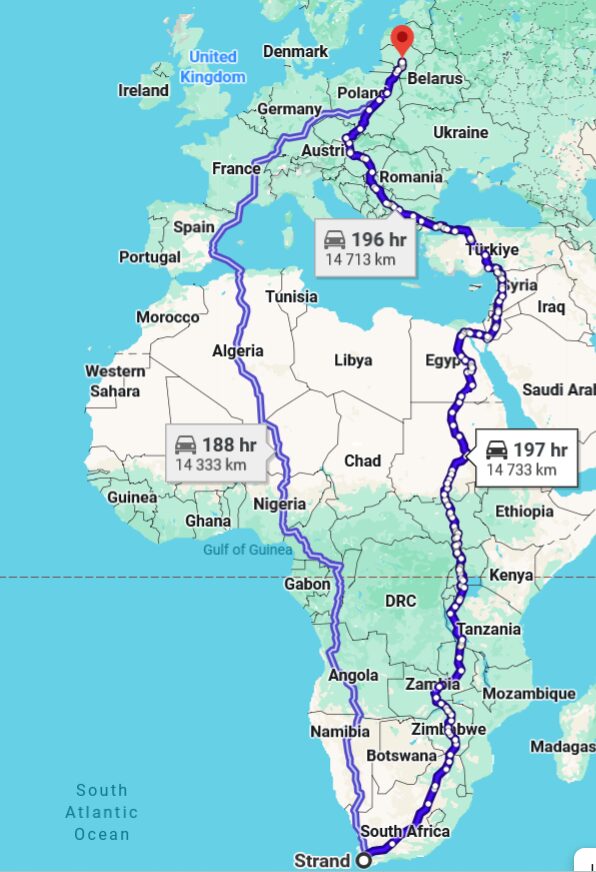
That journey, from a Lithuanian shtetl to a Helderberg beach town, is one of the most remarkable immigration stories in this valley’s history. And most people who live here have never heard it.
They came from the towns and villages of Lithuania, from Kovno, Ponevez, Shavli, Rakishok, Vilna, Grodno and dozens of other small communities. They were escaping pogroms: organised, state-tolerated violence against Jewish communities that swept through the Russian Empire in waves, in 1881, in 1903, in 1905. They were also escaping poverty, compulsory military service and the grinding daily humiliation of a system that regarded them as less than human.
Most of the world’s Lithuanian Jews went to America. A smaller, less well-known wave went south. Between 1880 and 1910, over 40,000 Lithuanian Jews immigrated to South Africa, a movement so significant that some referred to the South African Jewish population as a colony of Lithuania. They were drawn initially by the diamond fields of Kimberley and the gold fields of the Witwatersrand. But many filtered outward from the cities into the smaller towns and villages of the Cape Colony. Into the Helderberg. Into The Strand.
The Somerset Strand Hebrew Congregation was formed in 1902, the same year the Anglo-Boer War ended. The first synagogue was in Michau Street, behind the Marine Hotel. Think about that timing. The Afrikaner community was grieving its war dead and rebuilding its identity. The British colonial administration was trying to consolidate its victory. And on a back street in The Strand, a small group of Jewish immigrants from Lithuania were holding their first services in a rented building, establishing a congregation that would last for decades.
Nochemowitz arrived in 1904 from Kovna. Abe Schulman arrived in 1902 from Dvinsk in Latvia. Benjamin Friedman, who started out as a general dealer in 1904, eventually founded the Friedman and Cohen Department Store, the largest department store in the area. Isaac and Rose Barenblatt opened a cinema in 1918 in the old town hall. In the 1930s the Barenblatt family opened the Empire Rialto Cinema.
General dealers. Department stores. Cinemas. Hotels. Miller’s for men’s and ladies’ fashion, garments altered and adjusted to your particular size rather than the one-size-fits-all approach of the later chain stores. These were the businesses that Lithuanian Jewish families built in The Strand. They came with almost nothing. They spoke Yiddish at home and learned English and Afrikaans at speed. They sent their children to the local schools, joined the Chamber of Commerce, sponsored local sports teams and became, within a generation, so woven into the commercial and social fabric of the town that you could not imagine The Strand without them.
And yet their story is barely recorded. The Huguenots have their monument at Franschhoek. The Voortrekkers have their monument at Pretoria. The Lithuanian Jews of The Strand have a mention in a blog post and some fading photographs in family albums.
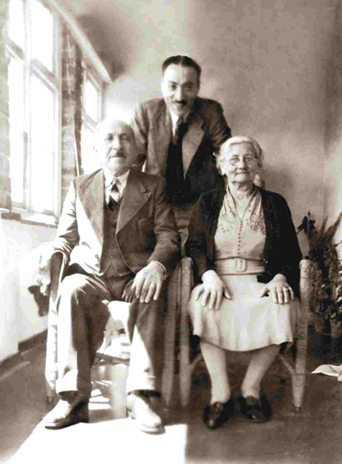
Bernard and Leah Juter settled in The Strand in 1921 after their arrival from Pompian, Lithuania, to South Africa.
As the children of these immigrant families grew up, finished school and built their careers, they moved to Cape Town and its suburbs. In time the older generation followed their children. Hence the absence of a visible Jewish community in the Helderberg today. But they were here. For half a century they were here, baking bread, selling fabric, opening cinemas, attending synagogue, burying their parents in the local cemetery, raising children who spoke Afrikaans with a Yiddish cadence.
I remember having a conversation with Cedric Miller, whose parents Jack and Esther had built Miller’s Outfitters into the institution it became, about what it meant to close the shop. He did not say much about it directly. But I understood that it was not simply a business decision. It was the end of something that his family had built and sustained across three generations, in a town that his parents had chosen when they arrived with very little and decided to stay. That kind of ending does not have a simple name.
The Strand they built is the one we still live in. How it has changed.
Between You and Me:
The Lithuanian Jews arrived in The Strand with almost nothing and built a department store, a cinema, a congregation and a commercial district. The Huguenots arrived at the Cape with almost nothing and built a wine industry, a cultural identity and half the street names in the Western Cape. The pattern is not a coincidence. It is what people do when they have been stripped of almost everything except their skills and their determination to build something new. The Helderberg has been the beneficiary of this pattern more than once. It should probably say so more often than it does.
Historian – Harmen Bockelenberg
Next week: the shipwrecks of False Bay — the vessels that did not make it and the coastline that has been keeping them ever since.

Be the first to comment