
The Anglo-Boer War was fought mostly in the Transvaal and the Orange Free State, hundreds of kilometers north of the Helderberg. The battlefields were at Spion Kop, at Colenso, at Magersfontein. The concentration camps were at Irene, at Bloemfontein, at Norvalspont. Somerset West, The Strand and Gordon’s Bay heard no cannon fire. No commando rode through the Hottentots Holland passes.
And yet the war changed the Helderberg utterly. It just did it quietly, from the inside.
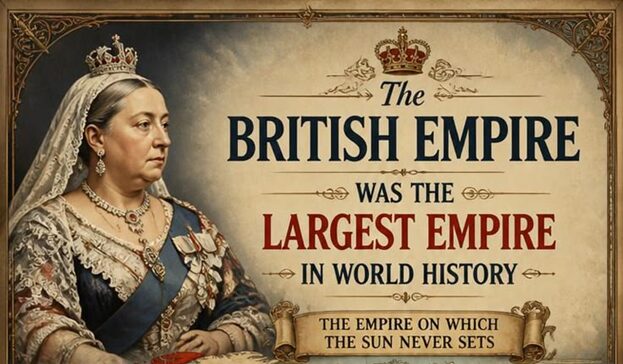
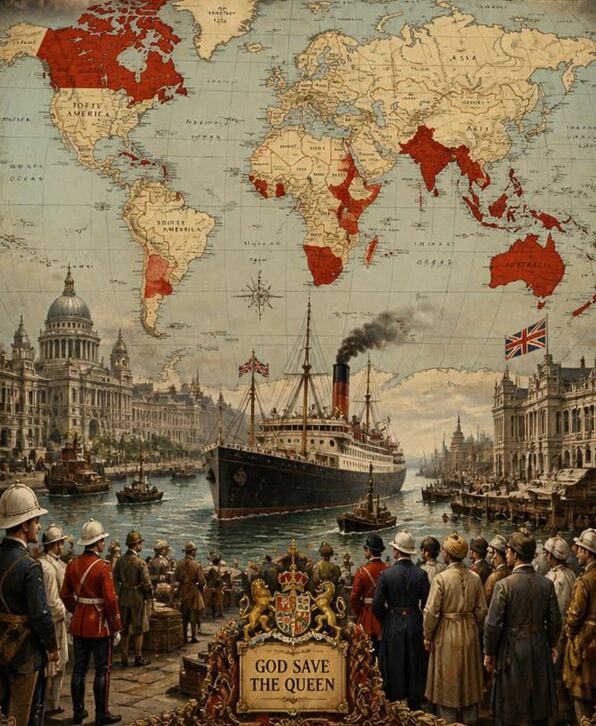
To understand how, you need to understand what the war actually was. It began on 11 October 1899 when the Boer republics, the Transvaal and the Orange Free State, issued an ultimatum to Britain and then invaded the British colonies. At its heart it was a war about gold, about empire, about who would control southern Africa. But for the Afrikaner people of the Western Cape, the descendants of the Dutch settlers, the Huguenots, the free burghers who had farmed this valley for two centuries, it was something far more personal than that. It was a war in which their cousins and brothers were fighting and dying against the British flag under which they themselves lived.
The Western Cape was British territory. Its Afrikaner farmers were technically British subjects. They were not supposed to take sides. Many of them did anyway. In some instances the conflict showed characteristics of a civil war, particularly in the Cape Colony, where some white colonials fought against white Cape rebels. Helderberg families were divided. A man might have a brother riding with a Boer commando in the Free State while he himself supplied provisions to the British garrison.
The brutality of the British scorched-earth campaign shocked people throughout the colony. The figures most widely accepted by modern historians are significant enough to bear repeating here:
Approximately 30,000 Boer farmhouses destroyed, along with hundreds of thousands of livestock killed or confiscated. Around 40 towns and villages partially or completely damaged. Between 115,000 and 117,000 Boer women and children interned in concentration camps, along with approximately 115,000 to 119,000 Black Africans in separate camps. Approximately 28,000 Boer civilians died in the camps, mostly women and children, 80 percent of them children, from malnutrition, disease and in some cases poisoning. At least 14,000 to 20,000 Black Africans died in their camps, though exact numbers remain uncertain.
To appreciate the scale: there were only about 35,000 to 40,000 Boer farming families in the two republics before the war. This means that a very large proportion of the rural population saw their homes destroyed.
These were not numbers in a newspaper for the Afrikaner families of the Helderberg. These were names. These were relatives.
The war ended on 31 May 1902 with the Treaty of Vereeniging. The Boer republics were absorbed into the British Empire. The Boers had lost. But they had not been broken.
What followed was a cultural mobilisation unlike anything the community had seen since the Huguenots lost their language two centuries earlier. Afrikaans, which the British had dismissed as a mere dialect, was fought for, standardised, championed and eventually legislated. The Dutch Reformed Church became a fortress of identity. Afrikaner schools, Afrikaner newspapers, Afrikaner cultural organisations, all of it deliberately constructed to ensure that the people who had lost the war would not lose themselves.
In the Helderberg, this translated into something visible and permanent. The Dutch Reformed congregation in Somerset West, the one south-east of the subway in Victoria Road and already a century old, became an even more central anchor of community life. The language spoken on the farms, in the shops, in the homes along the mountain slopes was defended, consciously and passionately, as something worth fighting for.
The Union of South Africa was established in 1910, bringing the Boer and British colonies together under a single government. Eight years after the war, the enemies sat together in Parliament. Within a generation, an Afrikaner political movement would begin its long march toward power. The Helderberg, sitting quietly between its mountain and its sea, had no idea what was coming.
Animosities between the Afrikaners and the English, the Boere and the Rooinek, continued for many years. Things seem to be patched up now, though. Mostly.
Between You and Me:
The British dismissed Afrikaans as a mere dialect — not a proper language, not worth the dignity of recognition. Within three decades it was the co-official language of a country. There is something instructive in that trajectory for anyone who has ever been told that the thing they value is not quite legitimate enough to defend. The people who said Afrikaans was not a real language were wrong. The people who fought for it were right. The language survived. It is the arguments about what counted as a real language that now seem slightly absurd.
Historian – Harmen Bockelenberg
Next week: from Lithuania to The Strand — the extraordinary immigration story that built half of the Strand’s commercial district and then quietly disappeared from local memory.

Be the first to comment