


Featured image: De Beers or the Dynamite factory (AECI)
Ask anyone who grew up in Somerset West in the 1950s or 1960s what it was like and you will hear a particular kind of nostalgia, warm, unhurried, slightly disbelieving that the world was ever that uncomplicated. Wide streets lined with oaks. The mountain always there behind the town. Children cycling to school. The smell of the Gants factory drifting across on certain mornings. Families coming from Stellenbosch and Paarl for the weekend because the Helderberg was simply the most beautiful place to be.
By the mid-twentieth century, Somerset West had quietly reinvented itself from a small agricultural service town into something altogether more comfortable. Retired civil servants and military officers from Cape Town discovered that you could buy a substantial house with a garden and a mountain view for a fraction of what the same property would cost in Rondebosch or Claremont. Word spread. More retired families followed. The town filled with people who had time, modest means and excellent taste in scenery.
The vehicle registration code tells its own story. CFM. In Somerset West’s irreverent self-mythology, CFM stood not for the administrative district code it officially represented, but for City for Millionaires, a tongue-in-cheek acknowledgement that the town had developed a slightly genteel reputation. Not wealthy, exactly. But comfortable. Respectable. The kind of place where people pruned their roses and argued about the Dutch Reformed Church roster and turned up reliably to the Playhouse Theatre on a Friday night.
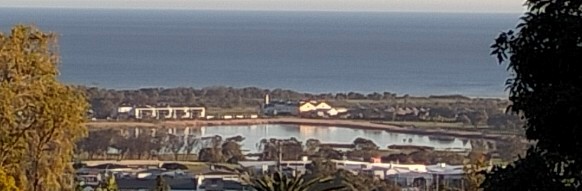
The Strand had its own character, louder, saltier, more working-class in its bones, with the fishing community and the beachfront and the factory workers giving it an energy that Somerset West’s retired colonels never quite managed. Gordon’s Bay was quieter still, tucked behind its mountain, doing what it had always done. Three towns, one valley, one mountain, one bay.
And just down the road from all that comfortable rose-pruning, something rather more dramatic had been happening since 1899. Not that the rose-pruners talked about it much. The factory was the factory. It employed people, it paid wages, it kept the tills of Somerset West ringing quietly through every decade of the twentieth century. It was the economic engine beneath the comfortable surface of the town, reliable, powerful and best not examined too closely on certain mornings when the mountain wind was in the wrong direction.
That story deserves its own chapter.
Between You and Me:
CFM. City for Millionaires. I grew up knowing that this was what it stood for and it was years before I discovered it was actually a vehicle registration district code. The Helderberg’s habit of quietly reinterpreting official designations to suit its own self-image seems entirely consistent with everything else about the place. We live next to a world-class wine route and we call it the Cape Winelands. We live next to a mountain that catches light in a way that geologists describe as the result of sandstone composition and we call it the Helderberg, the clear mountain. The rose-pruners who built CFM’s reputation were not wrong about the scenery. They were just slightly vague about the dynamite factory down the road.
Historian – Harmen Bockelenberg
Next week: the American engineer who arrived with a brief from Cecil Rhodes and accidentally built the economic engine of the Helderberg for a hundred years.


Be the first to comment