

STORY 49
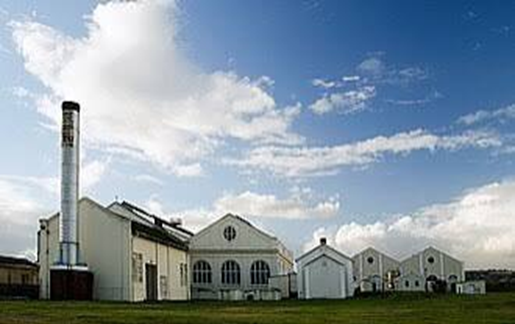
The online record for the June 1962 explosion at the AECI factory in Somerset West is thin. No detailed indexed account exists. This is entirely typical of pre-internet industrial incidents, especially at a facility with the security sensitivity of an explosives factory. What newspapers published at the time would be in the Cape Argus and Die Burger archives, both accessible at the Cape Town Central Library and the National Library. The story survived not in print but in the memories of the people who were there.
And those memories are vivid.
Family members and friends who were attending a film at the Rialto Cinema in Strand, known simply as the bioscope in those days, often spoke about the moment it happened. The old cinema was fitted with heavy, thick curtains that would slowly part at the start of a movie, adding a sense of occasion to the experience. According to those present, the blast wave was so powerful that it swept through the building and lifted the curtains high into the air. For a few moments confusion reigned as people tried to understand what had happened. Rumours spread quickly throughout the town, as they always do in the aftermath of a major incident.
As the story gradually unfolded, it became known that the explosion had originated at the nitroglycerin plant. I have no personal memory of the event itself, having been only a few days old at the time, but the accounts retold over the years left a lasting impression of the scale and force of the blast. Today the crater seems like a natural indent in the overgrown dunes, unremarkable to anyone who does not know what made it.
There were two massive explosions at the Somerset West plant during the 1960s and some workers died. That the loss of life was not greater in each case was due to deliberate design. The factory had been laid out with modular construction, blast walls, earthworks and plantations of trees that directed the force of any explosion upward rather than outward. The trees were not decoration. They were blast deflectors. The town’s rose-pruners and the town’s dynamite manufacturers lived as close neighbours for decades, separated by earthworks, sand dunes and a polite silence on the subject.
The factory continued through the latter decades of the twentieth century, diversifying from dynamite into a broader range of chemical and explosives products as nitroglycerin-based explosives were gradually phased out in favour of safer modern alternatives. The factory was split into commercial and military operations. The commercial side remained AECI. The military side became Somchem. A third division, Vynide, split off to produce seat coverings for vehicles and paints, supplying the Leyland plant in Blackheath among others.
Dynamite production at Somerset West ceased in 1986. In 1995 a sulphur stockpile fire caused serious damage and led to a major legal action by Macassar residents, the community that lived closest to the factory’s eastern boundary and had the least political power to object to what it was enduring. AECI stopped explosives manufacturing at the site entirely in 1998.
The explosions of the 1960s did not destroy the factory. They scarred it and were quietly absorbed into the community’s collective memory as the price of living beside something that powerful. The workers went back the next day. The white wagons kept rolling to Firgrove Station. The roses in Somerset West continued to be pruned. The mountain looked on, as it always does, indifferent to the noise.
Between You and Me:
I was a few days old when the 1962 explosion happened. This means I have no memory of it but a very strong second-hand impression of it, assembled from decades of people telling me what it was like. The curtains in the Rialto Cinema lifting into the air is the detail that has stayed with me most. Not the crater, not the scale, not the nitroglycerin, but the curtains. The domestic scale of that image, the way a movie audience suddenly understood that something enormous had happened outside, through the entirely unexpected behaviour of the cinema curtains, that seems to me to be how history actually arrives for most people. Not in headlines. In curtains lifting.
Historian – Harmen Bockelenberg
Next week: the factory changes names, changes hands and quietly begins working on something considerably more alarming than dynamite.

Be the first to comment