


Not wanting to open old wounds, but it is carved into history and it needs to be mentioned. For those who want to forget it, those who want to cling on it and for those who blame everything else on it. Living through it, normal citizens did not have much of a choice. You obeyed the signs, always, well mostly.
In 1948 the National Party won the South African general election by a narrow margin and a new word entered the national vocabulary. Apartheid. Separateness. The idea that South Africa’s different racial groups should live, work, travel, worship, swim and die in separate places and that the government should use the full force of law to make sure that happened.
Most of what apartheid did to the Helderberg, it did quietly. No bombs, no battles. Just paperwork. Laws. Notices. Fences. And people told to move.
The legal instrument that reshaped the physical map of every South African town was the Group Areas Act of 1950. It divided the country’s urban areas into zones: one for white residents, one for coloured residents, one for Indian residents, one for black residents. If you were living in the wrong zone when the line was drawn, you moved. Not by choice. By law.
What is often overlooked is that the Group Areas Act displaced people of every background. White families were moved out of areas declared for other groups. Coloured families who had lived in mixed neighbourhoods for generations were relocated. Indian communities that had built businesses and mosques and schools in certain areas found themselves told to go elsewhere. The disruption was not limited to one community. It fell on everyone the map decided was in the wrong place.
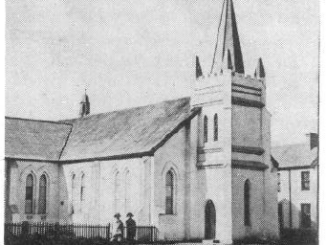
In the Helderberg specifically, Somerset West and The Strand were declared white group areas. During the 1970s, all black, coloured and Asian people were forcibly removed when the towns were classified as white-only areas. Cape Malay descendants who had lived in the area for over a hundred years were also forced to move. They lost their homes, but their mosque still stands today. A community with roots going back to the slave era, to Sheikh Yusuf and the first Muslim settlement at the mouth of the Eerste River, was told to pack up and go.
They went to Macassar. They went to Lwandle. They went wherever the map said they were allowed to be.
There were, however, one or two families who somehow escaped the full force of the racial classifications during that era. Whether through circumstance, official discretion or because they passed the notorious pencil test used by apartheid authorities to determine racial classification, they were permitted to remain in their homes. These families held on to their properties on the outskirts of the Strand, along Aerodrome Road opposite the high school, becoming quiet exceptions to a system that seldom allowed them. There were others in Somerset West as well.
The Helderberg that emerged from those years was tidier on paper than the one that had existed before. Tidier and considerably poorer for what it had lost.
Between You and Me:
The pencil test. For those who do not know: an apartheid official would push a pencil into your hair. If it fell out, you might be classified white or coloured. If it stayed in, you might be classified African. The racial destiny of a person and their entire family, determined by the behaviour of a pencil in their hair. I have thought about this many times and I cannot decide which aspect of it is more disturbing, the cruelty, the absurdity or the fact that it was administered by officials who went home afterwards, ate their supper and presumably slept without difficulty. Systems of injustice do not require monsters. They require ordinary people who have decided not to look too carefully at what they are doing.
Historian – Harmen Bockelenberg
Next week: Lwandle — the township the Helderberg built for men without families and the community that grew there anyway.



Be the first to comment