

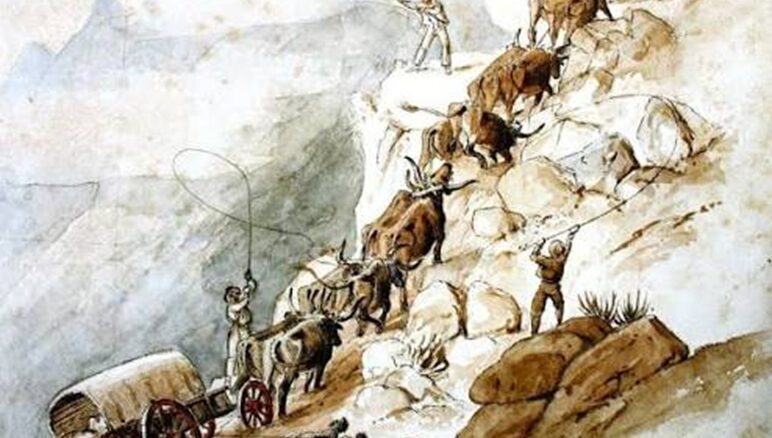
When people think of the Great Trek, they usually picture ox-wagons cresting the Drakensberg, vast open landscapes and the founding of the Boer republics far beyond the reach of the Cape Colony. It is not a story that is immediately associated with the Helderberg. The mountains above Somerset West and the shores of False Bay lay well clear of the routes followed by most Voortrekker parties. No wagon tracks cross the valley. No famous Trek battles were fought beneath the Helderberg’s slopes.
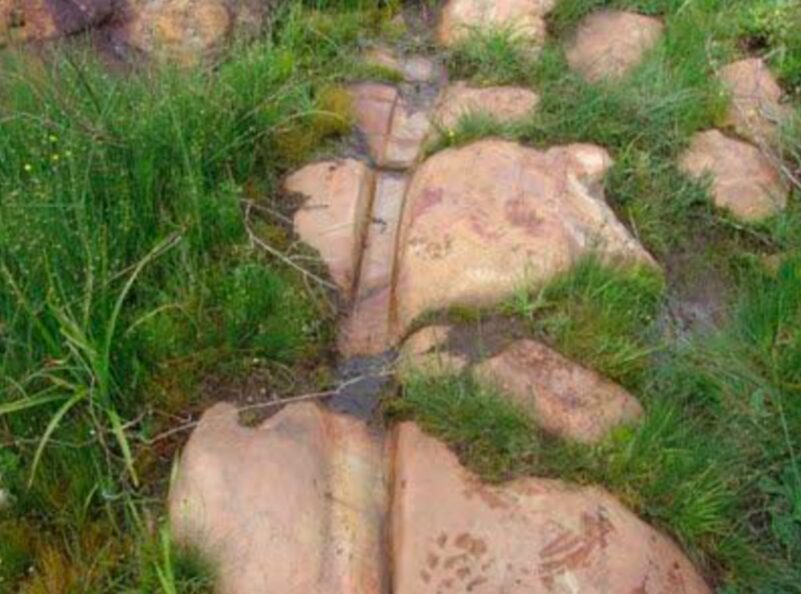
And yet the Great Trek left its mark here, in ways both subtle and lasting.
By the time the first parties began moving out in 1835, the farms of Somerset West, the Lourens River valley and the lower slopes of the Hottentots Holland Mountains had been occupied by settler families for several generations. Many were descendants of the Dutch, German and French Huguenot settlers who had established themselves in the district during the eighteenth century — the same families whose names still appear on the older farms and wine estates of the region today.
When thousands of colonists chose to leave the Cape Colony in protest against British rule, some families from the wider Stellenbosch and Somerset West districts joined the movement. Others stayed behind but kept close ties with relatives who had gone. It was not uncommon for one branch of a family to remain on its Helderberg farm while another sought a future in the Orange Free State, Natal or the Transvaal. The Trek divided families as much as it united a movement.
Those who stayed were not untouched by it. The stories of the Voortrekkers, their hardships, their losses, their determination, became part of the cultural fabric passed from one generation to the next. By the late nineteenth and early twentieth centuries, these stories were taught in schools, commemorated in churches and discussed around family tables throughout the district. The Trek had become more than history. It had become identity.
That identity sharpened considerably after the Anglo-Boer War. Many Helderberg families had relatives who fought in the Boer commandos or endured the suffering of that conflict. The memory of the Great Trek and the republics it had built became intertwined with more recent experiences of war, loss and the long effort to rebuild. As Afrikaner nationalism grew through the early decades of the twentieth century, the Voortrekker story occupied an increasingly central place in the cultural life of the region.
The centenary celebrations of 1938 brought this into vivid focus. Symbolic ox-wagons travelled across South Africa, drawing enormous crowds at every stop. The event generated considerable interest throughout the Cape, including the Helderberg. For many local residents it was experienced as a direct celebration of their own heritage, a moment of collective remembrance that connected the farms and streets of Somerset West to something much larger.
The Great Trek’s legacy in the Helderberg survives not in monuments or battlefields but in family histories, place names, cultural traditions and the memories carried quietly from one generation to the next. The Trek may not have travelled through the Helderberg, but it travelled through the lives of many Helderberg families. In that sense, its reach extended even to the quiet farms and coastal settlements beside False Bay — shaping this corner of the country more deeply than the absence of wagon tracks might suggest.
Between You and Me:
The centenary ox-wagons of 1938 drew enormous crowds across South Africa. People lined the roads for hours to watch them pass. Children were lifted onto shoulders. Grown men wept. It was one of the most effective pieces of cultural mobilisation this country has ever seen — a political movement dressed up as a history lesson and all the more powerful for it. I do not say that to diminish the genuine emotion involved. The history was real. The families who suffered were real. But the men who organised the centenary knew exactly what they were doing. Emotion and history, in the right combination, can move a nation. In 1938, they did.
Historian – Harmen Bockelenberg
Next week: the war that changed everything — how the Anglo-Boer War came to the Helderberg without firing a single shot in the valley.

Be the first to comment