

Drive along the N2 from Cape Town toward Somerset West and you will pass a sign on the left that reads Macassar. Most people barely notice it, a suburb, a beach, a place you pass on the way to somewhere else. But that name carries more history in its four syllables than almost any other place name in the Helderberg.
Macassar is not an Afrikaans name. It is not Dutch. It is not French or English or Khoikhoi. It is the name of a city on the island of Sulawesi in what is now Indonesia, a city called Makassar, more than 9,000 kilometres from where you are sitting right now. And it is there because the Dutch Empire stretched from the Cape of Good Hope all the way to the East Indies and because the people it moved, forcibly, brutally, across those enormous distances, left their names on the land where they were taken.
On 2 April 1694, Sheikh Yusuf, together with 49 other Muslim exiles from the East Indies, arrived at the Cape aboard the ship de Voetboeg. Sheikh Yusuf, his family and followers were sent to the farm Zandvliet at the mouth of the Eerste River, deliberately placed far outside Cape Town to prevent his influence on the Islamic slave population.
That farm at the mouth of the Eerste River. The same Eerste River that runs through Stellenbosch and past Vergenoegd, the farm where your author’s grandmother grew up, a few kilometres inland. The same river that drains the Helderberg mountains by means of small streams and empties into the sand dunes of False Bay just north of The Strand. These distances in the Helderberg are small. History is always closer than you think.
Who was Sheikh Yusuf? Born on 3 July 1626 in Makassar, in present-day South Sulawesi, Indonesia, he belonged to the ruling elite of the twin kingdoms of Gowa and Tallo. His father was a brother of Sultan Alauddin of Gowa, while his mother descended from the nobility of Tallo. A nephew of the Sultan, Yusuf was a man of noble birth, deep Islamic scholarship and unwavering opposition to Dutch colonial expansion. He fought alongside local rulers against the advance of the VOC across Southeast Asia and became one of its most determined adversaries. Twice he escaped from Dutch custody, but after years of resistance he was persuaded to surrender on the promise of a pardon. The Dutch failed to honour that promise. Instead, in 1694, they exiled him to the Cape of Good Hope, sending him as far from his homeland, his influence and his followers as the vast VOC empire could carry him. The Cape then sent him off as far as they could.
The land, then known as the Eersterivier Farm, was officially granted to Reverend Petrus Kalden by Governor Simon van der Stel on 4 January 1699. Kalden, who had initially been tasked with supervising the exiled Sheikh Yusuf, renamed the farm Zandvliet, a reference to its position between the sandy coastal veld and the Eerste River. A homestead was built on the farm, believed to have stood on the western side of the werf, though the exact fate of the original house remains uncertain. Zandvliet later became connected to Kalden’s wider role in establishing the Dutch Reformed Church at the Cape.The Dutch thought distance would neutralise him. They were wrong.
Zandvliet became a gathering spot for Muslims, a rallying point for runaway slaves and other exiles from the East. Sheikh Yusuf’s influence and spiritual teachings spread widely among the slaves at the Cape. The community he established came to represent one of the first areas of resistance to colonisation at the Cape.
He was 68 years old when he arrived. On 23 May 1699, Sheikh Yusuf died at Zandvliet. He was buried on a hill overlooking the area that had come to bear his city’s name, Macassar. The area around Zandvliet, at the mouth of the Eerste River, became known as Macassar because of him and because of the enslaved people from that same Indonesian city who had been brought to the Cape. They gave a suburb of the Helderberg the name of their homeland. It was the only thing the VOC could not take from them.
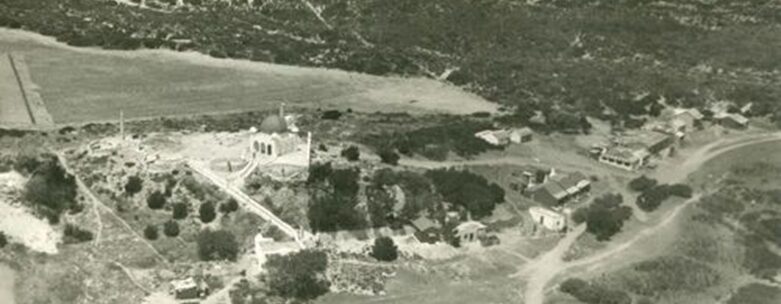
Kramat – Macassar
When they opened their precious copies of the Quran at Zandvliet in 1694, it marked the foundation of South Africa’s first Muslim community. His kramat, his tomb, stands on the sand dunes of Macassar, on False Bay, to this day.
More than three hundred and thirty-two years later, that community is still there. Still practising. Still remembering. The name on the highway sign is not just a suburb. It is a memorial.
[Rev. Kalden departed for the Netherlands on 23 April 1708 after selling his farm for 20,500 Cape guilders. In the Netherlands, he was required to appear before the Classis of Amsterdam to answer the accusations brought against him by the Cape burghers.]
Between You and Me:
Sheikh Yusuf arrived at the Cape at sixty-eight years old, in exile, far from everything he knew and proceeded to found South African Islam. The Dutch sent him to Zandvliet specifically because they thought distance would neutralise him. He had been neutralising Dutch plans for thirty years at that point. They should have known better. There is a lesson here about what happens when you underestimate a sixty-eight-year-old man with deep convictions and a community that needs him. The kramat on the dunes at Macassar has been there for centuries. The VOC has not.
Historian – Harmen Bockelenberg
Next week: sixty-three thousand people — where they came from, what they built and why their voices are still in the language you speak every day.



Be the first to comment