

MOTORING & SOCIAL ANTHROPOLOGY
YOU ARE WHAT YOU DRIVE: A COMPLETELY SCIENTIFIC, THOROUGHLY IMPARTIAL and LEGALLY DEFENSIBLE GUIDE TO WHAT YOUR CAR SAYS ABOUT YOU, YOUR PERSONALITY, YOUR LIFE CHOICES and YOUR NUMBER PLATE
The Helderburger’s motoring desk has spent considerable time in traffic observing the vehicles of the Helderberg Basin and the people inside them. We present our findings without apology, with the full acknowledgement that stereotypes are unfair and with the equally full acknowledgement that they exist for a reason.
By Derick Badenhorst-Kotze — Motoring, Social Dynamics & Parking Lot Anthropology Correspondent
There is a theory, held by sociologists, psychologists and anyone who has ever spent forty minutes in the Somerset Mall parking lot on a Saturday morning, that you can tell a great deal about a person from the vehicle they drive. The car — or bakkie or SUV or ancient Corolla held together by prayer and a strip of masking tape — is not merely a mode of transport. It is a declaration. A manifesto. A rolling autobiography, visible at fifty meters and legible to anyone who knows how to read it.
South Africans, in particular, understand this. We are a nation that takes our vehicles personally. We name them. We defend them in arguments. We speak of their reliability with the conviction of people citing character witnesses. We have strong opinions about other people’s choices and robust reasons for our own and we carry both at all times, along with a braai grid, a tow rope and an emergency pack of biltong in the cubbyhole.
The Helderburger has conducted extensive research — defined here as driving around the Helderberg Basin with a notepad, observing what people drive and drawing conclusions that are obviously generalisations but are, in our considered editorial opinion, more accurate than they have any right to be.
The following is our report.
THE TOYOTA HILUX — The National Religion
Let us begin where all honest discussions of South African motoring must begin: with the Hilux. The South African affair with the Toyota Hilux dates back more than 50 years. With a heritage and pedigree entrenched in South African history and culture, the Toyota Hilux is not simply a bakkie. It’s an indelible part of the South African fabric; an essential tool across hundreds of farms, construction sites and, more recently, even suburban family homes. Known for its reliability, durability and never-die attitude, the Toyota Hilux is the embodiment of legendary toughness. ZAWYA
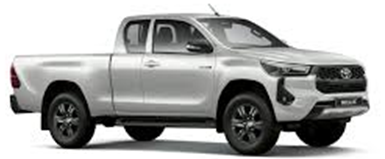
All of this is true. It is also, in the Helderberg context, a vehicle that now appears in three distinct configurations, each carrying its own social meaning.
The first is the Working Hilux — bakkie tray bearing the honest scars of actual labour, paint faded to the colour of good intentions, a selection of tools in the back whose specific purposes are known only to the driver and a cab that smells reassuringly of diesel, dust and a hard day’s work. This Hilux is not making a statement. This Hilux is simply getting on with it. The Helderburger respects this Hilux unconditionally.
The second is the Weekend Hilux — immaculate double cab, spotless load bin, bull bar that has never encountered a bull, side steps that have never been used for stepping and a set of off-road tyres that have encountered nothing more challenging than the speed bump outside Somerset Mall. This driver has watched every Top Gear Africa special, owns three braai tools that came in a canvas roll and refers to the Clarence Drive coastal route as “the trail.” The Helderburger respects this Hilux with minor reservations.
The third is the Hilux that has been lifted four inches, fitted with aftermarket everything, wrapped in a colour not offered by Toyota and whose driver wears an expression suggesting he is perpetually five minutes from a river crossing that will never actually occur. This driver describes himself as “not really a car person” in exactly the way that someone with seventeen car-related Instagram accounts might. The Helderburger salutes this Hilux with one eyebrow raised.
Number plate typically: CFM or CEY. Usually a personalised plate that is either his name, his nickname or four letters that mean something to him and absolutely nothing to anyone else.
THE FORD RANGER — The Hilux With Ambitions
The Ford Ranger is now a permanent fixture in South Africa’s top-selling bakkie charts, with many purchases made not by farmers or builders but by middle-class professionals living in major cities. In the Helderberg, the Ranger driver is a specific type: organised, brand-loyal and mildly evangelical about the fact that they chose differently from the Hilux crowd, which they bring up with a frequency that the Hilux crowd finds charming in the way that a large dog finds a small dog charming — with affectionate, patient tolerance and no particular change in behaviour. Autoads
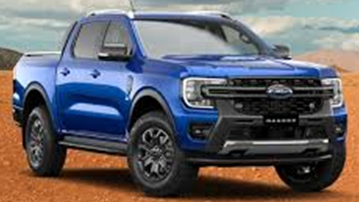
The Ranger driver has a Ford sticker on the back window and a Ford cap in the cubbyhole. They have done the towing capacity comparison. They have done it multiple times. They will do it again, unprompted, at a braai, while the Hilux driver listens with the serenity of someone who has already won without needing to argue.
Number plate: CFM or CEO (Grabouw represents heavily in the Ranger market). Often factory standard, because the Ranger driver believes the factory got it right and does not require enhancement.
THE TOYOTA FORTUNER — I Wanted A Hilux But My Wife Had Opinions
The Toyota Fortuner has become a macho status symbol and is perfect for those who’ve always wanted a Hilux but don’t think of themselves as bakkie people. The Fortuner basically puts a roof over the double-cab Hilux’s load area, so you can fit a couple more people in the two foldout seats in what is now the luggage area. Sunday Times
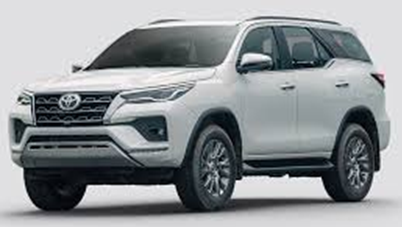
This is the most diplomatic description possible of what is, in practice, a negotiated settlement between two people who wanted different vehicles and found one that satisfied neither fully while making both feel they got something.
The Fortuner driver in the Helderberg is almost certainly a parent. The back seats contain child paraphernalia of a quantity suggesting the vehicle has not been completely emptied since 2019. There is a school sticker on the rear window — Hottentots-Holland High or Parel Vallei or whichever school currently features most prominently in the Somerset West property market calculations — and a parking disc from Vergelegen that expired in October but remains, because removing it would require an act of organisation that the Fortuner’s interior does not currently support.
The Fortuner driver is a perfectly capable person navigating a full life at considerable speed. Their vehicle is a testament to competence under pressure. The Helderburger respects them enormously and asks only that they please indicate before changing lanes on the N2.
Number plate: CFM, almost invariably. Somerset West is Fortuner country. The two deserve each other in the very best sense.
THE BMW — Performance Anxiety, Leather Upholstery
The BMW requires careful handling, because BMW drivers, as a cohort, tend to read things written about BMW drivers. They do this to confirm that the stereotype is unfair. This is understandable. The Helderburger approaches the matter with journalistic caution and merely notes that a study of 2,000 motorists found that BMW drivers ranked high in measures of narcissism and lacked empathy, based on responses across 19 car brands, with BMW drivers also displaying the most psychopathic tendencies in a separate assessment. Briefly
The Helderburger does not endorse these findings. The Helderburger notes them for completeness.
What the Helderburger can say, from direct observation on the roads of the Helderberg Basin, is that the BMW driver operates with a particular set of assumptions about road priority that is not shared by the Road Traffic Act but is held with great personal conviction. The indicator is used rarely, on the grounds that anyone worth notifying already knows they’re coming. The following distance is maintained at a gap best described as “optimistic.” The speed in the fast lane is everything the N2 article was about, except in reverse — the BMW is not the obstruction, the BMW is the vehicle behind the obstruction, pressed as close as physics and mutual goodwill permit, headlights on, expressing through the medium of automotive body language an entire philosophical position on traffic flow.
The BMW in the Helderberg is typically either a 3 Series with a personalised plate beginning with CFM or an X5 whose driver has decided that the parking bay markings in the Waterstone Village parking lot are a suggestion rather than a perimeter. Both are driven with the quiet assurance of someone who checked the CarTrack subscription is current and considers this sufficient preparation for anything.
Number plate: Personalised, always. Something assertive. Often initials. Occasionally a word in Afrikaans that the driver considers either intimidating or motivational and which passersby read as a small window into a rich inner life.
THE MERCEDES-BENZ — I Have Arrived. I Would Like You To Know This.
The Mercedes in the Helderberg is a particular creature. It is not driven fast. It does not need to be. The point of the Mercedes is not speed but presence — the automotive equivalent of entering a room and saying nothing, in the confidence that the room has already formed an opinion.
The Mercedes driver in Somerset West is typically of a certain vintage — not necessarily old, but certainly settled. They have made their decisions. The house is paid for or impressively close to it. The garden is maintained by someone reliable who has been coming on Tuesdays for nine years. The restaurant of choice is booked, the wine is familiar and the parking space at Vergelegen is the same one as always because they arrive at the same time as always because punctuality is, in their view, a form of respect that the rest of the world is letting slip.
The Mercedes C-Class is for people who are nearly there. The E-Class is for people who are there. The S-Class is for people who have been there for some time and have settled into it with the comfort of well-worn leather. The GLE is for people who wanted a Fortuner but felt that the badge should reflect more accurately what they paid for the house.
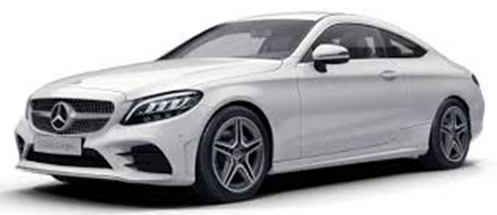
Number plate: CA from Cape Town — because the Mercedes driver came from Cape Town’s Atlantic Seaboard, got offered a fair price on a Helderberg property during lockdown and has not entirely decided what to do about the number plate, which is becoming, with each passing year, a mild source of domestic conversation.
THE VW POLO — Statistically, The Most Interesting Journey
The VW Polo driver and the penchant for mishap joins an elite league of motoring comedy stereotypes, becoming the subject of multiple memes and jokes filed to the motoring drawer. On any given day in the realm of social media, your feed is bound to be graced by the image of a Polo in a compromising position. TimesLIVE
The Helderburger means this affectionately. The Polo is South Africa’s second most viewed car on AutoTrader, behind only the Hilux, which means it is everywhere, driven by everyone and statistically bound to feature in more incidents purely on the basis of volume. This is the numbers game. It is not a character flaw.
The Polo driver in the Helderberg is young, usually — a first proper car, financed over 72 months, kept immaculate externally and somewhat less so internally, where the evidence of a full life accumulates at approximately the same rate as the km counter. The Polo is driven with commitment and occasionally with an optimism about turning radius that the vehicle’s geometry is not fully able to support.

There are also, in the Helderberg, a number of Polo GTIs driven by people who would like you to know that theirs is a GTI and have fitted a wing and a different exhaust and a set of aftermarket rims that cost more than the service plan. The GTI driver is indistinguishable from the standard Polo driver in almost every respect except the speed at which they cover the distance between Strand and Somerset West and the angle at which they park.
Number plate: CEY, overwhelmingly. Strand and Gordon’s Bay are Polo territory. The beach and the Polo belong together in the way that youth and optimism belong together — brightly, noisily and with occasional minor damage.
THE NISSAN NP200 — The National Workhorse Nobody Thanks
The NP200 is the single-cab bakkie that keeps the Helderberg operating. It is driven by electricians, plumbers, tilers, painters, pool cleaners, garden services, small delivery operations and every other trade that makes a house a functioning home. It is dented. It is usually white. It has a phone number stencilled on the door that is either the driver’s direct line or a number that has not worked since 2021.
The NP200 does not have pretensions. The NP200 has a job. The NP200 has approximately seventeen jobs, back to back, six days a week, in the service of other people’s properties and projects and it is completing those jobs without complaint, without a bull bar and without anyone asking it to be more than it is.
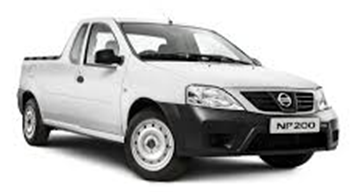
The Helderburger considers the NP200 driver one of the most genuinely essential people on the road. When the NP200 arrives at your gate on a Wednesday morning, you are relieved to see it. When the BMW arrives at your gate on a Wednesday morning, you are also relieved to see it, but for completely different reasons and at considerably greater expense.
Number plate: Anything. Every plate in the Western Cape has, at some point, been on an NP200. This is not an exaggeration.
THE TOYOTA COROLLA, CIRCA 2007 — Immortal, Irreplaceable, Undefeatable
The old Toyota Corolla sporting brown-beaded seat covers is a motoring comedy stereotype in its own right. The Helderburger wishes to be clear that this is not comedy. This is respect. TimesLIVE
The early-2000s Toyota Corolla in the Helderberg Basin is a vehicle that has outlasted its own warranty, its service history, two owners, one respray, a cracked windscreen that was repaired with something that is not technically glass and the complete discontinuation of several of its original parts. It runs on Toyota’s reputation for reliability, the mechanical instinct of a man named either Fanus or Ebrahim who operates from a property in Macassar and the quiet determination of a vehicle that has simply decided not to stop.
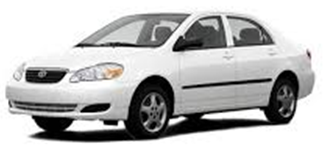
The beaded seat covers are not an accessory. They are load-bearing. They are holding the seat together. They have been there since the second year of ownership and will be there, intact and amber-tinted, when the vehicle is eventually retired to whatever paradise awaits a Corolla that served faithfully and never once asked for anything except oil changes that came slightly later than recommended.
Number plate: The original plate from registration, still on the vehicle, slightly bent on one corner from a parking incident in 2014 that was not entirely the driver’s fault. It has not been changed. It will not be changed.
THE LAND ROVER — More Complicated Than It Looks
The Land Rover in the Helderberg occupies a unique position: it is simultaneously the most capable off-road vehicle most of its owners possess and the vehicle least likely to go off-road in the Helderberg Basin, where the most demanding terrain most residents encounter is the gravel road up to a wine estate. Simply known as the “Landy” in certain circles if you know what I mean.
The distinction of this vehicle needs to be made as there are two types – the pre-1980’s models or the newer models. There is a major gap here but the circle is completed by the age of the driver.
The Discovery driver is aspirational in a direction that is specifically outdoorsy — they own hiking boots that have seen real mountains, a roof rack that has carried a kayak at least twice and a knowledge of Sir Lowry’s Pass in conditions of light mist that they consider a genuine driving credential. They subscribe to a 4×4 magazine not because they do 4×4 but because they fully intend to do 4×4, possibly next year, perhaps in the Cederberg, once the children are a bit older.
The Defender driver is a different matter. The Defender driver has made a statement. The new Defender, in particular, is a statement that costs upward of a million rand and says, in the most elegant possible way: I have the money, I have the taste and I have decided that the correct expression of both is a vehicle that looks like it has important business in difficult terrain while being driven almost exclusively on the R44 to Lourensford on a Sunday morning.
This is not a criticism. This is aspiration, which is the engine of all commerce and most property purchases in the Western Cape.
Number plate: CFM. Always CFM. The Defender and Somerset West were designed for each other by someone who understood that luxury and understatement, when combined, produce something quietly devastating.
THE GWM P-SERIES — The New Contender That The Others Are Watching
Whether it’s a Toyota Hilux on a Limpopo farm, a Ford Ranger navigating the N3 or a GWM P-Series doubling as a delivery workhorse and a weekend leisure ride, the bakkie transcends mere utility. The GWM has arrived in the Helderberg with the energy of someone who just moved into the neighbourhood and is determined to make a good impression. It is priced accessibly, it is equipped generously and it is driven by people who did the comparison, found they could not justify the Hilux premium for their specific usage pattern and made the practical choice with the mild defiance of someone who has decided they are not going to pay for the badge. Autoads
The GWM driver has strong opinions about value for money. They will tell you about the features list unprompted. They are correct about the features list. They are winning this argument even though nobody officially started it.
Number plate: Anything from CEO to CEY to CFM. The GWM is still establishing its regional identity and has not yet been claimed by any one Helderberg town as its own. Give it time.
THE PERSONALISED NUMBER PLATE — A WORLD UNTO ITSELF
No examination of Helderberg motoring culture is complete without addressing the personalised number plate, which is, in the Western Cape, a form of expression as revealing as any vehicle choice.
The personalised plate falls into several categories. There is the Name Plate — KOBUS, ANRI, RIAAN — which says: I am here, this is my vehicle and I considered the anonymity of a standard plate and found it insufficient. There is the Nickname Plate — BAKKIES, OUBAAS, SUS, KLEINJAN — which says the same thing, with an added layer of social information about what this person’s friends call them and whether they consider this a compliment. There is the Statement Plate — BRAAI2, HILUX4, LAST1, BLESSED — which is a mission statement, a personal motto and an advance notice of dinner party conversation, all in seven characters. And there is the Mysterious Plate — a combination of letters and numbers that means something profound to the owner and absolutely nothing to anyone behind them — which is perhaps the most honest category of all, because it acknowledges that the plate is for the driver, not the observer, which is a level of self-awareness the other categories sometimes lack.
The Helderburger has, in the course of research on the roads of the Helderberg Basin, observed plates reading GROOT1, BOERSEUN, THEBOET, WYNTYD and, memorably, one that appeared to read NOGALS — which, for non-Afrikaans readers, means “rather” or “quite” and is, as a personal statement on a number plate, so magnificently understated as to constitute its own philosophical position.
NOGALS. Indeed.
THE CONCLUSION: THE VEHICLE IS THE PERSON, EXCEPT WHEN IT ISN’T
The Helderburger acknowledges, in the spirit of fairness, that all of the above is generalisation. That Hilux drivers are not all weekend warriors, that BMW drivers can be entirely courteous, that some Fortuners have genuinely muddy load areas and that a number of our most thoughtful neighbours drive completely unremarkable vehicles with no discernible personality implications whatsoever.
We acknowledge this. We stand by the generalisations anyway, because the truth of a stereotype lies not in its universal application but in its persistent recognisability — the fact that when you read a description and think immediately of someone you know, you are confirming that the world sorts itself into patterns and that the patterns are, on occasion, visible from the parking lot at Somerset Mall on a Saturday morning.
You are what you drive. Except when you are more than what you drive, which most people are, most of the time.
But the plate helps.
Derick Badenhorst-Kotze drives a 2011 Toyota Corolla MkII that he fully intends to replace. It has 297,000km on the clock, the air conditioning has not worked since 2018 and the beaded seat covers were already there when he bought it. He considers it the most honest vehicle he has ever owned. He has named it Gerald. Gerald starts every morning without complaint, which is more than can be said for several vehicles in this article that cost four times as much.
The Helderburger accepts no liability for vehicle-related identity crises prompted by the above. If your car is not listed, it means you drive something so sensible as to defy comedy, which is admirable and also slightly boring, which is also admirable, depending on your priorities.
Letters to the editor regarding the personalised plate NOGALS and the identity of its owner, are actively encouraged.