

STORY 74
The vines were always here. The Huguenots planted them in the 1680s. The VOC demanded them. The British taxed them. Phylloxera killed them in 1886. They were replanted, replanted again, grafted onto American rootstock and kept going through two centuries of boom and bust and boom again.
But something different happened after 1994.
The wine route that had existed quietly since 1971, one of South Africa’s first, running through the Helderberg and Stellenbosch valleys, suddenly became an international destination. South Africa re-entered the world. The trade sanctions ended. The wine awards started coming. Wine writers from London and New York who had never tasted a Stellenbosch Cabernet began flying in to do exactly that. And the valley changed.
The change was not just commercial. It was cultural. Wine had always been made here. But now it was being celebrated here, marketed here, architected here. The tasting rooms that had once been converted farm sheds became glass-and-steel pavilions. The wine routes multiplied. The Helderberg Wine Route, taking in the farms on the slopes of the Helderberg mountain itself, established its own identity, distinct from the broader Stellenbosch appellation, though legally within it.
And then came the celebrities.
Ernie Els planted his flag on the Helderberg in 2000. The professional golfer, ranked among the best players in the world, with two US Open titles already in his cabinet, bought a farm on the slopes above Somerset West and launched Ernie Els Wines. He hired Louis Strydom, one of the country’s finest winemakers. He built a gravity-flow cellar. He took it seriously. The flagship blend, simply called Ernie Els, became one of the most recognised South African red wines in export markets. The name above the door brought buyers in. The wine in the bottle brought them back.
Els was not alone. The post-1994 era produced a wave of what the industry called lifestyle estates, farms bought not primarily as agricultural operations but as passion projects, status symbols and retirement dreams by business people, athletes and entrepreneurs who wanted a piece of the valley. Some made indifferent wine. Some made extraordinary wine. All of them invested in the landscape, the infrastructure and the visibility of the region.
Lourensford was the grandest reinvention of all. The farm, one of the oldest in the valley, granted to Laurens Campher in 1700, had passed through many hands over three centuries. In 2005, the Lourensford estate underwent a complete transformation under new ownership. The wine cellar was rebuilt and vineyards were replanted. A working fruit farm was retained alongside the wine operation. And then came the market.
The Lourensford Craft Market grew into one of the most popular weekly markets in the Western Cape, drawing thousands of visitors every Saturday from Somerset West, Stellenbosch, Cape Town and beyond. Artisan food. Local crafts. Live music. Dogs on leads. Families on picnic blankets. It became something the wine route had never quite managed on its own, a reason for people who did not drink wine to come to a wine farm.
The Helderberg wine farms were no longer just places where wine was made. They had become places where people came to spend a Saturday. The distinction matters. It changed the economy of the valley, the traffic on the roads, the lunch trade in Somerset West and the way outsiders understood the Helderberg.
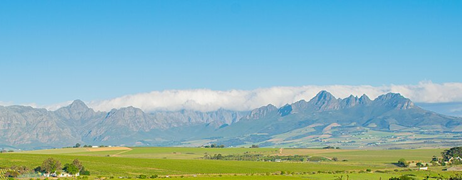
The old soil was still there. Triassic sandstone, decomposed granite, the same terroir the Huguenots had worked by hand three hundred years ago. The vines growing in it were grafted descendants of vines that had survived phylloxera and prohibition and apartheid isolation.
New names. Old soil. The valley kept making wine.
Between You and Me:
Ernie Els bought a farm on the slopes above Somerset West and called the flagship wine Ernie Els. There is something refreshingly direct about a sportsman who, having reached the top of one profession, decides his own name is the best possible asset for the next one. I have no objection to this. The wine is genuinely good, which removes any temptation toward cynicism. But I do think about the long chain of people who farmed that land before him, Huguenots, VOC loan-farmers, generations of families whose names appear nowhere on a label and the fact that it took a world-class golfer’s brand recognition to put the Helderberg’s wine on shelves in markets that three hundred years of patient farming had not quite reached on its own. The soil did not change. The marketing did.
Historian – Harmen Bockelenberg
Next week: the infrastructure that shaped the Helderberg the roads, the railways and the decisions, large and small, that determined how this valley would be crossed.

Be the first to comment