

STORY 90
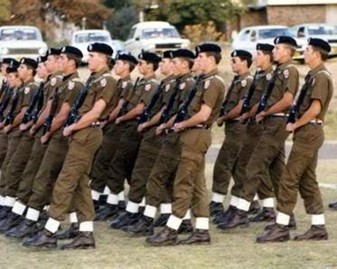
Every young man who grew up in the Helderberg from the 1970s to the 1990s knew the call-up was coming. It was not a possibility. It was a scheduled fact, as certain as matric and slightly less negotiable. The South African Defence Force required two years, more or less, of national service from every able-bodied white male and the Border War in South West Africa required those men to be ready for something that was no longer hypothetical. Boys from Somerset West and Strand and Gordon’s Bay went north. Some came back changed. Most came back. Not all.
The author of this book did his national service in the early 1980s, stationed at the South African Naval Headquarters in Pretoria and at the Naval College in Gordon’s Bay, Pretoria being, for those unfamiliar with South African geography, as far from the sea as it is possible to be while remaining in the country. The Navy, it turned out, had administrative requirements in the capital that did not require a coastline. He was there on 20 May 1983.
At 16:30 on that Friday, a car bomb detonated outside the Nedbank Square building on Church Street West, Pretoria, a building rented by the South African Air Force. The bomb had been planted by uMkhonto we Sizwe, the armed wing of the African National Congress. It exploded ten minutes earlier than planned, killing the two operatives who had planted it along with 17 other people and wounding 217. At least twenty ambulances were needed to transport the dead and wounded.
The Naval Headquarters was close enough to Church Street that the concussion of the blast was felt in the building. The smoke was visible from the windows. The sirens started almost immediately and did not stop for a long time. In the hours that followed, the information came in pieces, the location, the casualties, the scale of it, the fact that civilians at a bus stop had been among the dead, the fact that the perpetrators had also died when their own device detonated early.
He remembered thinking and this is the honest memory, not a retrospective gloss, that the number of dead was smaller than it could have been. That 217 wounded and 19 killed, in the middle of a city street at rush hour, with forty kilograms of explosive, was the result of timing that had gone wrong for the people who planted the bomb. Ten minutes later, with the full complement of Air Force personnel at the bus stop, the number would have been different.
The war that South African television had been presenting as something happening on the border of a distant territory had arrived in a Pretoria street on a Friday afternoon. It had been arriving in other places too, in township streets and police stations and courtrooms, for years before Church Street. But Church Street was the moment it arrived in the specific geography of the white city, in the office buildings and the bus stops of the capital, in the middle of the working day.
The second incident came later, in 1984 or 1985, after national service had ended and a young man from the Helderberg had become a freelance photographer working in Pretoria. The call came through in the early hours of the morning, a bomb at the Lyttelton post office, detonated at three in the morning. He drove to the scene with his camera before the light came up.
The building had been comprehensively destroyed. The post office, an ordinary civic building in an ordinary Pretoria suburb, was rubble and twisted metal and broken glass spread across the street in the particular pattern that explosions leave, radiating outward from a centre point, each piece of debris a record of where the force had pushed it. Nobody had been injured. A post office at three in the morning is an empty building. But it was not the absence of casualties that struck him as he walked through the debris with his camera. It was the ordinariness of what had been destroyed. A post office. A place where people sent letters and paid accounts and collected parcels. The most unremarkable civic institution imaginable.
The photographs he took that morning appeared in the Beeld newspaper later that day. They documented what a bomb does to a building that was not doing anything to anyone.
He had been thirteen years old on a street corner in Strand when a round left in a rifle’s chamber had taught him the first lesson about weapons and their consequences. He was in his early twenties in a demolished Pretoria street and a post office at three in the morning when the same lesson arrived in a different form.
The Helderberg was a long way away. The mountain was still there, clear and steady above the valley, looking down at the farms and the schools and the Saturday sports fields and the families going about their ordinary lives. Boys from those families were in the army. Some of them were in Angola. The war was real and it was theirs and it was everywhere.
Between You and Me:
Two events, roughly a decade apart, both arriving in the early hours or the rush hour, both leaving him standing in rubble that had been an ordinary building the day before. I have thought about what it means to carry these two memories alongside each other, Church Street with its sirens and smoke and the human cost spread across a city block and the Lyttelton post office at three in the morning, empty, undamaged in terms of lives but somehow more unsettling in its silence. A bomb in a crowd and a bomb in an empty building are different kinds of violence and I think he understood, standing in that second site with a camera, that the second kind was in some ways a preview of the first, that the people who built these devices were prepared to use them on crowds and the empty post office was simply the one that happened to be empty that night. The mountain was a long way away. It usually is, when these things happen. That does not mean the people under it are unaffected.
Historian – Harmen Bockelenberg
Next week: the schools that made us the educational backbone of the Helderberg and the history that its classrooms cannot avoid.

Be the first to comment