

STORY 63
When the Second World War ended in 1945, the ships and trains and military trucks began bringing South Africans home. They came from the deserts of North Africa, from the mountains of Italy, from East Africa and the Middle East and the waters around the Cape. They came back to their farms and their families and their towns, carrying memories that no one at home could fully share because no one at home had been there.
What do you do with that?
The Memorable Order of Tin Hats, the MOTHS, had an answer. It was a simple answer and it was the right one: you find the men who were there with you, you meet regularly, you look after each other and you remember.
The organisation had been founded in Durban in 1927, after the First World War, around three principles that sounded modest and turned out to be enduring: True Comradeship, Mutual Help and Sound Memory. Its local chapters were called Shellholes, the name carrying the deliberate dark humour of men who had spent time in or near actual shellholes and had survived to make the joke. The Shellhole was where you went to be with people who understood without explanation, where the stories that would have been incomprehensible at the dinner table could be told to men who had their own versions of the same stories.
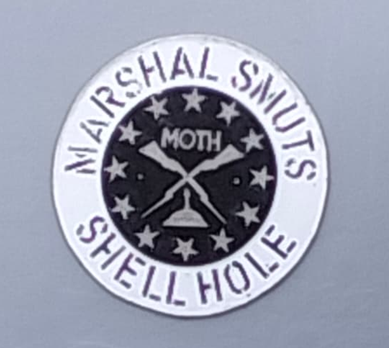
In Somerset West, the Marshal Smuts Shellhole was established in 1946. The timing was right, the returning servicemen were finding their way back into civilian life, the intensity of wartime was fading into something that needed to be held onto deliberately rather than left to drift and the Helderberg had its share of men who had served in the full range of theatres that South Africa’s war had sent them to. Soldiers who had been in the desert. Sailors who had watched the Cape shipping lanes. Airmen. Men who had been in prisoner-of-war camps. Men who had come through without a scratch and men who had not.
The MOTH-hall became something more than a meeting room. It was a place where practical assistance was organised for veterans and their families who needed it — the kind of mutual support that the organisation’s founding principles had always intended. It was a place where remembrance was taken seriously, structured, protected from the erosion that time applies to everything if it is not actively resisted. The annual Remembrance Day observances and the solemn Memorial Services, during which members honoured comrades who had answered what the MOTHS call the Sunset Call, gave the community a form for grief and memory that private feeling alone cannot sustain.
The Helderberg district had particular reasons to value this. The Gordon’s Bay Naval College. The coastal artillery batteries above the Steenbras River mouth. The wartime presence of military installations across the region. The Helderberg was not merely adjacent to the war’s infrastructure — it was part of it and the men who had served in and around it came home to a community that understood their service in a specific, local way. The MOTHS gave those men an institution that belonged to them.
Later conflicts brought later veterans into the Shellhole, men who had served on the border during the South African Defence Force’s campaigns in South West Africa and Angola, whose war was different in character and different in political context but who had the same need for comradeship and the same difficulty communicating their experience to people who had not shared it. The MOTHS accommodated them. The principles did not change. The need did not change.
The Marshal Smuts Shellhole has been meeting in Somerset West for nearly eighty years. The membership is smaller than it was at its peak. The men who came home from the Second World War are gone. But the organisation that was built to hold their memory is still holding it, in a community that has grown and changed around it while the principles of its founding, comradeship, mutual help, sound memory, have remained the same.
Sound memory. Of everything the MOTHS stood for, that phrase carries the most weight. Memory is not automatic. It requires effort and structure and people who have decided together that the remembering matters. The Marshal Smuts Shellhole made that decision in 1946.
It is still keeping it.
Between You and Me:
Sound Memory. That is the phrase that stays with me from the MOTHS’ founding principles. Not just memory, a sound memory. Memory that is maintained deliberately, actively, with structure and repetition and the support of people who share it. The assumption behind that phrase is that memory left to itself will degrade that without effort, the things worth remembering will fade, blur and eventually disappear. The men who founded the MOTHS understood this. They had seen what happened to the memory of the First World War when the survivors grew old and the stories stopped being told. They built a structure to prevent it happening again. The Shellhole is that structure. It is, in its own quiet way, one of the more important things in this valley.
Historian – Harmen Bockelenberg
Next week: the mountain they saved — how the Helderberg Nature Reserve came to exist and what was at stake if it hadn’t.




Be the first to comment