
There is a number that does not appear on any of the wine estate plaques, on any of the heritage certificates, on any of the beautifully restored homestead information boards. That number is 63,000.
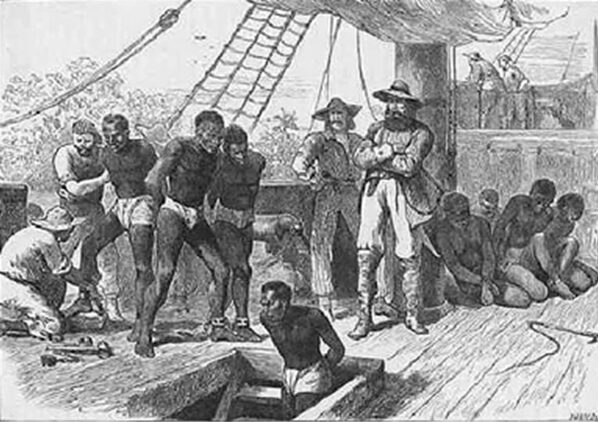
Between 1658 and 1807, 63,000 people were snatched from their homes and brought to the Cape as forced labour for the expanding Dutch settlement. Sixty-three thousand men, women and children. For a colony that at its peak had perhaps 20,000 European settlers, that is a staggering figure. Throughout the 18th century, slaves outnumbered settlers at the Cape. The colony that built the wine estates of the Helderberg, the homesteads with their elegant gables, the irrigation canals and the cellars and the oak-lined avenues, was built primarily by people who were not free to leave.
Where did they come from? Roughly a quarter from Africa, mainly the east coast. A quarter from Madagascar. A quarter from South Asia, India and Sri Lanka. And a quarter from the Indonesian archipelago, Sumatra, Java, the Celebes, Ternate, Timor. They came from four different continents and dozens of different language groups, cultures and religions. They arrived with nothing they were allowed to keep. Not even their names, those were taken and replaced with the names of Roman gods, months of the calendar or places of origin. Open the Cape Town phone book today and you will still find surnames from the time of slavery, February and November, Adonis and Moses, January and April. These are not quirky names. They are the remnants of a naming system designed to strip people of identity and remind them, daily, that they were property.
The first slaves arrived at the Cape on 28 March 1658 aboard the Dutch ship the Amersfoort, with 174 people in its hold. Within a generation, the Cape Colony could not function without them. They cooked in every settler kitchen, ploughed every field, tended every vine, built every wall and raised the children of the families who owned them.
Their daily lives were defined by a complete absence of legal rights. Enslaved women were particularly vulnerable: it was common practice for them to sleep near the hearth in the kitchen, isolated and exposed to exploitation. Enslaved people could be mortgaged, sold, hired out for profit and physically punished with impunity. They had no right to marry, to keep their children, to refuse an order or to leave. Some ran anyway. Some runaways joined Khoikhoi groups in the Cape interior. Others formed isolated communities in the mountains. Running was desperately dangerous. Being caught was worse.
Slave children born out of wedlock could not be baptised and thus no baptism records exist. The lost children of the colony.
And yet they were not passive. They resisted constantly, in small ways and large ones. A revolutionary uprising took place in 1808, shortly after the British took over the colony and outlawed the slave trade. Enslaved people had been watching the revolutions in America and France and Haiti and they understood perfectly well what freedom meant and that they were being denied it.
Slaves, as well as the non-Dutch speaking settlers, played an important part in the creation of a distinctive Cape culture, notably in the development of the Afrikaans language and Cape musical and culinary traditions. The language that millions of South Africans call their mother tongue today was not built by Dutch settlers alone. Afrikaans carries Malay words brought by slaves from the East: baadjie for jacket, baie for a lot, piesang for banana, blatjang for chutney, sjambok for whip, pondok for hut. The Dutch had more success stamping out French than they ever had suppressing the influence of the people they enslaved. The slaves left their mark on the language itself.
In more recent years another language took shape at the Cape, Kaaps, an adapted Afrikaans with its own words and codes like: Kapallingtjies for a type of flat sandal. Sy het kool geëet, she ate cabbage, meaning she is pregnant. Poenantjies for cute. Gattas for the police. A living language, still growing, still inventing itself.
They are in the stones of the Helderberg homesteads. They are in the words you use every day. They built this place.
Between You and Me:
Afrikaans carries Malay words brought here by enslaved people from the East. Baadjie. Baie. Piesang. Blatjang. Sjambok. Pondok. These are not borrowed words; they are the words that survived when everything else was taken. The people who brought them here were given new names, new masters and no rights whatsoever. What they could not be given was silence. The language that millions of South Africans call their mother tongue carries their voices in it still. Every time someone says baie dankie, they are, without knowing it, saying thank you in a language shaped partly by people the history books barely mentioned. That seems worth knowing.
Historian – Harmen Bockelenberg
Next week: the day that was not quite freedom — 1 December 1834 and why emancipation was not exactly what it sounded like.

Be the first to comment