

STORY 88
Before the wine estates had tasting rooms and before the Saturday market existed and before Somerset Mall had a cinema, the social life of the Helderberg was organised around sport. Not sport as entertainment, sport as community infrastructure. The rugby club. The cricket club. The bowls club. The swimming club. These were the institutions where the Helderberg went on a Saturday and where it went on a Wednesday evening for practice and where it went on a Sunday morning for the post-match conversation that was, for many people, the real point of the exercise.
The sport itself was secondary. The community was primary.
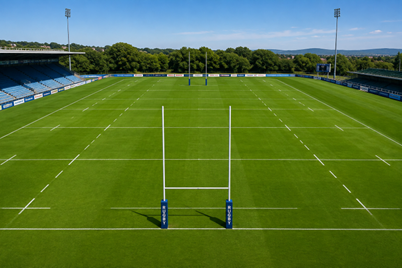
The Helderberg Rugby Club has its roots in the late nineteenth century, when the game was spreading rapidly through the Cape Colony along the same networks, schools, churches, farming communities, that spread everything else in colonial society. Rugby in the Western Cape was not merely a sport. It was an identity. For Afrikaner communities, it was bound up with a sense of physical strength, masculine culture and national pride that the game came to symbolise with particular intensity. For English-speaking communities, it was the game they had brought from the schools of Britain and transplanted into African soil. Both communities played it. Both communities cared about it ferociously.
Somerset West Cricket Club is one of the oldest sporting institutions in the Helderberg, a club with a history that runs back into the Victorian era, when cricket was the game of the British colonial world and every town with any pretension to respectability maintained a ground and a fixture list. The ground at Somerset West, flat, well-kept, with the Helderberg mountain as a backdrop that visiting teams found distracting and home teams had learned to ignore, became the site of Saturday afternoons that punctuated the calendar of the valley’s English-speaking community for generations.
Cricket and rugby divided the Helderberg along cultural lines that were real but rarely spoken about directly. Rugby was overwhelmingly an Afrikaner game until the middle of the twentieth century, though this is a simplification. Cricket was the English-speaking community’s game, though this too is a simplification. The reality was messier and more interesting, families crossed the lines, talented players were welcomed regardless of background and the rivalry between the communities was expressed on the sports field in ways that were vigorous but ultimately contained by the shared framework of the game.
The schools were the engine of all of it. Hoër Volkskool Strand, Hottentots Holland High School, Somerset College, each produced generations of players who went directly from school rugby and cricket into the club structures of the Helderberg. The pipeline ran continuously. Boys who had played against each other in school fixtures turned out on opposite sides in club matches the following season and found themselves on the same side the season after that.
The bowling clubs deserve a mention that they rarely receive in histories of sport. Lawn bowls, which sounds, to modern ears, like a gentle retirement activity, was for decades one of the most socially important sporting institutions in the Helderberg. The bowling clubs were where the older generation went. They were where business was done, alliances formed, disputes quietly resolved. A man’s standing in the Somerset West bowling club in 1965 told you something precise about his standing in the wider community. The same was true of the golf club. Sport, at a certain level, was not about sport at all.
The Helderberg was, on a Saturday in the 1960s or 1970s, a place almost entirely organised around sport. The rugby would be on one field, the cricket on another, the bowls in progress at the club, the swimming gala at the pool. Families attended. The community assembled. The mountain looked on.
Those structures changed as the Helderberg changed. The demographic shift of the post-1994 era brought new communities with different sporting cultures. Football, soccer, which had always been the game of the coloured and Black communities of the Helderberg, moved from the margins toward the centre. The old separations began, slowly and unevenly, to dissolve.
The clubs that survived did so by adapting. The ones that did not adapt became smaller and quieter and eventually merged or folded. That is not a tragedy. Communities change and their institutions change with them.
But the Helderberg was shaped, at a deep level, by those Saturday mornings on the cricket field and those Saturday afternoons on the rugby ground. The people who grew up here in the middle of the twentieth century were formed by those clubs as surely as they were formed by the schools and the churches. They learned how to win and how to lose, how to be part of a team, how to show up when the weather was bad and the opposition was better and the cause looked hopeless.
Those are not small lessons. They are the lessons that communities teach their children on sports fields, in every culture, in every era.
Between You and Me:
A man’s standing in the bowling club told you something precise about his standing in the wider community. I grew up around enough of this to know it is true and to know how thoroughly it has changed. The bowling club, the golf club, the rugby club committee, these were where things actually got decided, in a way that had very little to do with the sport itself. I am not entirely sure what has replaced them. Perhaps nothing has, in quite the same concentrated form. Perhaps that is fine. But there was a kind of social legibility to the old system, you could read a community by reading its clubs, that I am not sure the Helderberg has an equivalent for now. The mountain, at least, has not changed its standing in anything.
Historian – Harmen Bockelenberg
Next week: the Bren on Conradie Street a public demonstration, a round left in the chamber and a lesson a thirteen-year-old never forgot.



Be the first to comment