

STORY 68
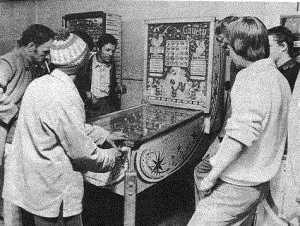
There was a certain sound that meant summer had arrived on Beach Road and it came from the doorway of the Springbok Café. The hum of the soft-serve machine, coins dropping into a jukebox and underneath it all, somewhere near the back, the electric clatter of a pinball machine taking a beating from a boy in wet swimming trunks.
The Springbok Café ran through the 1970s and 1980s as one of Strand’s great institutions, owned and run by the Silk family, who turned it into a welcoming, multi-generational fixture for locals and the inland holidaymakers who flooded the town every December. It was not a restaurant in any formal sense. It was a café and takeaways in the true South African tradition, a corner café built for people who had walked straight off the beach in bare feet and bathing costumes, sand still on their legs, money clutched in a damp fist for chips or a milkshake. Long queues formed down Beach Road for the soft-serve and the thick milkshakes and the fish and chips, wrapped hot and vinegary, were carried straight back down to be eaten on the sand at Melkbaai. Beyond the food, the café doubled as a general holiday hub, sunblock, beach toys, the morning’s Die Burger, everything a family might need without leaving the block.
But it was the evenings that made the Springbok Café what it was remembered for. On hot December and January nights the lights stayed on late, drawing teenagers and families out for a stroll along the promenade and inside, tucked away, sat the pinball machines. By then pinball had already survived a strange history of its own, banned as gambling in cities abroad for decades until flippers turned it from a game of chance into a game of skill and by the time it reached the Strand it had long since become nothing more sinister than a way to lose your pocket money one silver ball at a time. Teenagers fed the machines coin after coin, chasing high scores under buzzing fluorescent lights, while their parents lingered over coffee or a Coke.
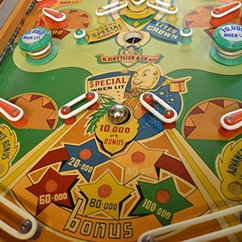
As the technology moved on, so did the games. Pinball’s own golden age gave way through the late 1970s and 1980s to the first electronic arcade machines, the vector graphics and glowing wireframes of games born out of the same American amusement industry that had once produced the flipper. Somewhere in a corner of the Springbok Café or a café much like it further along the block, the old pinball tables likely made room for a new generation of blinking cabinets, part of the same restless cycle of entertainment that has always defined a beach town’s nightlife, one novelty replacing another every few summers.
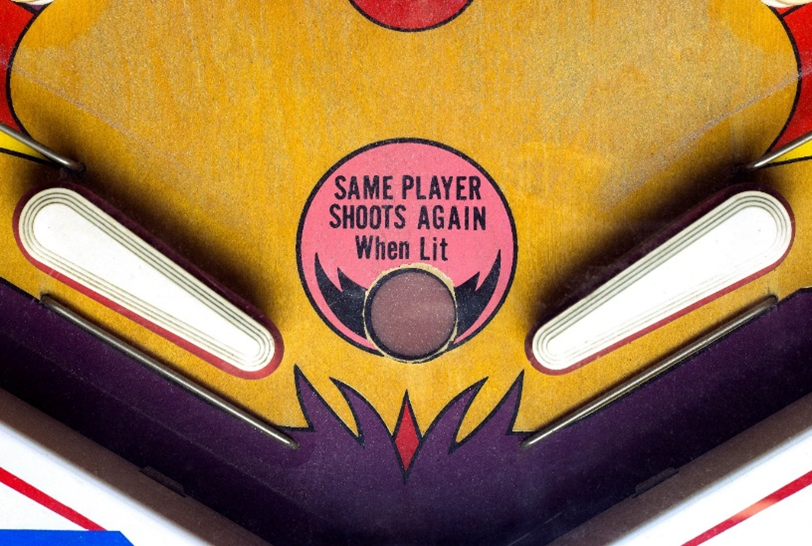
The Springbok Café itself did not last forever in that form. By the 1990s the milk bar layout to takeaway café had disappeared entirely, the venue reborn as a formal sit down steakhouse, the barefoot counter culture of the 1970s traded in for tablecloths. But for a certain generation, the name Springbok Café still calls up the same thing without fail, the smell of chips, the sound of a pinball machine losing a ball down the drain and the particular freedom of a summer evening with nowhere in particular to be.
Between You and Me:
I think what I miss most is not any one machine or any one milkshake, but the total lack of urgency in those evenings. Nobody was in a hurry at the Springbok Café. You had all summer and the café seemed to know it too.
Historian – Harmen Bockelenberg.
Next week: 27 April 1994 the day democracy arrived in the Helderberg, in a queue.




Be the first to comment