
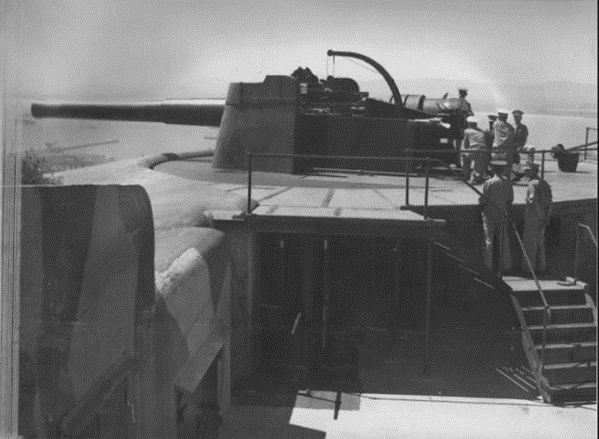
Featured image: Typical 6-inch breech-loading guns used c1938
Today, motorists speeding along the scenic coastal road between Gordon’s Bay and Rooi-Els are unaware of the weathered, overgrown concrete ruins overlooking the mouth of the Steenbras River. To most people, they are little more than forgotten relics slowly surrendering to the wind and salt spray. Yet during the dark years of the Second World War, these lonely gun positions formed part of a vast defensive network guarding one of the most important shipping routes in the world.
When war engulfed Europe in 1939, the Cape of Good Hope once again assumed strategic importance. The Mediterranean became increasingly dangerous for Allied shipping, forcing thousands of vessels carrying troops, fuel, food, ammunition and raw materials to round the southern tip of Africa. The sea lanes passing the Cape became a lifeline connecting Britain with the Middle East, India, Australia and the Far East. Any disruption to this route could have serious consequences for the Allied war effort.
False Bay, with its broad entrance and proximity to Cape Town, was regarded as a potential target. Military planners considered the possibility of German naval raiders, submarines and acts of sabotage against shipping and harbour facilities. Although a direct attack on the Cape was unlikely, the threat was real enough for extensive coastal defences to be established around the bay.
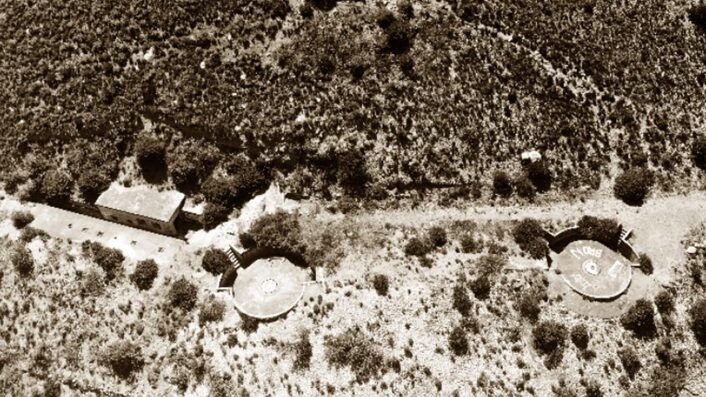
Aerial view of the battery
One of these defensive positions overlooked the mouth of the Steenbras River. Perched on elevated ground with commanding views across False Bay, the battery formed part of a chain of observation posts and artillery positions stretching around the peninsula. Reinforced concrete gun emplacements housed medium coastal artillery, while observation posts scanned the horizon day and night. Ammunition bunkers were partially concealed within the hillside and camouflage netting helped reduce the visibility of the installation from enemy aircraft.
The men stationed there belonged to South Africa’s coastal artillery units. Their war was one of patience rather than combat. Long hours were spent watching the sea through binoculars, recording shipping movements, maintaining equipment and conducting endless drills. Salt-laden winds corroded metal fittings faster than any other environment on earth, demanding constant maintenance. False alarms were common and rumours travelled quickly along the coast whenever unidentified vessels appeared on the horizon.
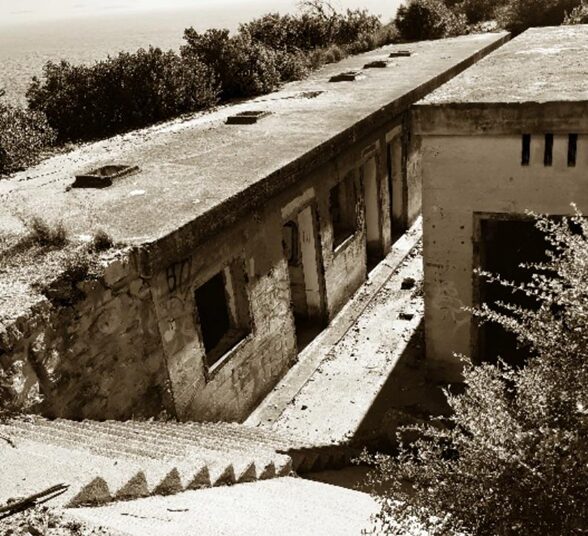
Steenbras River mouth Battery – Duty room & Power plant
Although the guns at Steenbras never fired in anger, the danger offshore was genuine. During 1942 and 1943, German U-boats operated extensively in South African waters, sinking merchant ships and bringing the war closer to home than many residents realised. For those manning the battery, every silhouette on the horizon demanded attention and a decision.
When peace finally arrived in 1945, the need for coastal artillery disappeared almost overnight. The guns were removed, military personnel departed and the battery was gradually abandoned. Nature slowly reclaimed the site, leaving only concrete foundations, bunker walls and fragments of access roads scattered across the hillside.
Today these weathered ruins stand quietly above the sea, overlooking the same shipping lanes they once guarded. Most visitors to the R44 pass them without a second glance. Yet they remain silent witnesses to a time when the Helderberg coastline stood on alert — watching the horizon for an enemy that never came, while a world war raged beyond the mountains and the sea.
Between You and Me:
There is something particular about a gun that was built to fire and never did. Not a malfunction — a gun that was manned, maintained, pointed at the correct horizon, operated by men who knew their purpose and then simply never needed. The men above the Steenbras River mouth spent years looking at a sea that did not deliver the threat they had been placed there to meet. The guns were removed. The men went home. The concrete is still there. I find myself wondering what that kind of waiting does to a person — the sustained readiness for a thing that never arrives. Most of life is not the emergency. Most of life is the watching.
Next week: the General Botha — the training ship that shaped a generation of South African sailors and the institution that carried her name to Gordon’s Bay.

Be the first to comment