
STORY 64
The Helderberg Nature Reserve did not just appear. Nobody in government woke up one morning and decided a nature reserve would be nice. It was argued for, campaigned for, pushed through bureaucratic resistance and eventually proclaimed — because a group of Somerset West residents looked up at their mountain and decided that what was left of it needed protecting before there was nothing left to protect.
That is how most of the world’s best conservation stories begin. Not with governments. With people who refuse to look the other way.
The mountain had been losing ground for two centuries by the time anyone thought to do something about it. Farms had crept up the lower slopes. Alien vegetation, Port Jackson willow, rooikrans, hakea, pine had invaded the fynbos. The Lourens River valley had been carved into agricultural plots. The fynbos that had covered the mountain since before human memory was retreating, year by year, slope by slope.
In the early 1960s, the Rotary Club of Somerset West proposed that a nature reserve would benefit the community. It sounds modest when you put it like that. In practice, it was the beginning of a sustained community effort to reclaim and protect a piece of the mountain before the encroachment became irreversible.
The Helderberg Nature Reserve was proclaimed on 23 September 1960, initially as a wildflower garden, to preserve an important enclave of mountain fynbos on the southern slopes of the Helderberg. The original name given to it was the Land-en-Zeezicht Nature Reserve, Land and Sea View, a name that perfectly captured what you see from those slopes: the mountain above, False Bay below, the two great natural forces that define the Helderberg framing everything between them. The farmland was officially opened as a reserve by the Administrator of the Cape on 3 October 1964.
The name Land-en-Zeezicht did not last long. It became the Helderberg Nature Reserve — named for the mountain it protects and the quality the mountain names it for. Clarity. The clear face in the afternoon light.
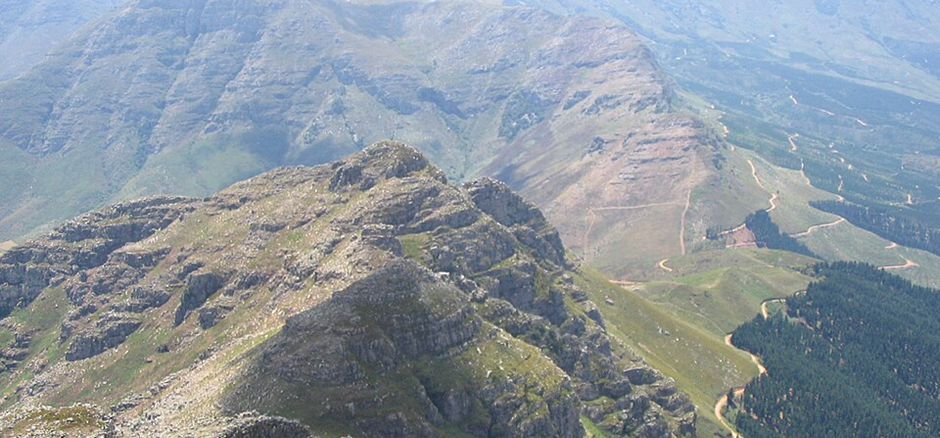
What was saved is extraordinary. The reserve covers 398 hectares on the southern slopes of the Helderberg mountains and extends up to a height of 1,137 metres. The predominant vegetation is Kogelberg Sandstone Fynbos — nearly 600 plant species, including sugar bushes, pincushions and cone bushes. To give that number some context: the reserve contains more than double the number of flowering plant species found in the entire British Isles. In 398 hectares. In a suburb of Somerset West.
Along with the plant diversity, the reserve has a rich fauna. Bontebok graze in the shady picnic area. More than 169 species of birds have been recorded. Leopard, lynx and honey badger have also been sighted on the upper slopes. Cape sugarbirds work the proteas on a winter morning with an efficiency that puts every other living thing to shame. The orange-breasted sunbird, arguably the most beautiful small bird on earth, flashes through the ericas like a living ember. Up in Disa Gorge, a cold mountain stream runs clear through indigenous forest and you can fill your water bottle from it and drink. In 2026. In a city of four million people. That is what conservation looks like when it works.
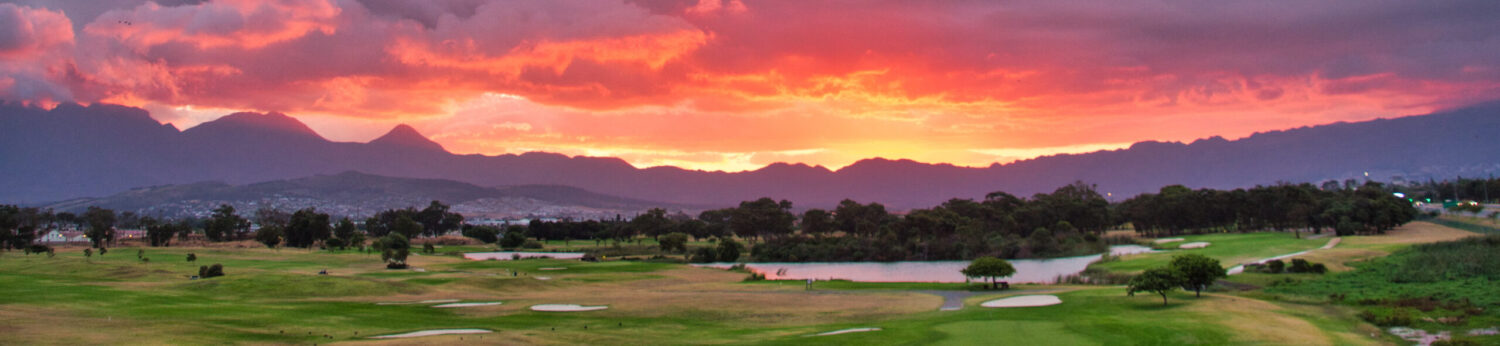
The reserve is managed jointly by the City of Cape Town and CapeNature, with the active support of the Friends of the Helderberg Nature Reserve, a community volunteer organisation that runs the gift shop, the indigenous nursery, the environmental education centre, the guided walks and the summer sunset concerts that have become one of Somerset West’s most loved annual traditions. Families bring picnic baskets and blankets and sit on the grass with the mountain above them and the bay below them and listen to music as the sun goes down over the Hottentots Holland peaks. It is, on those evenings, one of the most perfect places on earth.
None of it was inevitable. None of it happened automatically. Volunteers and work groups developed the boardwalks organised events, ran the gift shop and visitor centre, keeping the reserve alive, relevant and loved across six decades.
The Rotary Club of Somerset West suggested a nature reserve. The community built one. The mountain did the rest.
Between You and Me:
The sunset concerts at the Helderberg Nature Reserve. Picnic baskets, blankets, wine, the mountain above and False Bay below and someone playing music as the light changes on the Helderberg’s face. I have sat on that grass on those evenings and thought that this is the specific thing this valley does better than almost anywhere else combines the natural and the human at exactly the right scale. Not a stadium. Not a performance hall. A slope of fynbos with a mountain behind it and a bay in front of it and a community that shows up with baskets and blankets and is not in a hurry to be anywhere else. The Rotary Club proposed it. The community built it. The mountain, as always, provided the backdrop without being asked.
Historian – Harmen Bockelenberg
Next week: the night the Helderberg fell from the sky — the story of Flight SA295 and the questions that were never fully answered.

Be the first to comment