

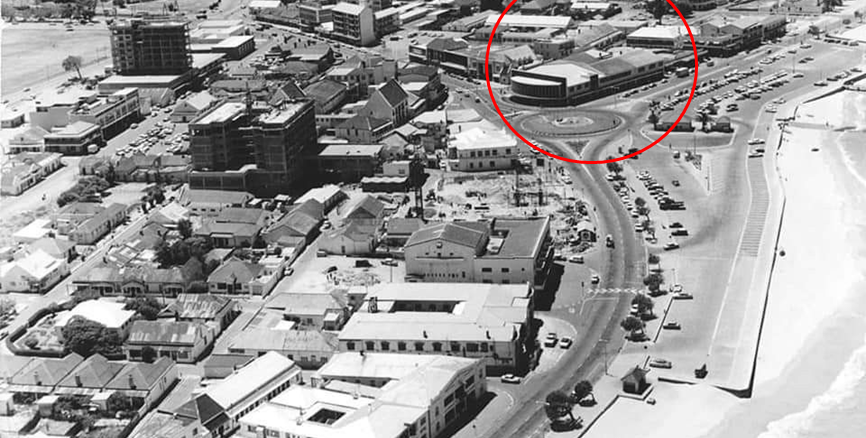
STORY 61
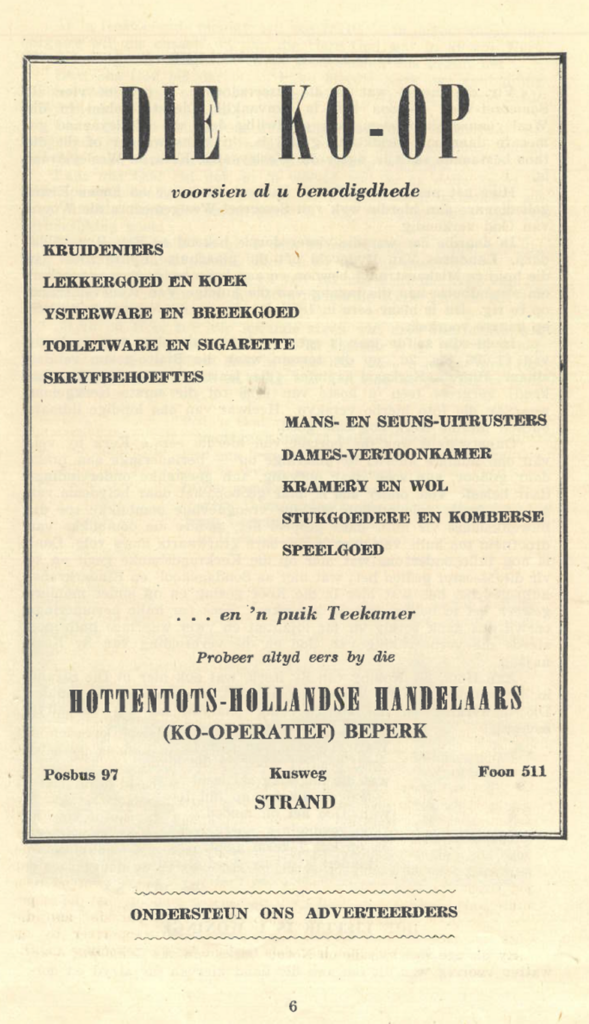
Before it was a place where you could get a milkshake and a plate of pancakes, before it became the general dealer that stocked everything a household could need in one building, the Strand Ko-op was, at its heart, a farmer’s shop.
Strand had started life, back in the 1700s, as Mostert’s Bay, a place where inland farmers from Stellenbosch trekked down to the coast for their summer holidays, tents on the beach, fishing lines in the water, weeks spent away from the wheat and the vines. That seasonal migration built something more lasting than a suntan. It built trust, trade networks, the kind of familiarity between farming families that eventually needed somewhere permanent to happen. Out of that grew the cooperative.
For most of the twentieth century, the Ko-op supplied the Helderberg basin’s wine, fruit and grain farmers with fertiliser, machinery, feed and credit, much of it made easier by the sheer scale of the Cape Explosives Works out at Paardevlei, which had branched from dynamite into agricultural chemicals and sulphur treatments and could get them to a cooperative like Strand’s faster and cheaper than almost anywhere else in the Cape. Two very different industries, standing a few kilometres apart, quietly propping each other up.
But if you grew up walking through its doors rather than reading about its supply chains, the Ko-op was something else entirely. It was the kind of shop that does not really exist anymore, one where you could buy your groceries, your school clothes, a toy for a birthday and a box of nails, all under the same roof, from the same wooden drawers with their glass fronts so you could see what was inside before you asked for it. Nails and screws were not sold by the packet. They were weighed out, however many you needed, no more, no less. Upstairs, on the first floor, there was a small restaurant and if you were a child in Strand in those years, that restaurant meant one thing: milkshakes and pancakes, the reward for whatever errand had brought you and your parents into town that day.

Change, when it came, arrived from the top down rather than the shop floor. Through most of the cooperative era, bodies like the Ko-op were not really operating in a free market at all. They functioned as arms of the state’s agricultural marketing boards, holding an official monopoly on buying grain and wine in the district. When deregulation reached South African agriculture in the early 1990s, that protected structure came apart almost overnight and the Strand Ko-op was absorbed into Sentraal-Suid Koöperasie, a larger cooperative rooted in Swellendam. The old building’s function shifted from cooperative trading floor to retail space, the way so many buildings in this town seem to, one purpose worn smooth and handed on to the next.
Between You and Me:
I have to tell you about one particular New Year’s Eve. I must have been about nine or ten, out walking with my cousin sometime around nine at night and as we passed the Ko-op we noticed the front doors standing wide open. The keys were still in the lock. We went inside and called out, shouted, waited, nothing. No answer, nobody there. So the two of us, with the gravity only two children can bring to a situation like that, simply locked the doors ourselves, pulled the keys out and walked them down to the police station. We never found out what happened after that. I do not know if someone had simply forgotten to lock up on their way out to a New Year’s party or whether there was a longer story behind it that two children were never going to be told. It has stayed with me for decades all the same, that strange, small responsibility of locking up a whole shop full of a town’s groceries and hardware and walking off into the night with the keys.
Historian – Harmen Bockelenberg
Next week: Circles, Suites and Sizzling Grills
A fountain that reads the wind, a boarding house that burned down twice as fast as it went up and the day the milkshake finally beat the hotel dining room. We trace a hundred years of arriving in Strand, from the Platdak boarding house to the Ben Friedman Traffic Circle, by way of the Marine Hotel’s electric lights and the first Spur on Beach Road. Come for the traffic circle, stay for the fish and chips.

Be the first to comment