

STORY 66
Featured image: Miss Strand
Long before anyone in Strand thought to build a proper runway, the sky over the town was already being used, in its own improvised way. Through the 1910s and into the early 1920s, pioneering aviators found that the wide, hard-packed sands of Melkbaai made as good a landing strip as anything an engineer could design and they set their aircraft down there simply because the beach allowed it. No permission was needed from anyone, because nobody had yet thought to ask.

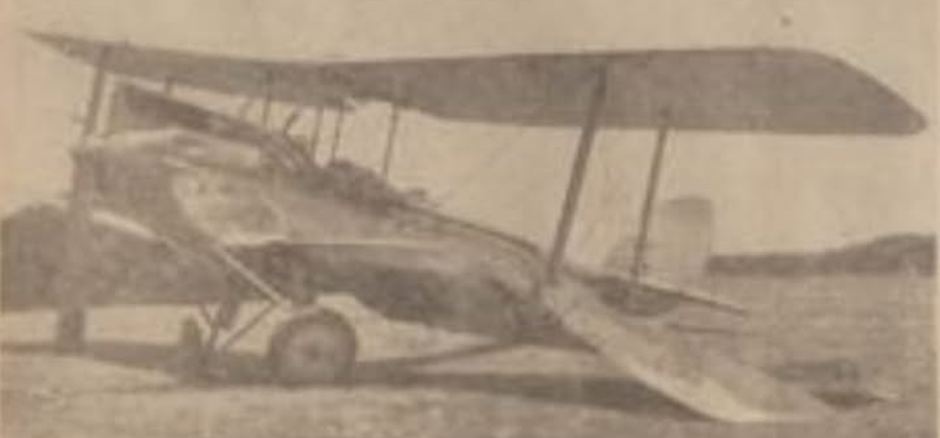
That changed in 1929, when a local resident named PJ Pienaar decided Strand should have an aviation company of its own. He called it the Strand Aviation Company and its one aircraft was a single-engine, two-seater De Havilland Gipsy Moth biplane, registration ZS-AAE, which he named Miss Strand. Pienaar built a corrugated iron hangar and service building on the corner of Main Road and what is now, fittingly, Aerodrome Road and laid out a grassy landing strip nearby, on the ground where the Hoërskool Strand sports fields sit today. From there Miss Strand took holidaymakers up for pleasure flights over the town, the first time most residents had seen the Helderberg from above.
The company’s chief pilot was Colonel Pat Murdoch, a man whose career did not stop at giving joyrides over Strand. He went on to serve with distinction in the Second World War and later broke the solo flight speed record between London and Cape Town, carrying a piece of Strand’s aviation story with him around the world.
Miss Strand herself earned her place in local memory on Friday 27 November 1929, when her engine failed without warning while she was cruising over the town. There was no strip beneath her, only the beach corridor and the pilot brought her down in a long, desperate glide toward the sand. He walked away without a scratch, though the aircraft did not survive the landing. Word travelled fast along the beachfront that afternoon and residents and holidaymakers alike came running to see it for themselves, turning a mechanical failure into the most talked-about day in the town’s early aviation history.
Strand’s little aerodrome did not last. As flight technology moved on, operations across the wider False Bay area shifted inland and toward the Cape Flats, to bases like Wingfield and later to Fisantekraal, built by the South African Air Force in 1943 to help patrol the coast during the war. The grassy strip beside Aerodrome Road went quiet and eventually became a school’s sports fields, the way so much of Strand’s early infrastructure has a way of turning into something else entirely.
Between You and Me:
My mother used to tell me about that gravel road on the edge of town, Aerodrome Road, long after the runway itself was gone. She had her own connection to that world too, she worked at Young’s Field, up in the air traffic control tower, watching over a different generation of aircraft entirely. It is strange to think that a road named for a runway that stopped operating decades before I was born still carried enough of its old purpose to touch my own family’s story. That is the thing about this town. The names stay long after the reason for them has moved on, waiting for someone to ask why.
Historian – Harmen Bockelenberg.
Next week: they called her Mej. Brander, Miss Wave and every December she turned the Strand beachfront into a stage. The story of Die Burger’s beach pageant, the T-shirts and swimwear parades and the finalists who came from as far as the Tygerberg to be crowned by the sea.

Be the first to comment