

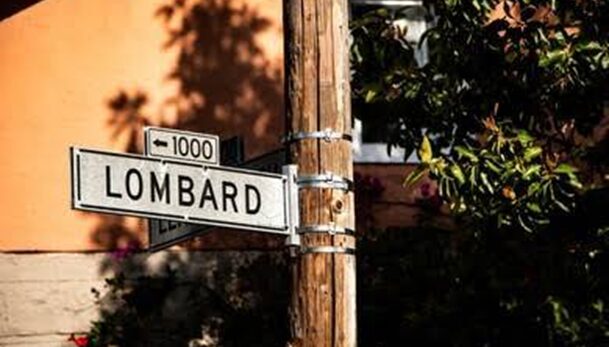
Next time you drive through the Helderberg, do this: pay attention to the street names. Not the modern ones, the old ones. The ones that have been there since the town was first laid out. You will notice something.
Joubert. De Villiers. Du Toit. Malan. Le Roux. Lombard. Du Plessis.
These are not Afrikaans names. They are not Dutch names. They are French names, battered and softened by three hundred years of Afrikaans pronunciation, but French nonetheless. Every single one of them is the ghost of a Huguenot refugee family that arrived at the Cape between 1688 and 1691/2, fleeing a king who had made their religion a crime.
Think about that next time you turn left at the Joubert Street intersection.
A survey published in 1981 found that nine of the thirty-six most common surnames among white South Africans were of Huguenot origin: Nel, Du Plessis, Coetzee, Fourie, Du Toit, Le Roux, Viljoen, Marais and Du Preez. Nine of the thirty-six most common surnames in an entire country, from a group of fewer than two hundred families who arrived three centuries ago. That is a legacy out of all proportion to the numbers involved.
Genetic research indicates that Huguenot ancestry contributes an estimated 24% to the modern Afrikaner gene pool. Nearly a quarter of every Afrikaner’s DNA traces back to those refugee ships. And yet within two generations of landing, the Huguenots had lost their language entirely. The VOC made sure of it — no French teaching in schools, French families deliberately dispersed among Dutch settlers, everything pushed toward assimilation. The people survived. The culture was absorbed. Only the names remained, stubbornly, magnificently, persistently French.
Some survived almost unchanged. De Villiers, Malan, Du Toit, Du Plessis, Du Preez, Malherbe; the spelling intact from the original French. Others were quietly Afrikaanised over the generations: Cronier became Cronjé. Pinard became Pienaar. Retif became Retief. Vilion became Viljoen. Naudé, the author’s family name, kept its accent and its French spelling intact through everything.
The wine industry in South Africa owes a significant debt to the Huguenots, some of whom had vineyards in France or were brandy distillers and brought those skills with them. The surnames and the wine, those are the two great Huguenot legacies in the Western Cape. Walk through any wine estate in the Helderberg and you will find both.
And there is one more legacy worth noting: the first names. Certain names that the Huguenots brought with them are still popular amongst their descendants today, especially François, Pierre, Etienne, Jacques and Louis. If you know a François or an Etienne or a Pierre in the Helderberg, there is a reasonable chance their name was carried here on one of those refugee ships many years ago.
The Huguenots lost almost everything when they fled France. They kept their faith, their farming skills, their family names and their stubborn habit of passing all three down to their children.
The Western Cape is still living with the results.
Between You and Me:
Naudé. That is my family name and it is as French as a beret in a vineyard. We kept the accent. They kept the spelling. Three hundred years of Afrikaans pronunciation did not manage to flatten it into something more convenient. I find this quietly satisfying. The VOC suppressed the French language in two generations. It could not suppress the accent on the é. There is a lesson in there somewhere about the things that survive because they are simply too small and too stubborn to stamp out.
Historian – Harmen Bockelenberg
Next week: the house that Africa built — where Cape Dutch architecture came from, what it is made of and why it looks like nothing else on earth.

Be the first to comment