

Before WhatsApp groups became the preferred method for Strand residents to complain about barking dogs and before Somerset West residents discovered the phrase “curated lifestyle estate” there existed a mysterious tribe known as HAM radio operators. These brave souls spent their evenings in garages and spare bedrooms speaking into microphones hoping somebody in Finland would answer before Eskom switched off the power.
The Helderberg’s love affair with HAM radio stretches back decades. Long before Harbour Island arrived with its polished apartments and artisanal coffee shops the old Gordon’s Bay harbour echoed with the sound of fishing boats naval officers and radio enthusiasts who believed an antenna taller than your neighbour’s was a mark of civilisation. Some still do.
Back in the 1960s and 70s when Somerset West still had more cows than traffic circles local HAM operators were viewed with a mixture of suspicion and admiration. The Strand middle class thought they were probably spies. Gordon’s Bay residents assumed they were talking to submarines. Stellenbosch intellectuals insisted radio waves were merely misunderstood philosophical concepts.
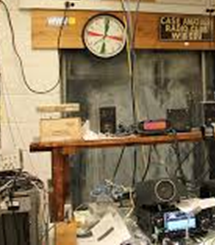
HAM radio operators however considered themselves pioneers of global communication. While ordinary Helderberg residents were struggling to tune into LM Radio these men were casually chatting to Canadians from a room smelling faintly of soldering iron and Ricoffy. One local Gordon’s Bay enthusiast reportedly managed to contact a research station in Antarctica during a southeaster so violent it nearly relocated his antenna to Sir Lowry’s Pass Village.
What Does HAM Stand For?
In the Helderberg the acronym HAM has naturally evolved to mean:
H – Helderberg
A – Airwave
M – Madness
This refers to the proud tradition of local radio hobbyists spending thousands of rand on antennas cables and mysterious blinking equipment just to ask a Norwegian pensioner what the weather is doing near Oslo.
Experts believe the hobby also provides middle-aged men with a scientifically accepted excuse to avoid garden work social gatherings and trips to Somerset Mall.
The hobby attracted a very specific type of man. Usually retired. Usually wearing shorts in winter. Usually married to a woman who had long accepted that “just adjusting the frequency” meant she would not see him again until supper. These men spoke a strange language of call signs static and abbreviations. Entire conversations sounded like distressed robots trying to order fish and chips.
The Helderberg mountain itself played an important role in local radio folklore. Operators claimed signals bounced beautifully off the mountain although cynics from Strand argued most signals simply got lost trying to avoid Somerset West estate agents. During summer months European “swallows” arrived in their thousands bringing sunscreen sandals and occasionally their own HAM equipment. Suddenly Gordon’s Bay airwaves filled with German accents discussing weather patterns while locals were just trying to ask if the snoek had arrived.
Along the R44 towards Stellenbosch several wine farms secretly housed serious radio hobbyists. It turns out Europeans buying farms in the Helderberg were not always interested in wine. Some simply wanted enough land to erect antennas large enough to contact Jupiter. Somerset West residents naturally pretended not to notice these structures unless they lowered property values which of course is the closest thing Somerset West has to a humanitarian crisis.
During the apartheid years HAM radio developed an almost rebellious reputation. While governments worried about censorship local radio operators happily chatted across borders exchanging stories recipes and occasionally rugby scores. It was social networking before social networking became a platform for sharing pictures of breakfast.
Then came the internet. Suddenly everybody could communicate instantly without learning Morse code or accidentally electrocuting themselves in a garage. HAM radio seemed destined for extinction much like affordable housing in Somerset West.
Yet somehow the hobby survives.
Even today hidden among the suburbs of Strand perched against the mountain in Gordon’s Bay or tucked away in Stellenbosch where professors probably claim radio frequencies are postmodern metaphors you will still find dedicated operators speaking into microphones late at night. Their antennas rise proudly above rooftops like metallic middle fingers to modern technology.
Because while society moved on HAM radio enthusiasts never really cared about trends. They were too busy trying to contact somebody in Iceland during load shedding.
And honestly in the Helderberg that still sounds more productive than most community WhatsApp groups.