

Across the Helderberg basin a highly organised and quietly competitive subculture operates daily in plain sight. They do not wear uniforms of authority in the traditional sense. They do not attend municipal gala dinners. They do not give interviews unless absolutely necessary.
Yet they arrive faster than most emergency services, identify distress within seconds and have an almost supernatural ability to appear exactly when a vehicle has stopped functioning in the most inconvenient possible location.
They are the tow truck drivers of Somerset West, Strand and Gordon’s Bay.
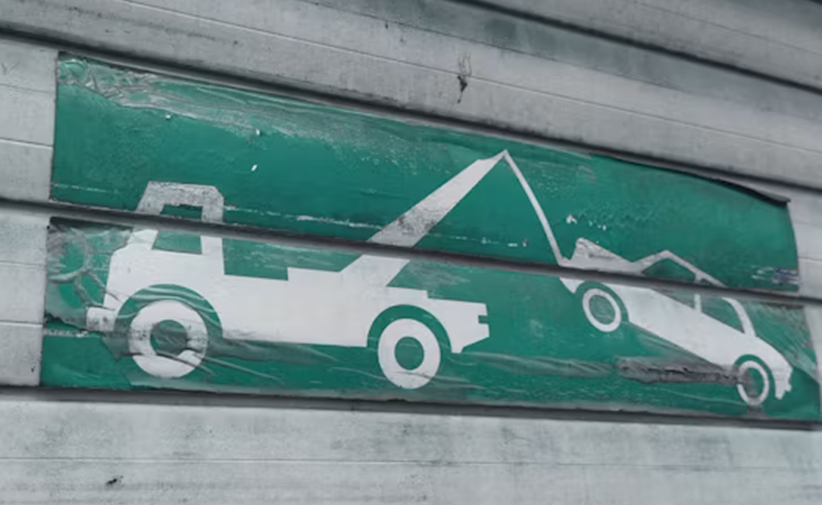
And according to local residents they may be the only group in the region who never struggle with traffic because they are already where the problem is about to happen.
The tow truck ecosystem in the Helderberg is both competitive and cooperative depending on time of day, weather conditions and how dramatic the breakdown location happens to be.
At its core lies a simple principle:
If something can fail on a steep hill, in a narrow lane or directly in front of a busy coffee shop, it probably will.
Tow truck operators describe their work less as transport and more as “predictive arrival management.”
One driver explained:
“You don’t respond to accidents. You anticipate emotional events involving cars.”
Their day typically begins long before sunrise with informal radio communication networks, WhatsApp groups and what can only be described as tactical scanning of known trouble spots such as steep estate entrances, beach parking areas and intersections where clutch control goes to die.
Somerset West is considered high-value territory due to its combination of busy school routes, large vehicles and drivers who are still learning the difference between hill assist and hope.
Strand offers a different challenge, with beachfront congestion, holiday traffic and vehicles that occasionally refuse to restart after “just a quick swim nearby.”
Gordon’s Bay however is widely regarded as the final boss level of towing operations where narrow roads, mountain gradients and spontaneous mechanical surrender create near-daily retrieval missions.
Despite the competitive nature of the industry, tow truck drivers maintain a strong sense of mutual respect.
“Today it’s his call-out,” said one operator.
“Tomorrow it’s mine. Or both of us at the same intersection at the same time arguing politely about angles.”
A unique etiquette has developed among operators involving subtle positioning rights, hazard light diplomacy and the unspoken rule that whoever hooks the car first gets to pretend they arrived first emotionally as well as physically.
Residents often describe tow truck arrival scenes as oddly reassuring.
A stranded driver may be panicking, traffic may be building, and a minor existential crisis may already be forming, but the sight of a flatbed truck turning the corner immediately restores order.
“It’s like seeing a professional problem solver arrive in diesel form,” said one Strand commuter.
However, not all interactions are calm. Some drivers admit to mild embarrassment when their vehicle is loaded in full public view.
Tow operators have become experts in emotional management, often offering reassurance such as:
“It happens to everyone.”
while simultaneously assessing whether the vehicle will need a tow, a prayer or a full mechanical investigation.
There is also a growing appreciation for the social intelligence required in the job. Tow truck drivers regularly mediate between frustrated motorists, traffic officers, estate security personnel and the occasional pedestrian who insists on filming the entire event for reasons unknown.
One operator noted:
“You are not just towing a car. You are managing an audience.”
Despite the challenges, many drivers take pride in their role as the invisible backbone of Helderberg mobility.
They see every breakdown, accident or unfortunate parking decision as part of a larger system that only works because they exist just outside it.
Even European swallows passing through during summer months have reportedly begun to recognise tow trucks as a seasonal landmark, often circling briefly before continuing their migration with slightly more caution than usual.
Still, the job is not without humour. Operators frequently exchange stories of impossible parking rescues, dramatic clutch failures halfway up estate driveways and vehicles that somehow end up in positions not covered by standard physics training.
One veteran driver summarised it best:
“We don’t ask how it happened. We just ask where it is and how dramatic the recovery will be.”
As Helderberg traffic grows busier and estates expand further up mountainsides the tow truck community continues to quietly evolve alongside it, responding to every mechanical misfortune with speed, skill and a deeply grounded sense of reality.
Because in a region where everything from school runs to potholes has become an event, someone has to be ready when things stop moving entirely.
And more often than not, they already are.